

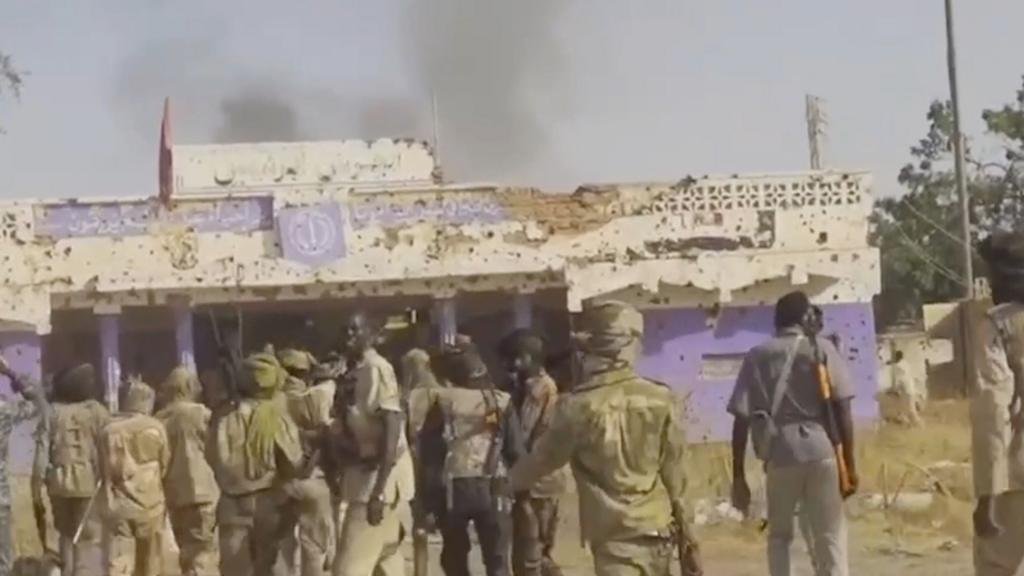

At least 114 people have been killed in a week of intense attacks across Sudan’s western Darfur region, according to medical sources. The deaths were reported following assaults by Sudan’s army and its paramilitary rival, the Rapid Support Forces (RSF), on two separate towns. The latest violence highlights the worsening humanitarian and security crisis gripping the country.
Sudan has been locked in a brutal conflict since April 2023. The war pits the Sudanese army against the RSF, a powerful paramilitary force. Over time, the fighting has spread across large parts of the country, with Darfur and Kordofan emerging as key battlegrounds.
Deadly Attacks in North Darfur and Kernoi
Medical sources reported that 51 people were killed on Saturday in North Darfur’s town of Al-Zuruq. The deaths were caused by drone strikes reportedly carried out by the Sudanese army. The strikes hit a busy market and nearby civilian neighborhoods.
Al-Zuruq lies around 180 kilometers north of El-Fashir, the capital of North Darfur, which has largely fallen under RSF control. The town itself is also under RSF influence and is known to house relatives of RSF commander Mohamed Hamdan Daglo.
Eyewitnesses confirmed that two members of the Daglo family were among those killed. Local sources described widespread destruction and panic following the strikes. Medical facilities in the area are struggling to cope due to shortages of supplies and staff.
In a separate incident, RSF fighters advancing westward toward the Chadian border carried out attacks around the town of Kernoi. According to medical staff at a local hospital, 63 people were killed and at least 57 injured in RSF assaults over several days.
Local residents reported that entire neighborhoods were targeted. Seventeen people are still missing. Many families fled the area in fear, seeking shelter with limited access to food or medical care.
Displacement and Ethnic Targeting Concerns
The violence has triggered new waves of displacement. The United Nations reported that more than 7,000 people were forced to flee Kernoi and nearby Um Baru village in just two days last month.
Many of the displaced belong to the Zaghawa ethnic group. This group has reportedly been targeted by the RSF. Some Zaghawa fighters are aligned with the army through an alliance known as the Joint Forces.
Darfur remains largely inaccessible to independent journalists. Years-long communication blackouts have left residents relying on satellite internet to share information. Aid organizations warn that the lack of access hampers humanitarian response efforts.
Both the army and the RSF have been accused of targeting civilian areas. The United Nations has described the conflict as a “war of atrocities,” citing repeated violations of international humanitarian law.
Fighting Expands Into Kordofan Region
While Darfur continues to suffer, violence has also intensified in the Kordofan region. Drone strikes on the North Kordofan capital, El-Obeid, caused a major power outage on Sunday. Sudan’s national electricity company confirmed that drones struck a power station, triggering a fire and halting electricity supply.
Kordofan is a strategically important region linking Darfur to the capital, Khartoum. It is also rich in oil resources. The RSF has been attempting to tighten its grip on the area by besieging army-held cities.
Since mid-December, more than 11,000 people have been displaced from North and South Kordofan, according to the International Organization for Migration. Across Sudan, the war has forced over 11 million people to flee their homes.
Humanitarian agencies warn of mass starvation. Many displaced families lack access to food, clean water, and medicine. As fighting continues, prospects for peace remain uncertain, and civilian suffering continues to rise.
