

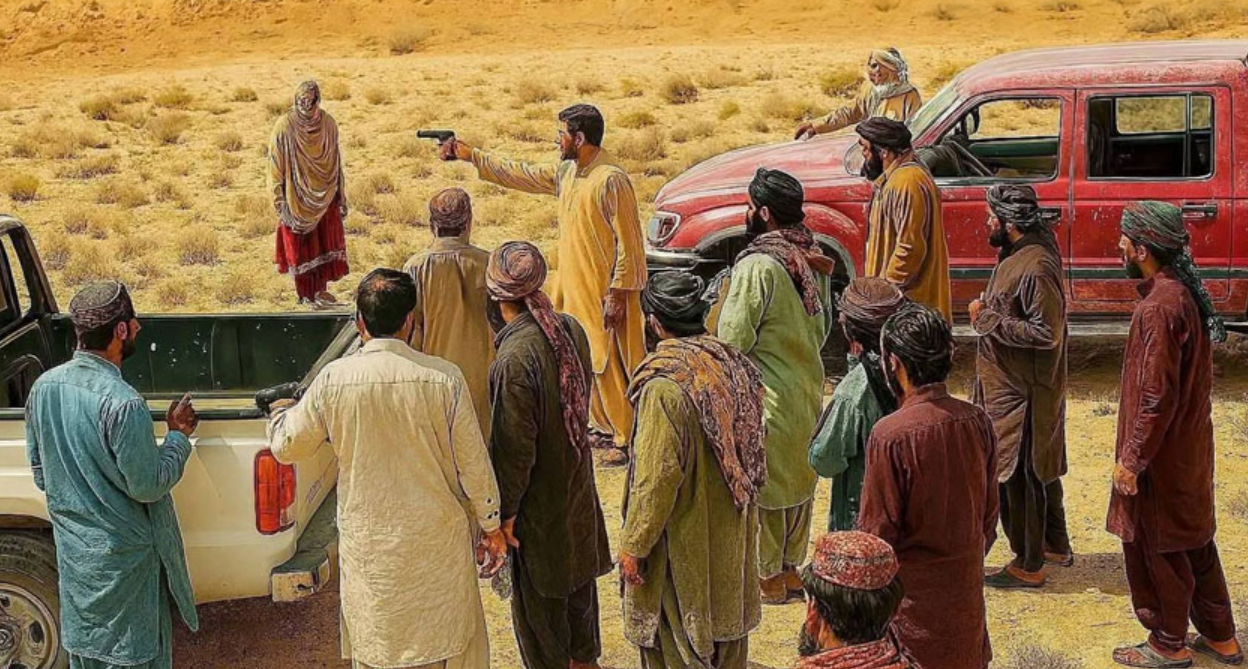

In a deeply disturbing incident of honour killing in Balochistan, at least 11 new suspects, including a tribal leader, were arrested in connection with the brutal murder of a man and a woman. The horrific act, recorded on video and circulated online, showed the victims being led into a desert and gunned down, sparking nationwide condemnation and urgent legal action. This act of honour killing in Balochistan has now prompted authorities to transfer the investigation to the Serious Crimes Investigation Wing (SCIW) for a transparent and thorough inquiry.
According to SCIW Superintendent of Police Syed Saboor Agha, those arrested include a tribal elder who allegedly ordered the execution of the victims. The first information report (FIR), filed at Hanna-Urak Police Station, details the discovery of the viral video by SHO Naveed Akhtar, who launched an immediate investigation into this shocking case of honour killing in Balochistan.
The couple, identified as Bano Bibi and Ihsanullah, were accused of being in an “immoral relationship” before being executed under the orders of a tribal council. The murder, recorded and posted online, was apparently meant to instill fear, making this honour killing in Balochistan not just a crime but a message intended to intimidate.
In response, Balochistan Chief Minister Sarfraz Bugti directed swift police action. Within 24 hours of the video surfacing, several arrests were made, including that of the tribal chief, Sardar Sherbaz Satakzai. Bugti condemned the act as inhumane and illegal, affirming that no cultural or tribal tradition justifies such a heinous honour killing in Balochistan.
The Balochistan High Court also took notice, with Chief Justice Rozi Khan Barrech summoning top provincial officials. The judiciary’s involvement signals the seriousness with which the state is treating this case of honour killing in Balochistan. The chief justice expressed deep concern about the act being linked to marriage choice and called for the protection of individual rights.
Condemnation poured in from across the political spectrum. PPP MNA Shazia Marri labeled the crime a violation of constitutional and Islamic principles and moved a motion in the National Assembly for an urgent discussion. She also stressed the need for the state to be the complainant in such cases to avoid pressure on victims’ families, a critical point in addressing honour killing in Balochistan.
Social and political leaders echoed this sentiment. Bilawal Bhutto-Zardari called the killers “beasts,” while Defence Minister Khawaja Asif urged locals to fight internal injustices rather than external enemies. Senator Sherry Rehman described the incident as an unforgivable attack on human dignity and law. She demanded immediate and strong legal action to halt the cycle of honour killing in Balochistan.
Civil society was equally vocal. Baloch activist Sammi Deen Baloch expressed deep anguish and urged tribal leaders to respect women’s autonomy. She emphasized that today’s women are educated and capable of making life decision, a point central to ending honour killing in Balochistan.
This tragic incident sheds light on a larger crisis. Human Rights Commission of Pakistan data reveals 346 cases of ‘honour’ killings in 2024, with Balochistan contributing to this alarming figure. Despite repeated promises of reform, cultural and tribal practices continue to undermine the rule of law, especially in the context of honour killing in Balochistan.
As legal proceedings advance and arrests continue, pressure is mounting on the state to ensure justice and set a precedent. The nation watches closely, hoping this case will mark the beginning of the end of honour killing in Balochistan.
