

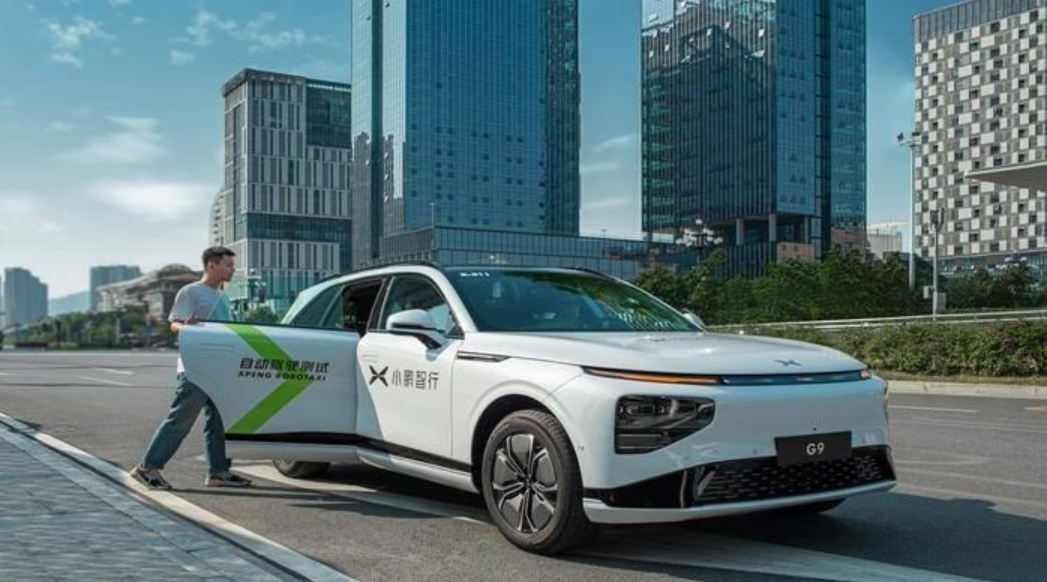

Chinese automaker Xpeng has announced plans to begin street trials for its robotaxis and commence mass production of humanoid robots in 2026.
The company’s announcement highlights the growing role of physical artificial intelligence (AI) in automotive and robotics sectors, combining advanced sensors, hardware, and proprietary software for real-world applications.
Robotaxi Trials to Hit Streets Soon
Xpeng is preparing to launch robotaxi street trials, marking a significant step in the development of fully autonomous transportation. These trials are expected to test AI navigation, obstacle detection, and safety features under urban conditions.
He Xiaopeng, founder and CEO of Xpeng, emphasized that the company aims to go beyond traditional car manufacturing. He stated that leveraging Xpeng’s proprietary “Turing” AI chip will give the company a competitive edge in both electric vehicles and robotics.
“Xpeng is not just a hardware company,” he said. “We are focused on integrating AI to deliver smarter and safer mobility solutions.”
Humanoid Robots Enter Mass Production
In addition to robotaxis, Xpeng confirmed that mass production of humanoid robots will begin in the second half of 2026. These robots are designed to automate tasks in factories, warehouses, and service industries, reflecting the global rise of AI-driven physical automation.
The company’s strategy mirrors similar moves by other tech leaders like Tesla, which is also advancing into humanoid robotics and autonomous vehicles.
Focus on AI and Autonomous Driving
Xpeng showcased four updated electric vehicles at a recent event in Guangzhou, featuring enhanced software systems such as 3D navigation, advanced hazard alerts, and improved autonomous driving capabilities.
Despite recording a net loss of 380 million yuan in the third quarter, He Xiaopeng expressed optimism about breaking even by the end of 2025. He highlighted that AI integration in mobility and robotics is central to Xpeng’s long-term growth strategy.
Growing Industry Momentum
Tech companies worldwide are increasingly investing in physical AI solutions. For instance, Arm Holdings recently reorganized to establish a dedicated physical AI unit to expand its presence in robotics, reflecting the sector’s fast-paced evolution.
Xpeng’s dual focus on robotaxis and humanoid robots positions the company at the forefront of AI-driven innovation, blending automotive expertise with cutting-edge robotics for practical applications.
