

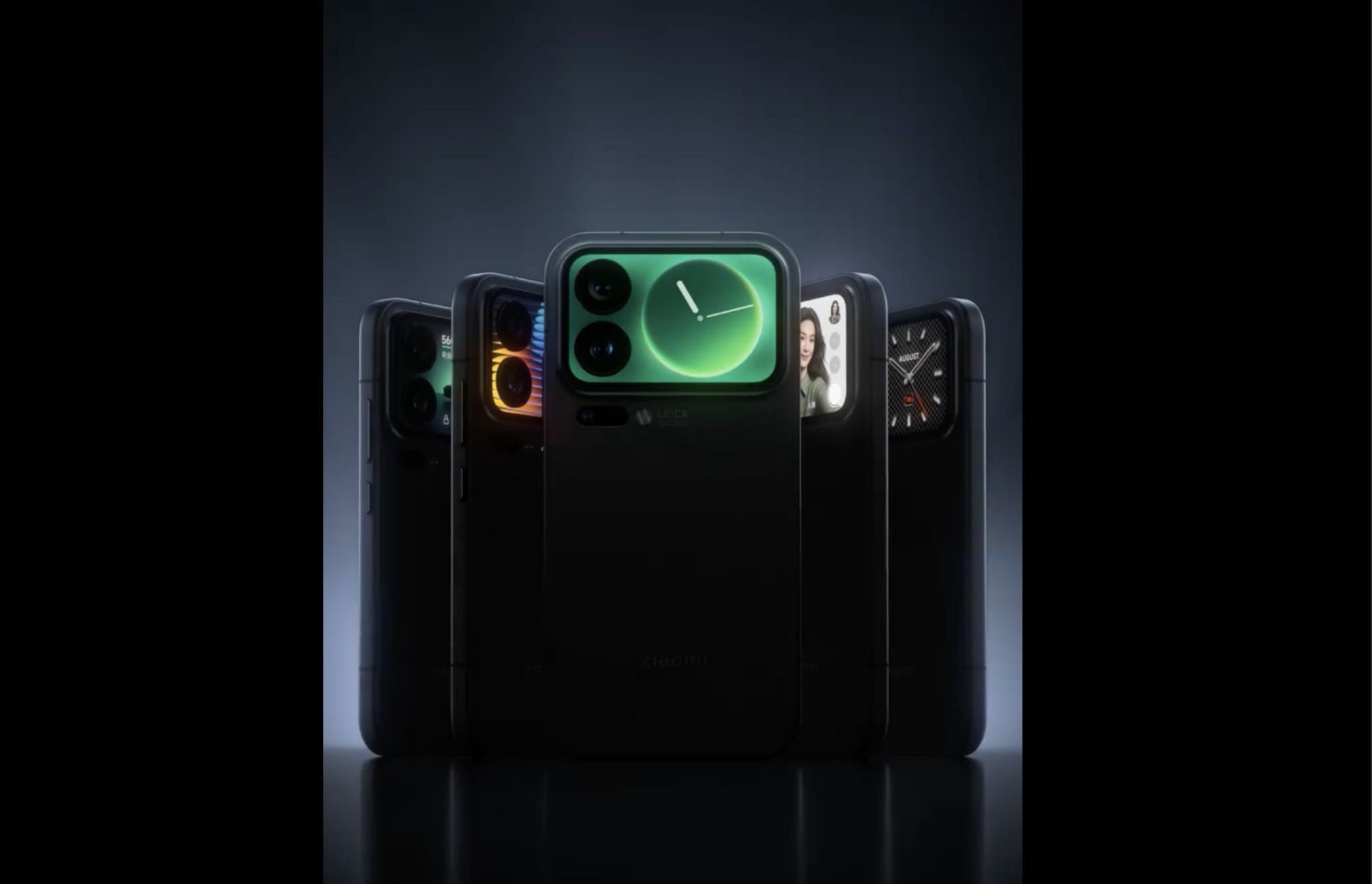

Xiaomi has officially confirmed that the Xiaomi 17 Pro will feature a rear secondary display, matching the previously teased 17 Pro Max variant. The company released new Weibo teasers revealing both flagship models will include the innovative “Magic Black Screen” technology.
Design Innovation: Expanded Camera Island Integration
Secondary Display Placement
The rear screen is seamlessly integrated into the horizontal camera island, utilizing the blank space around the camera lenses. This design approach maximizes the available real estate while maintaining aesthetic appeal across both Pro models.
Expected Functionality
Based on official teasers, the rear AMOLED display will offer multiple practical applications:
- Watch faces and time display for at-a-glance information
- Notification previews without unlocking the main device
- Camera viewfinder enabling front-camera quality selfies using rear cameras
- Quick settings access and widget functionality
Learning from Previous Experience
Building on Mi 11 Ultra Legacy
Xiaomi previously experimented with rear displays on the Mi 11 Ultra, which featured a small 1.1-inch AMOLED screen. However, that implementation suffered from size limitations and software restrictions, leading to its discontinuation.
Leveraging Flip Phone Innovation
The company’s extensive experience with cover screens on foldable devices appears to be influencing this new implementation. The refined software and hardware integration from flip phone development could address previous limitations.
Strategic Series Positioning
Xiaomi is skipping the anticipated 16 series entirely, jumping directly to the 17 lineup with three variants: standard, Pro, and Pro Max. This strategic move positions the company to introduce significant innovations across the flagship range.
Market Impact and Launch Timeline
The Xiaomi 17 series is expected to launch later this month, with the rear display feature serving as a key differentiator in the competitive flagship market. The “Magic Black Screen” branding suggests Xiaomi views this as a premium feature worth highlighting in marketing campaigns.
This innovation could influence competitor strategies and potentially revive interest in secondary display smartphones, especially if software optimization addresses previous generation limitations.
