


Celebrity actors like Glenn Close, Julia Roberts, Meryl Streep, Tom Hanks, Robert De Niro, and Nicole Kidman – who headline mainstream films – are veritable American royalty because of their crowd-pulling prowess. They get to lead stories because they draw large box office numbers simply for their personal allure.
Then there is the fact that each of these A-listers made their mark at a young age. They continue to rake in given their overwhelming star power. The overwhelming- ing majority of these mature actors are white. Only a small percentage of older minority actors have stood out in Holly- wood. Viola Davis, Jackie Chan, Rita Moreno, Cicely Tyson, Samuel L. Jackson, and Denzel Washington is pretty much the definitive list.
Grossly overlooked and largely relegated to supporting roles, older actors of Asian, Latino, and African-American descent have minuscule chances of leading films unlike their white counterparts. Then there is the matter of underrepresentation of ageing female artists in America.
Older male actors appear to have a cutting-edge over their female counterparts. Maggie Gyllenhaal, for example, faced vehement rejection at the age of 37 for a film role. In a 2015 interview, Gyllenhaal, now 43, said, “There are things that are really disappointing about being an actress in Hollywood that surprise me all the time. I’m 37, and I was told recently that I was too old to play the lover of a man who was 55.”
A Hollywood producer downright rejected a 37-year-old female actor despite her immense talent while casting a 55-year-old as the male lead. The double standard is blatant to say the least.
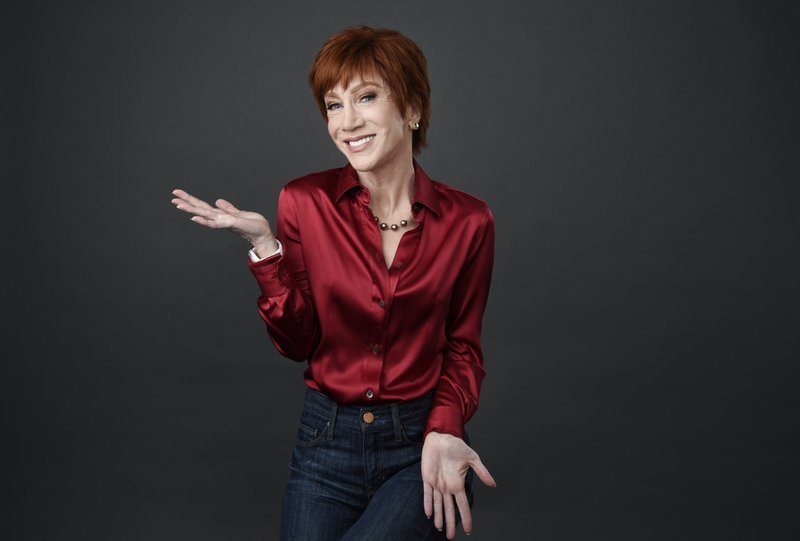
Comedian Kathy Griffin has been at the forefront of calling out ageism for what it is. “I’ve just been told everything from ‘Female driven sitcoms don’t make as much money as male driven sitcoms’ which can’t be true,” says she. “Then I’ve had network executives tell me ‘We’re just not considering females at this time.’ I would be hearing, they like you, they’ve just decided to go younger”.
Reese Witherspoon, who was supposed to portray the famed singer-songwriter Stevie Nicks in a biopic, was told by Nicks herself that she was “too old to play her” back in 2013 when Witherspoon was 37 years old.
It is not that only male producers are in charge in major casting decisions like who
would fit the mold of a lead “hero” or “heroine.” Women too contribute to the misogynistic, ageist traditions that Holly- wood needs to outgrow.
America’s entertainment industry is clearly biased against ageing women. Olivia Wilde, Elizabeth Banks and Anne Hatha- way have all been targets of ageism. Older male actors get a pass and are instead regarded as debonair, hunky silver foxes. They are largely cast in key roles irrespective of their age while women have to withstand the worst ageism.
Ageism is a mere symptom of a broader problem at hand. Sexism, prejudice against minority actors, unequal pay between males and females, and enormous pay inequities suffered by minority actors are just some of the problems Hollywood is unable or unwilling to tackle. It is essential that female actors get their due share of opportunities based on constructive scripts. Talent should always precede appearance in an industry as influential as America’s.
Producers bear a responsibility to mainstream narratives that shine a light on ageism and issues that affect the older demographic. It is high time actors came together to tackle deep-rooted issues such as ageism. Not doing so would only incentivize the entertainment fraternity to continue with their subpar, reductionist ways.
