

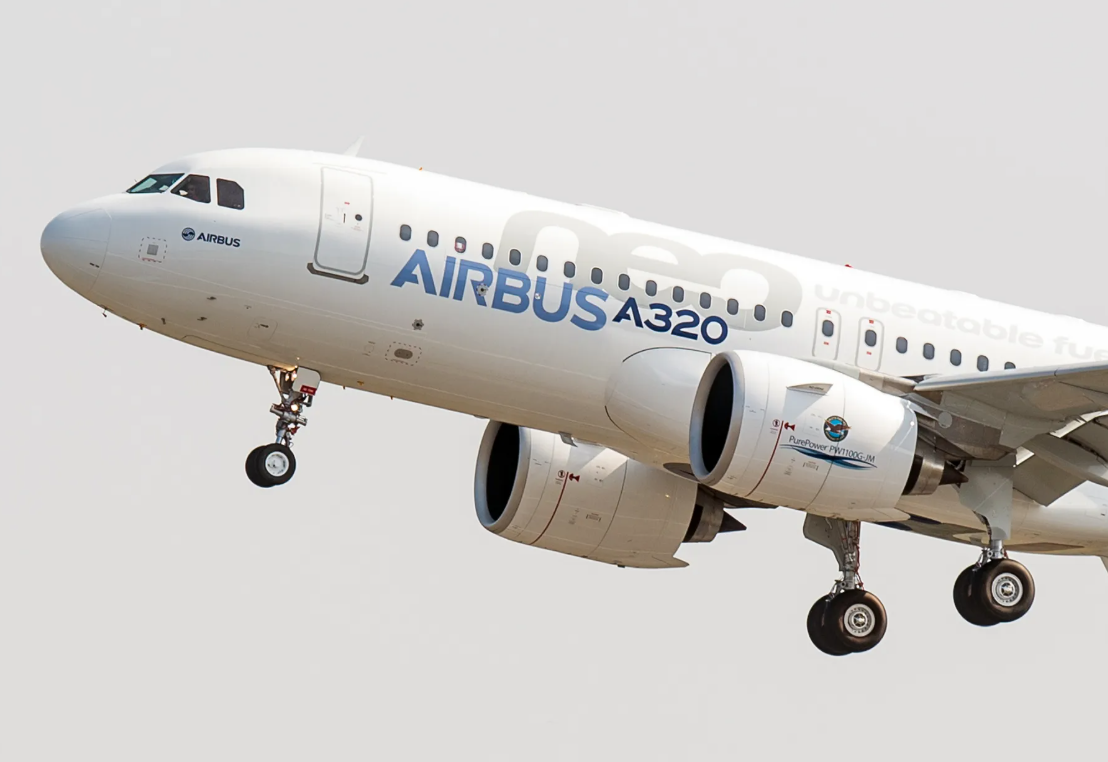

Global aviation has been hit by significant delays as Airbus issued an urgent recall affecting nearly 6,000 A320-family aircraft. The directive impacts almost half of all A320 jets in service, creating widespread cancellations during one of the busiest travel periods of the year.
The move came after aviation regulators demanded immediate action to address a serious safety concern linked to critical flight-control systems.
Solar Radiation Risk Triggers Urgent Software Rollback
The European aviation regulator instructed operators to revert to an earlier version of the Elevator and Aileron Computer software. According to investigators, intense solar radiation could corrupt essential data within the flight-control computers, raising safety risks under specific conditions.
The recall follows a mid-air incident on October 30 involving a commercial flight travelling from Mexico to the United States. That aircraft experienced an abrupt altitude drop after its systems malfunctioned, which caused injuries to fifteen passengers. The event prompted urgent reviews of the fleet.
Groundings Begin as Airlines Rush to Apply the Software Change
Although the required update is technically simple, each jet must be grounded until the fix is completed. Consequently, airlines across continents are experiencing immediate schedule disruptions.
American carriers reported that 340 of their 480 A320-family jets require the mandatory software rollback. As a result, flight availability tightened considerably during the holiday travel rush.
In Japan, a major operator cancelled 65 flights on November 29 due to the recall’s impact. Meanwhile, a South American airline placed a temporary halt on ticket sales because more than 70 percent of its A320 fleet needs the software change.
Travel Impact Felt Worldwide, Though Some Markets See Limited Disruption
The recall has strained flight operations across North and South America, Europe, and Asia. Nevertheless, some regions face a less severe effect. Authorities in the United Kingdom noted that domestic carriers appear to have limited exposure to the grounding requirements.
Despite that, the timing has disrupted thousands of travellers as airlines struggle to meet demand during a peak season. Aircraft will only return to service after receiving the reinstated software, creating logistical bottlenecks globally.
One of the Largest Recalls in Airbus History
This event marks one of the most extensive recalls undertaken by Airbus in its five-decade history. While the software rollback is expected to enhance safety, the global grounding has underscored how a single system anomaly can ripple across worldwide aviation networks.
Airlines continue to work through the backlog as engineers apply the update fleet-wide. Although the recall aims to prevent further mid-air anomalies, passengers may continue to experience disruptions until affected fleets return to normal operations.
