

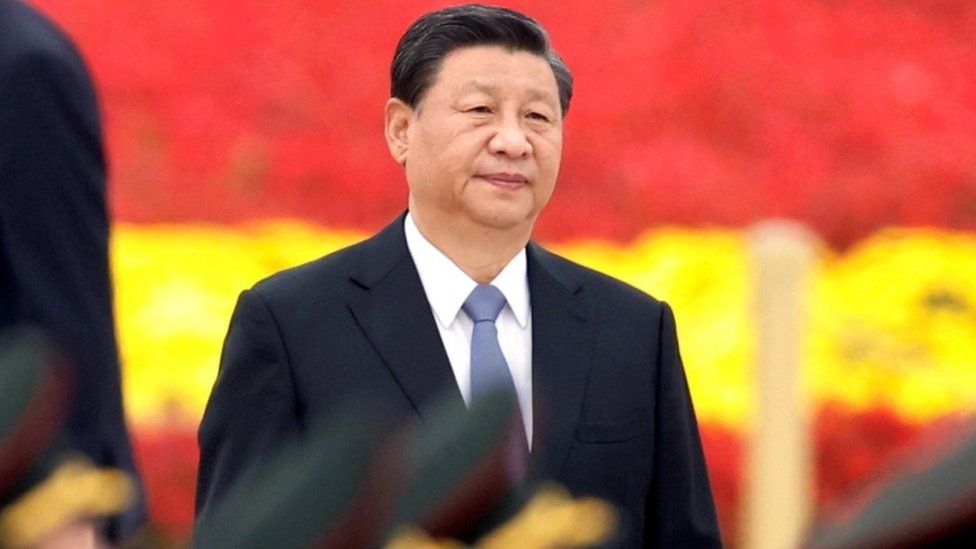

The annual BRICS summit kicked off in Brazil on Sunday, bringing together leaders from major emerging economies—but notably absent is the group’s most influential figure, Chinese President Xi Jinping.
For the first time in over a decade of leadership, Xi opted to skip the leaders’ summit, despite having made BRICS a central platform in his efforts to reshape the global power structure. His absence from the two-day gathering in Rio de Janeiro comes at a pivotal time for the bloc.
Originally formed by Brazil, Russia, India, China, and South Africa, BRICS expanded in 2024 to include Egypt, the United Arab Emirates, Ethiopia, Indonesia, and Iran. This year’s summit comes as several members face looming U.S. tariff deadlines imposed by President Donald Trump, along with broader economic uncertainty stemming from his disruptive approach to global trade—raising the stakes for unity among BRICS nations.
Xi’s decision to stay away means missing a key moment to present China as a stable, alternative leader to the United States—a narrative Beijing has long promoted to the Global South. That image gained traction amid Trump’s “America First” policy and, more recently, Washington’s joint military action with Israel targeting Iranian nuclear facilities.
In Xi’s place, Chinese Premier Li Qiang is representing Beijing. Analysts say the delegation change does not indicate a reduced commitment to BRICS, but rather reflects shifting priorities at a time when Xi is focused on China’s internal economic challenges.
“BRICS remains central to Beijing’s strategy to avoid being encircled by U.S. allies,” said Chong Ja Ian, an associate professor at the National University of Singapore. However, with Trump disrupting even Washington’s traditional partnerships, the urgency behind that strategy may have softened.
Chong noted that with potentially modest expectations for this year’s summit, BRICS may no longer command Xi’s full attention—at least for now.
