
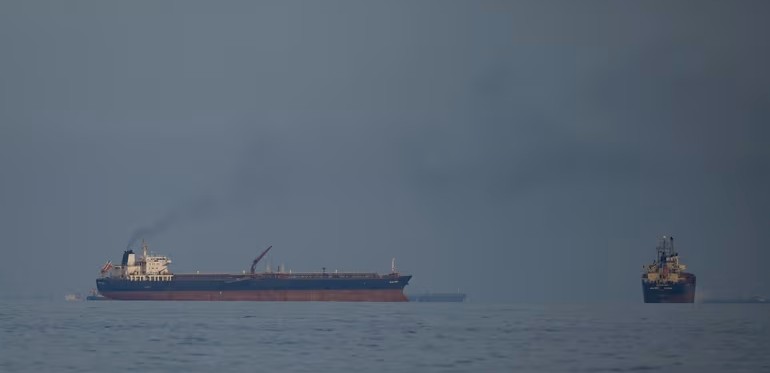

Several commercial vessels have adopted an unusual tactic while sailing through the Strait of Hormuz. They now declare Chinese links in their navigation signals.
The move emerged after the Iran war increased tensions across the Gulf region. Consequently, shipping companies began exploring ways to reduce security risks.
Marine traffic data shows that some ships recently changed their destination signals. Instead of ports, they displayed short messages such as “CHINA OWNER” or “CHINA OWNER & CREW.”
These messages appeared in vessel tracking systems used across global shipping networks. Crews manually enter such signals through onboard transponders.
Although these messages do not change a ship’s route, they send a clear signal. The crews hope attackers will avoid vessels believed to have Chinese connections.
Why Ships Believe the Strategy May Work
Shipping analysts believe this tactic reflects a simple risk reduction strategy. Ships want to avoid being mistaken for potential targets.
China maintains strong economic ties with Iran. At the same time, Beijing has generally taken a neutral position in regional conflicts.
Because of this relationship, attacks on vessels linked to China remain rare. Therefore, ships may hope that signaling Chinese ownership discourages aggression.
Experts say the message is straightforward. The signal essentially tells potential attackers that the vessel should not become a target.
However, analysts also warn that the effectiveness of this approach remains uncertain. It may reduce risks, but it offers no guaranteed protection.
Vessel Data Reveals Several Ships Using the Method
Tracking data indicates that at least eight vessels near the Gulf and Gulf of Oman adopted this strategy. Their signals changed while operating close to the Strait of Hormuz.
Some ships have already completed their transit through the strategic waterway. Meanwhile, others continue operating in nearby shipping routes.
Interestingly, most of these vessels do not fly the Chinese flag. Instead, they operate under registry flags from countries such as Panama and the Marshall Islands.
This practice remains common in international shipping. Many vessels register in countries different from the nationality of their owners.
Therefore, the flag of a ship does not always reveal who actually owns or operates it.
Understanding How Destination Signals Work
Ships broadcast navigation details using a device called an Automatic Identification System transponder. This system helps track vessels and avoid collisions.
Crew members manually enter short notes or destination information into the system. These signals usually show the ship’s next port.
Port authorities and nearby ships rely on this information for traffic management. It also improves navigation safety in crowded sea routes.
However, the system does not always verify these messages in real time. Because of this limitation, crews sometimes add extra details in the signal field.
For example, ships may display operational notes or ownership information. Recently, some vessels began adding references to Chinese ownership.
Rising Concerns After Attacks on Commercial Ships
Security concerns across the Gulf have grown sharply since the Iran war intensified. Shipping companies now face higher risks while operating in regional waters.
Reports indicate that at least nineteen commercial vessels suffered damage during the conflict. These incidents occurred across the Gulf and nearby maritime routes.
As a result, shipping operators continue searching for ways to protect their fleets. Some companies have adjusted routes, while others increase onboard security.
Meanwhile, the Strait of Hormuz remains one of the world’s most critical energy corridors. A large share of global oil shipments travels through this narrow passage.
Therefore, any disruption quickly raises global economic concerns.
Similar Tactics Appeared During Earlier Red Sea Attacks
This strategy is not entirely new. Some ships used similar signals during earlier attacks in the Red Sea.
At that time, vessels tried to show Chinese connections in their tracking data. Crews hoped that attackers would spare ships linked to China.
Those incidents involved attacks carried out by armed groups targeting maritime traffic.
Today, the situation in the Gulf has revived similar concerns. Consequently, ship operators once again experiment with creative ways to reduce risks.
A Temporary Solution in Uncertain Waters
Despite the tactic’s growing visibility, experts caution against relying on it completely. Declaring Chinese links does not guarantee safety.
Still, the signals reflect the anxiety spreading across global shipping routes. Operators must constantly adapt as geopolitical tensions escalate.
For now, the strategy represents a symbolic shield rather than a proven defense.
Nevertheless, it highlights how conflict can reshape even the smallest details of maritime navigation.

