

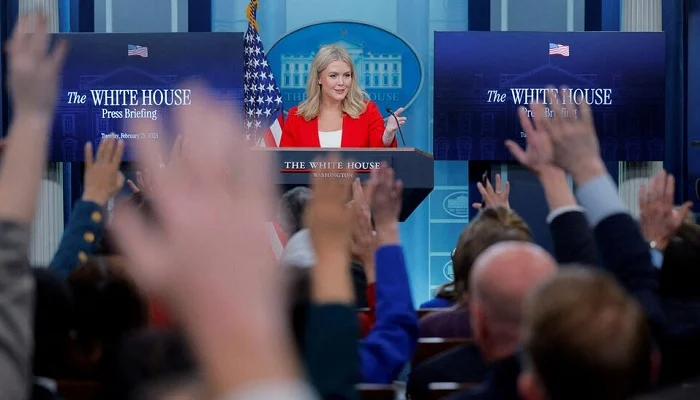

WASHINGTON — The White House on Friday announced new restrictions limiting journalists’ access to several West Wing offices, drawing sharp criticism from reporters and press freedom advocates who say the move threatens government transparency.
According to a National Security Council (NSC) memorandum, accredited journalists will now need prior appointments to enter Room 140, known as “Upper Press,” which houses the offices of Press Secretary Karoline Leavitt and senior communications aides. The NSC cited “the need to protect sensitive material” following internal structural changes that integrated some security-related operations into the communications wing.
“In order to protect such material, and maintain coordination between National Security Council staff and White House communications staff, members of the press are no longer permitted to access Room 140 without prior approval,” the directive stated.
Access Now by Appointment Only
The decision limits entry to an area just steps from the Oval Office — traditionally a space where reporters could informally approach senior officials for comment or clarification. That open access has long been a defining feature of West Wing reporting.
Deputy Press Secretary Steven Cheung defended the change on X (formerly Twitter), claiming some reporters had “secretly recorded video and audio” and taken photographs of sensitive materials without permission. He also alleged that journalists had “wandered into restricted areas” and “ambushed cabinet members” outside their offices.
Reporters Condemn ‘Threat to Transparency’
The White House Correspondents’ Association (WHCA) denounced the new rule, calling it a direct challenge to press freedom.
“The White House Correspondents’ Association unequivocally opposes any effort to limit journalists from areas within the communications operations of the White House that have long been open for newsgathering,” said Weijia Jiang, WHCA president. “Access to the press secretary’s office is essential for transparency and accountability.”
While access to “Upper Press” is now restricted, reporters will still be allowed into another designated workspace used by junior communications staff.
Follows Pentagon’s Tightened Media Rules
The new policy comes shortly after the Pentagon imposed its own stricter media access regulations, requiring reporters to sign new agreements acknowledging the Defense Department’s right to revoke credentials for perceived “security risks.” At least 30 media organizations, including Reuters, The Associated Press, and Bloomberg News, have refused to sign.
The White House move also echoes past efforts to limit media access — including a brief 1993 restriction under President Bill Clinton that was quickly reversed following public backlash.
Earlier this year, the administration was criticized for excluding major outlets from the permanent presidential press pool, a decision widely seen as part of a broader pattern of limiting scrutiny.
Press freedom groups have urged the administration to reverse the latest decision, warning it could set a dangerous precedent.
“When journalists can’t freely question officials in the nation’s most powerful building,” one senior correspondent said, “the public loses its right to know.”
