


Hanukkah, widely known as the Festival of Lights, commemorates the rededication of the Second Temple in Jerusalem nearly 2,200 years ago. The festival marks a pivotal moment in Jewish history following a successful revolt against Greek-Syrian rule. Today, Jewish communities around the world observe Hanukkah as a symbol of faith, resilience, and religious freedom.
The eight-day festival traces its origins to the second century BCE. During that period, King Antiochus IV Epiphanes of the Seleucid Empire imposed harsh restrictions on Jewish religious practices. He outlawed core traditions, desecrated the Temple in Jerusalem, and forced Jews to worship Greek gods. As a result, widespread persecution sparked resistance.
The Maccabean Revolt and Liberation
In response to oppression, a small group of Jewish fighters known as the Maccabees launched a rebellion. Led by Judah Maccabee and his family, the group fought against a far stronger army. Despite limited resources, the Maccabees gradually gained ground through determination and strategic resistance.
After nearly three years of conflict, the Maccabees succeeded in liberating Jerusalem. They reclaimed the Temple and purified it from foreign worship. Subsequently, they rededicated the Temple to Jewish religious practice, restoring a central place of worship and identity.
This historic victory formed the foundation of Hanukkah. However, another event soon added deeper spiritual meaning to the celebration.
The Miracle of the Oil
According to Jewish tradition, the Maccabees sought to relight the Temple’s menorah after reclaiming it. Upon searching the Temple, they found only one small jar of ritually pure olive oil. The oil supply was sufficient for just one day, while preparing new consecrated oil required eight days.
Miraculously, the oil burned for eight full days instead of one. This event allowed uninterrupted worship to continue until new oil was ready. As a result, Jewish leaders established Hanukkah as an eight-day festival to commemorate both the military victory and the miracle of the oil.
Traditions and Modern Observance
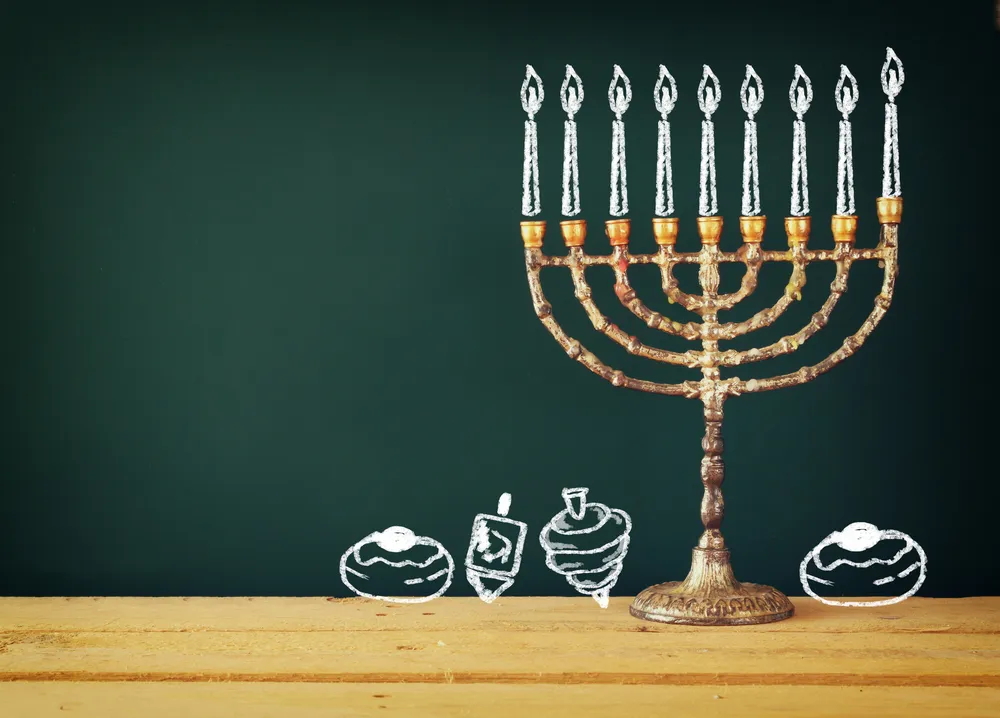
Today, Hanukkah is celebrated over eight nights with distinctive rituals and customs. Families light a special nine-branched menorah, known as a hanukkiah. Each night, one additional candle is lit, using the shamash, or helper candle, until all eight candles glow. In addition, food plays an important role in the celebration. Families prepare foods fried in oil, such as latkes and sufganiyot, to recall the miracle. Children also play traditional games like dreidel and receive small gifts.
Above all, Hanukkah symbolizes light overcoming darkness, faith triumphing over oppression, and the enduring right to religious freedom. Through its history and traditions, the festival continues to carry powerful meaning across generations.
