

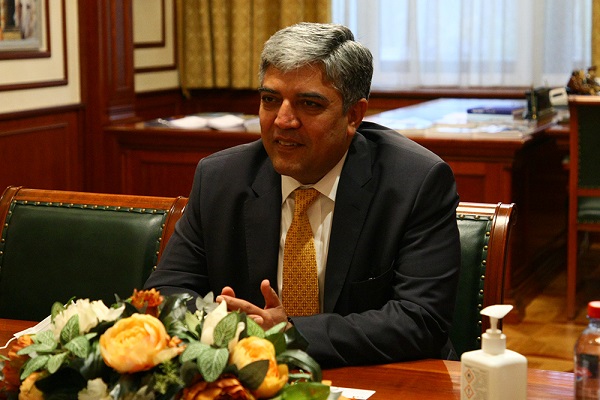

Pakistani Ambassador to Russia Shafqat Ali Khan was interviewed by Russia’s publicly financed international media outlets Sputnik and TASS, which reported on his comments in five separate articles. For the sake of those interested observers with limited time to follow all of this, especially if they’re understandably paying more attention to what’s happening in Afghanistan right now, the present piece will highlight the main points from his interviews and then briefly analyse their significance. Here are the most important policy pronouncements shared by Ambassador Khan followed by the author’s interpretation:
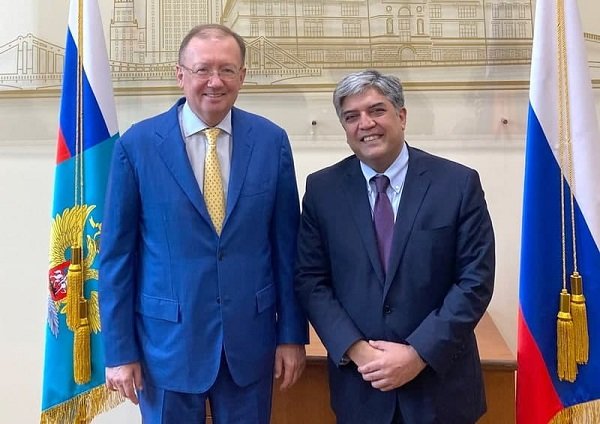
“Our relations are truly in a very strong position today, we have relationship based on trust which covers a wide area of cooperation: economy, politics, defence cooperation. Both sides are satisfied at the positive direction of our relations. This is a key priority of Pakistan’s foreign policy. And Russian friends who follow Pakistan know it is across all political parties, it is a common point that we want good relations with Russia. You can see that – the groundswell of positive opinion about Russia in Pakistan. And it is not an exaggeration.”
The rapid Russian-Pakistani rapprochement continues to proceed apace and is nowadays diversifying into other sectors than the defence one that originally brought them back together in 2014. Islamabad priorities ties with Moscow because it appreciates the Eurasian Great Power’s rising role in balancing the supercontinent’s affairs. There’s political unanimity on this front inside of Pakistan and this vision is genuinely popular with the Pakistani people too.
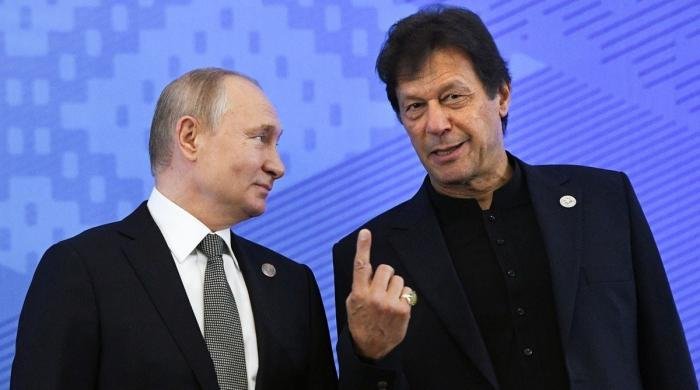
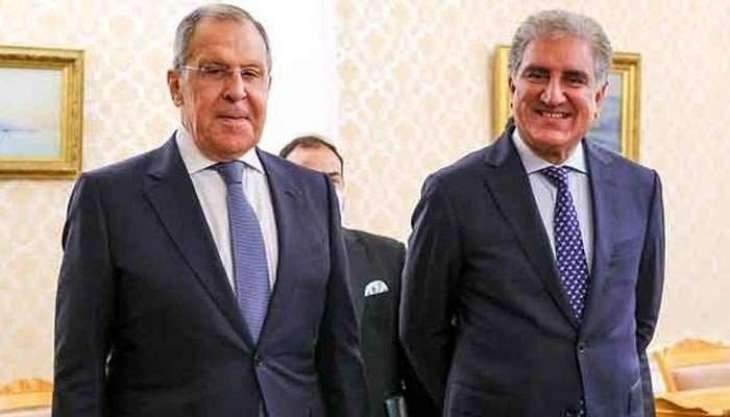
“In April, [Russian] Foreign Minister Lavrov visited Islamabad, it was a very successful visit. And then recently the two ministers spoke on telephone. Then President [of Russia Vladimir] Putin and Prime Minister [of Pakistan Imran Khan] spoke. There are some other visits in the pipeline at the senior level, but I cannot confirm because the dates are not confirmed yet.”
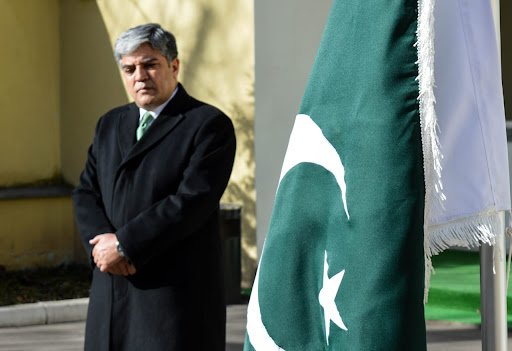
Ties will further develop following the planned visits that Ambassador Khan hinted at. It can only be speculated who’ll go where and when, but either way, it’s a positive sign that their governments are getting to know and therefore trust one another better. Well-wishers can only hope that closer people-to-people ties will eventually follow sometime in the future in order to add more robustness to bilateral relations.
“[The Extended Troika] is the fundamental forum, which is Pakistan, Russia, China, and the United States. That remains the key part of everything. And then, of course, we also have the Moscow format, which is more expanded, with more countries involved. And then, of course, there is the Shanghai Cooperation Organisation [that] also has been involved here.”
The three primary platforms within which Russia and Pakistan closely coordinate on Afghanistan are the Extended Troika, the Moscow peace talks, and the SCO. This shows how serious these top two regional stakeholders in Afghanistan’s stability are about jointly supporting that third country and getting their institutional partners to constructively contribute to this as well.
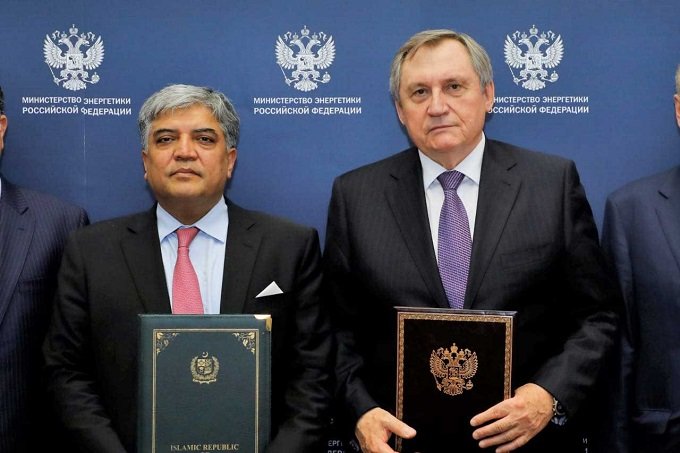
“About India’s joining, I have not seen the statement. There is a standing invitation for Iran to join the Troika Plus whenever it wants. So far, they have not taken a decision to join it … They have so far not responded, conveyed their interest in joining. But I haven’t seen Foreign Minister Lavrov’s statement that says that India will join the Troika plus format. For us, India is not a candidate for Troika plus.”
One point of divergence between Russia and Pakistan regarding their regional vision is Moscow’s belief that India should play a greater role in the Extended Troika, which Islamabad believes isn’t necessary. It’s natural that no set of partners will ever perfectly see eye to eye with one another on everything, and this issue likely won’t impede the steady growth of their relations though since bilateral ties are solid enough to prevent that.
“There has been discussion going on (about Pakistan’s suggestion to hold a meeting between foreign ministers of regional countries to discuss Afghanistan in the aftermath of the Taliban taking over Kabul), but there is nothing concrete yet as such in terms of who will be the participants, when it will take [place], whether the place is confirmed. I don’t have any information to share on that. But what I can tell you is there are some ideas about that. No concrete details yet.”
Pakistan continues to take the lead in promoting peace and stability in Afghanistan by attempting to assemble all responsible stakeholders that are concerned about that country’s future. These plans understandably take some time to organise, especially considering how busy their respective representatives are nowadays in dealing with this issue, but it’s indeed possible that something positive will eventually come out of these efforts. Should the meeting be held, then it’ll further strengthen Russian-Pakistani ties too.
“So it’s not that we have a kind of a control over Afghanistan, but geography, culture, history, and, of course, language and the fact that there are four million refugees living in Pakistan. That gives us some kind of a role, but not control over a situation. The solution and dealing with the challenge is a collective responsibility.”
Despite having very close ties with the Afghan people across all levels, Pakistan doesn’t “control” them nor the Taliban like some observers have falsely claimed. Islamabad can exert positive influence over some processes, but it cannot completely shape them, nor does it aspire to because the solutions should be multilateral.
“But we are not in the position to tell them exactly what to do. To us the process of reaching a settlement should not be important, for us the outcome should be important. There should be an inclusive government which would help Afghanistan finally arrive at a peaceful outcome.”
Pakistan pragmatically takes the stance that the outcome of Afghan stability – ideally through the eventual formation of an inclusive government – is more important than the process through which this is achieved. This signifies Islamabad’s sincere respect for its neighbour’s historical socio-political traditions.
“Our point is that it is going to be a problem because there is a limit to how much (refugees) we can take. If there are too many refugees from Afghanistan, we will be the most affected but there will be other countries affected. The refugees will go to Iran, Europe, Central Asia. To solve this, you try to work out a political settlement in Afghanistan.”
One of Pakistan’s goals in assembling all responsible stakeholders on Afghanistan is to multilaterally deal with the scenario of a regional refugee crisis. The South Asian state can’t absorb any more refugees after already hosting several million of them, which is why it’s important for everyone else to step up and proactively promote a sustainable political settlement in Afghanistan so as to address the root causes for migration.
“I hope [that it is] not [NATO attempting to shift all responsibility for Afghanistan on Pakistan] because western countries understand that the withdrawal of forces does not mean that they have washed their hands. They can’t. Refugees are just one manifestation. There can be darker consequences: drugs, human smuggling, narcotics, terrorism.”
The regional security situation is extremely sensitive right now and will accordingly require multilateral coordination to effectively address. Unconventional threats abound beyond the realm of refugees so it’s important for everyone to work together to prevent the worst-case scenarios from transpiring. Pakistan will take the lead in these respects, but it can only succeed in close coordination with its partners.
“And finally, one last point is that some foreign powers may think that it is only Pakistan’s problem. No, it’s not just our problem. Tomorrow a person fighting against Pakistan can join ISIS* and start attacking others. So overall, this problem has to be rooted out. But the key, one first step, is stability in Afghanistan for that.”
Amb. Khan felt it necessary to emphasise how his country cannot be expected to deal with these unconventional threats on its own. The contemporary regional security matrix is such that while Pakistan might be the first victim of such threats, it surely won’t be the last so it’s in everyone’s interests to work together now.
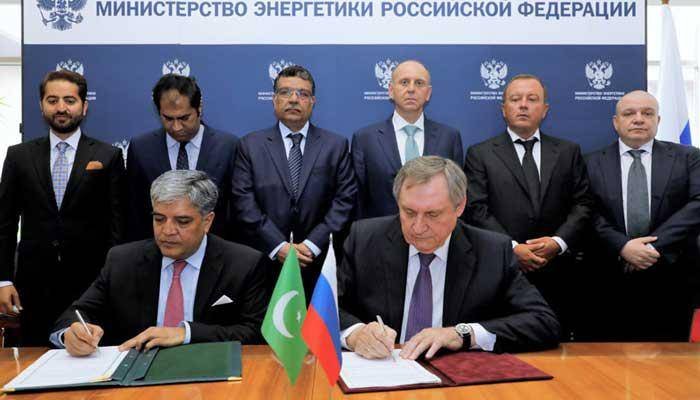
“I will not talk about procurement issues at this point of time because that is a sensitive matter. There is a legal foundation for defense cooperation: we have the main agreement, there are some other agreements and yet some more agreements are under negotiation between the two sides. As they complete we will tell you. So far, we have been historically importing in aviation sector, and also in terms of helicopters. So, there is already a long tradition of working with the Russian defense industry. But I think it will get much richer in the years ahead.”
The Kremlin acutely understands Pakistan’s unconventional security needs and is therefore working to expand relevant military-technical cooperation as part of their joint efforts to stabilise the uncertain regional situation. This speaks to Russia’s confidence in practicing a much more balanced policy towards South Asia than in years past where it neglected legitimate Pakistani security interests due to its narrow focus on its Indian ally’s interests. Moscow has evidently realised that its “military diplomacy” isn’t a zero-sum game but can be mutually beneficial for all since ensuring Pakistan’s unconventional security stabilises South Asia as a whole.
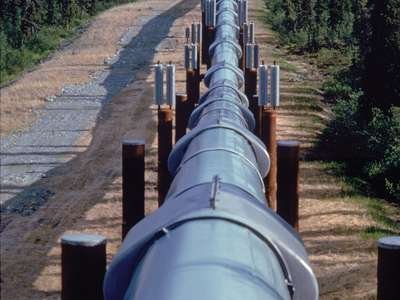
“Two rounds of commercial discussions have taken place (on the Pakistan Stream Gas Pipeline) and both sides are very satisfied with the progress achieved so far. I don’t know the details but the bulk of that is clear. Once they finish it, and then of course the date will come up for the start of construction. But we are very close to that.”
Bilateral relations with Russia have veritably expanded beyond the Afghan-related political and defensive fields to include strategic energy cooperation through the impending construction of the Pakistan Stream Gas Pipeline, which will serve as the flagship project of Russian-Pakistani economic ties.
“Ten million doses of Sputnik V we are going to get from Russia…Just few days back our authorities announced that the first one million doses of Russian vaccine Sputnik V are already there…We have made our interest known (in producing Sputnik V), the two technical sides are talking to each other, but right now the priority was procurement…And I think we were one of the first embassies where everyone got it and frankly it saved all of us from any trouble.”
Building upon the preceding observation above, bilateral relations are now rapidly expanding into the epidemiological sphere that directly affects people’s lives. Pakistan is becoming a major procurer of Sputnik V and intends to hopefully produce some of this treatment too. It’s also important to point out that the Pakistani Embassy in Russia was one of the first to receive Sputnik V too since this shows just how much Islamabad trusts Moscow that it would prioritise its diplomats taking this vaccine before most other countries’ there did.
Ambassador Khan’s interviews were extremely important because they clarified Pakistan’s stance towards the rapidly unfolding events in Afghanistan and were also an up-to-date assessment of bilateral relations with Russia. Russian-Pakistani ties continue to strengthen and expand into multiple domains, be they multilateral one regarding joint efforts to stabilise Afghanistan or the energy and epidemiological ones that stand to most immediately improve the Pakistani people’s lives. It’s time for observers the world over to wake up and realise that the Russian-Pakistani partnership is among the most promising ones in modern-day Eurasia.
