

A widespread strike brought daily life to a halt across the West Bank on Wednesday. Palestinian businesses, schools, and public institutions closed in protest against a new law passed by Israel allowing the death penalty for certain Palestinian prisoners.
The strike was called by the Fatah movement, led by Mahmoud Abbas. The protest aimed to show strong opposition to the controversial legislation.
Cities across the territory observed the shutdown. Streets were largely empty. Shops remained closed. Public life slowed significantly as people expressed anger and concern over the law.
Major Cities Witness Complete Shutdown
In key cities like Ramallah, Hebron, and Nablus, markets and shopping centers were closed. Universities and schools also suspended operations as part of the strike.
Ramallah, which serves as the administrative center of the Palestinian Authority, saw widespread participation. Main markets and commercial hubs remained shut throughout the day.
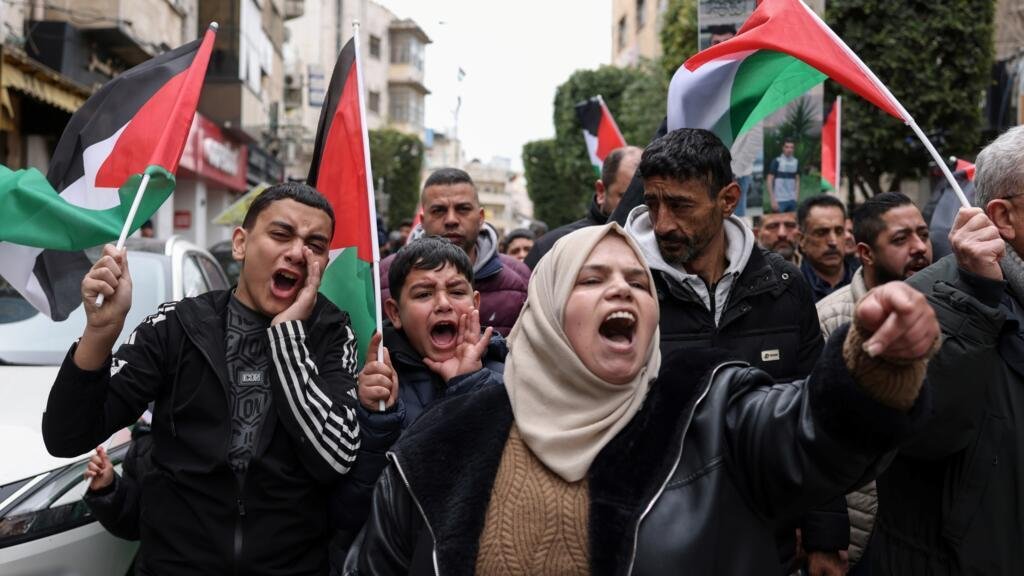
Protests were also held in several areas. Demonstrators gathered to voice their opposition. Many marched against the law and criticized Israeli leadership.
The law has been backed by Itamar Ben-Gvir, a key figure in Israel’s current government. His support for the legislation has drawn strong criticism from Palestinians.
Public Anger Grows Over Controversial Law
Many Palestinians described the law as unfair and discriminatory. Protesters said it targets Palestinians under a separate legal system. They argue that it reflects unequal treatment under Israeli rule.
Under the new legislation, Palestinians in the West Bank convicted of deadly attacks by military courts could face execution. This would be the default punishment in such cases.
Critics say this creates a harsher legal framework. Palestinians are typically tried in military courts, unlike Israeli citizens who go through civilian courts. This difference has raised concerns about justice and equality.
Residents expressed deep frustration. Many said the law ignores humanitarian values. Others pointed to the widespread impact of imprisonment on Palestinian families.
The issue resonates deeply in Palestinian society. Many families have relatives in Israeli prisons. This has made the law particularly sensitive and emotional.
Protests Intensify at Key Checkpoints
Demonstrations also took place at major checkpoints. At the Qalandia checkpoint, protesters burned tyres and blocked roads. The checkpoint is one of the busiest crossings between the West Bank and Jerusalem.
Images shared on social media showed rising smoke and crowds of protesters. Security forces were placed on alert in several areas.
The law does not apply retroactively. However, critics say it still highlights a system of unequal justice. They argue it could lead to further tensions in the region.
Palestinian leaders have warned of escalating unrest. They say the measure could increase instability and deepen divisions. International observers are also monitoring the situation closely.
The strike reflects growing resistance among Palestinians. It shows widespread opposition to policies seen as discriminatory. The situation remains tense as protests continue.

