

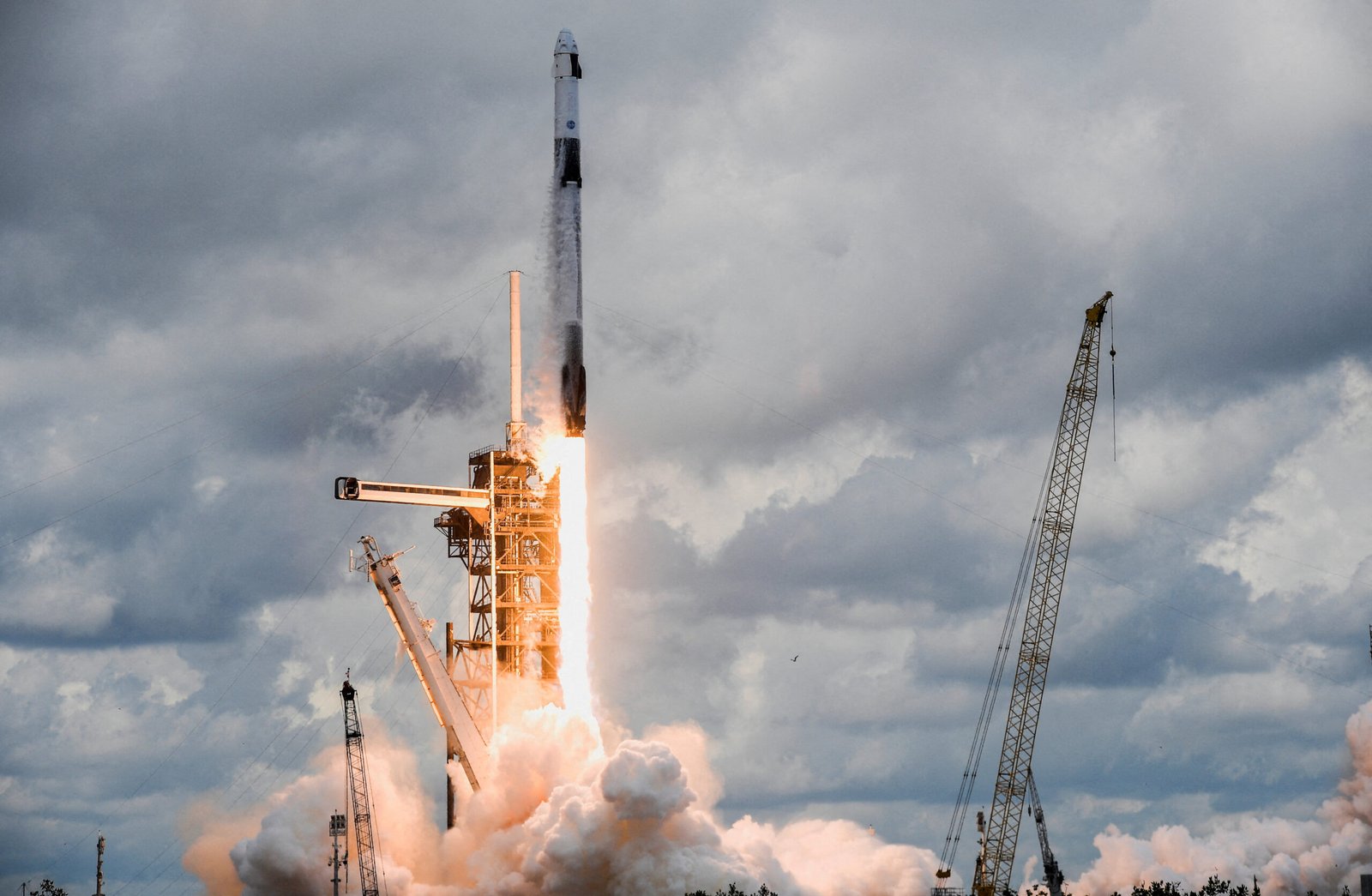

An Indian rocket carrying 16 payloads, including an Earth observation satellite, went off course shortly after liftoff on Monday, dealing a fresh setback to the Indian Space Research Organisation’s (ISRO) most reliable launch vehicle.
The incident marks the second major disappointment for the Polar Satellite Launch Vehicle (PSLV) in about eight months, raising concerns over its long-standing record of dependability.
The PSLV-C62 mission lifted off from the Satish Dhawan Space Centre in Sriharikota at 10:18 a.m. local time, carrying the EOS-N1 Earth surveillance satellite along with 15 additional payloads.
These included equipment and experiments developed by Indian startups as well as academic institutions from India and abroad, reflecting ISRO’s growing collaboration with the private sector and global partners.
According to ISRO’s mission control, the rocket performed normally through most phases of its flight. However, an unexpected disturbance occurred toward the end of the PS3 stage, causing the vehicle to deviate from its intended trajectory.
ISRO confirmed the anomaly in an official statement, saying a detailed analysis had been initiated to determine the cause of the failure. No further details were provided regarding the final status or location of the rocket and its payloads.
The setback is a blow to the PSLV’s reputation, which has been built on a success rate exceeding 90% across more than 60 missions. Often referred to as ISRO’s “workhorse,” the PSLV has played a pivotal role in India’s space programme over the past two decades. It has been used to launch several landmark missions, including Chandrayaan-1, India’s first lunar probe, and the Aditya-L1 solar observatory.
Beyond flagship scientific missions, the PSLV has also been central to India’s ambitions of expanding commercial and private participation in space activities.
The latest failure could prompt closer scrutiny of the vehicle as ISRO seeks to maintain confidence among international customers and emerging private players. Officials are expected to release more information once the investigation into the anomaly is complete.
