
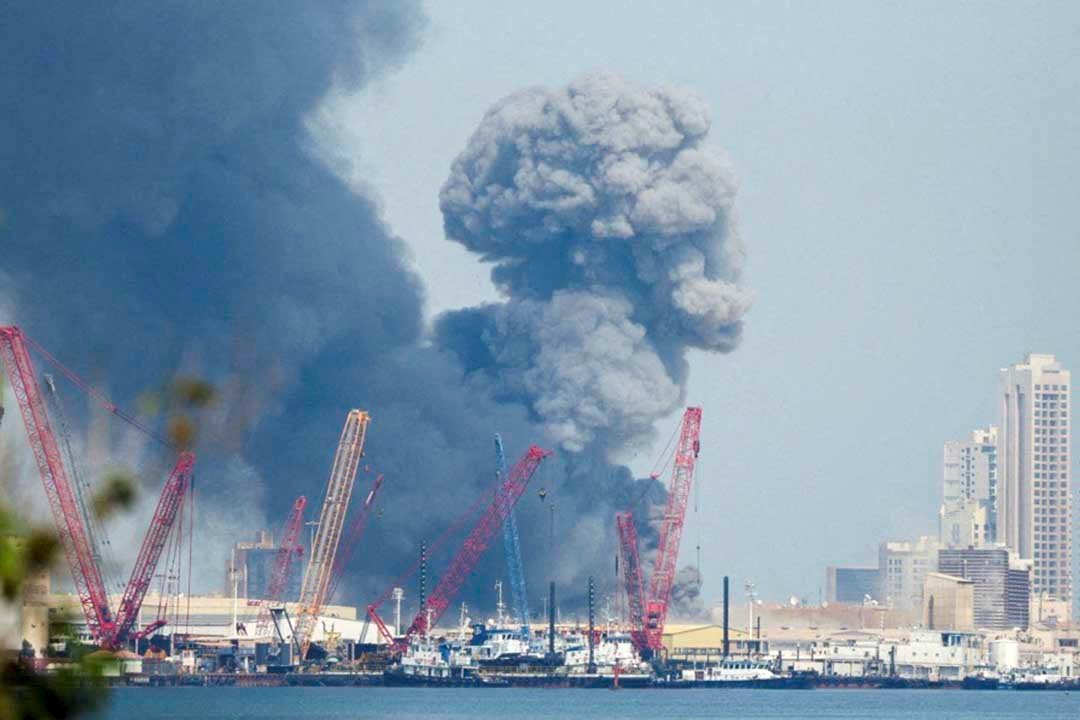

As the war between Iran and the US-Israel escalates, the environmental impact of the war is proving to be more difficult to overlook. A recent assessment has shown that the first 14 days of the war resulted in the emission of 5.1 million metric tonnes of carbon dioxide. This is more than the emission produced by Iceland.
This assessment was carried out by the Climate and Community Institute team, along with other academics from around the world. In addition to this assessment, satellite imaging has also shown a dramatic increase in gas flaring and methane leaks.
Destruction driving hidden emissions
However, surprisingly, the highest contributor of emissions is not the fuel used by the military. It is, rather, the destruction of civilian infrastructure.
Moreover, thousands of structures, including homes, schools, and hospitals, have been damaged or destroyed. This has, in turn, caused almost half of all the emissions that have been recorded so far.
Meanwhile, the strikes on oil installations have also caused a negative impact on the situation. Strikes on fuel depots have caused massive fires, which have sent toxic smoke into the atmosphere. In some areas, black rain has even fallen, which is a major health hazard for the residents.
Military activity and long-term risks
In addition to this, military activities have used huge quantities of fuel. Planes, drones, and naval forces have used millions of liters of fuel within a matter of days. This has added to the overall carbon footprint of this war.
In the future, experts predict that reconstruction activities will result in increased emissions. As seen in previous wars, reconstruction activities can be long-term and result in a high climate cost. Thus, the long-term result of this war may be much higher than what is evident today.

