

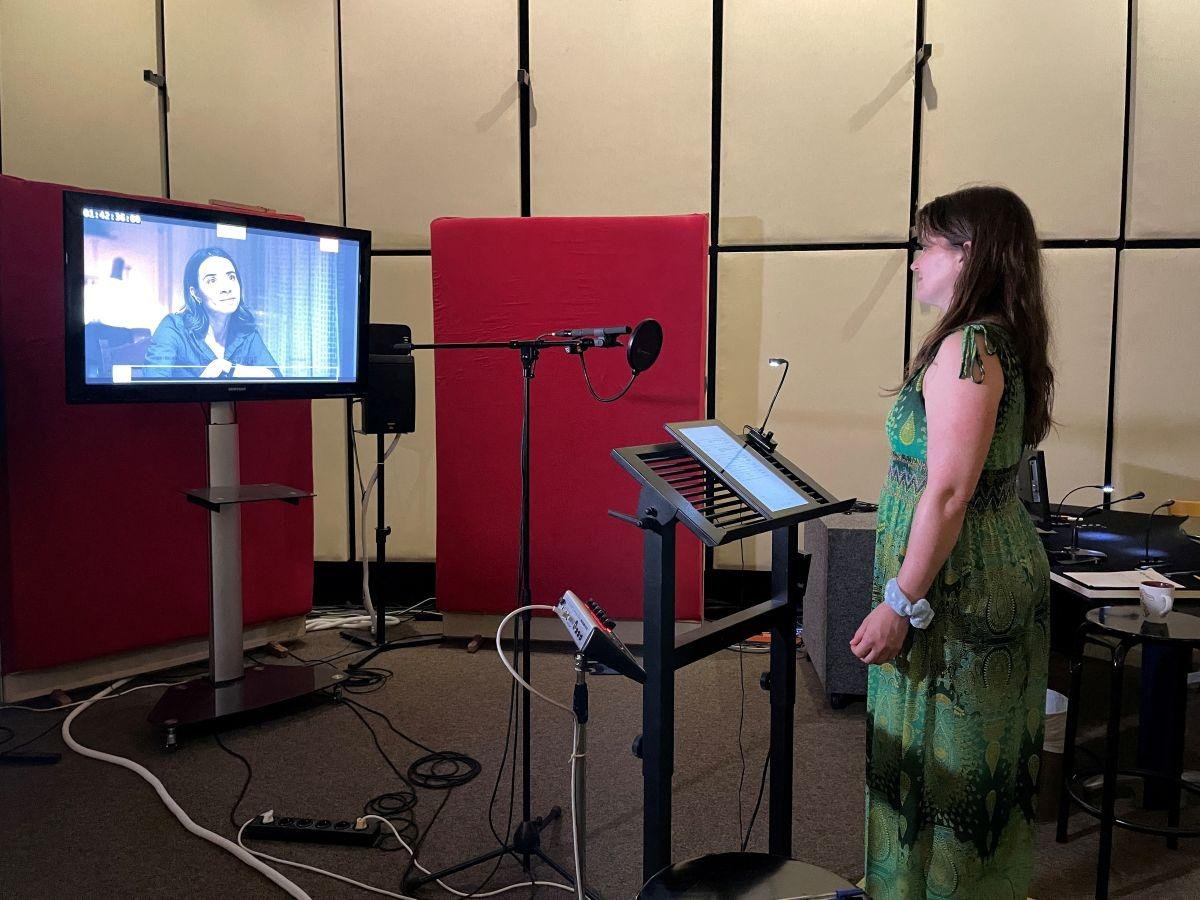

PARIS/BERLIN — Boris Rehlinger may pass unnoticed on Paris streets, but his voice is instantly familiar to French audiences as the dubbing artist behind Ben Affleck, Joaquin Phoenix, and even Puss in Boots. Now, Rehlinger is sounding the alarm about the growing threat artificial intelligence poses to his profession.
“I feel threatened, even though my voice hasn’t yet been replaced by AI,” he told Reuters, as part of the #TouchePasMaVF initiative, a French campaign to protect human-created dubbing from automation.
Voice acting in film and television is a carefully crafted process, involving actors, translators, dialogue writers, and sound engineers to make foreign-language content seamless for local audiences. The demand for dubbed content has skyrocketed with the rise of global platforms like Netflix, which rely heavily on dubbing to deliver international hits like Squid Game and Lupin.
According to consumer research firm GWI, 43% of viewers in Germany, France, Italy, and the UK prefer dubbed content over subtitles. The dubbing industry is projected to grow to $7.6 billion by 2033, but that growth is attracting increased interest in AI-powered alternatives that are faster and cheaper.
Voice Actors Demand Protection
As AI-generated voices become more sophisticated, European voice actors are urging lawmakers to introduce regulations. Actor Cedric Cavatore, a member of Germany’s VDS voice actors’ association, warned:
“When intellectual property is no longer protected, people stop creating—because it will be stolen tomorrow.”
A VDS petition demanding explicit consent, fair compensation, and transparent labelling for AI-generated content has gained over 75,000 signatures. VDS also works with United Voice Artists, a global network of 20,000+ professionals advocating for ethical AI use.
In Hollywood, AI has been at the center of creative disputes. The SAG-AFTRA union recently signed contracts with gaming studios that include protections for voice and motion capture actors, acknowledging AI’s growing role in the entertainment industry.
Studios Experiment with Hybrid Models
Some studios are cautiously testing AI tools. German studio Neue Tonfilm München, which worked on Conclave and is currently dubbing Guy Ritchie’s new film, believes AI can assist, but not replace, traditional dubbing.
“The real fear is that AI will lower standards just to cut costs,” said managing director Eberhard Weckerle.
Earlier this year, Viaplay faced backlash after viewers criticized the German-dubbed version of the Polish crime series Murderesses for its monotonous, AI-generated dialogue. The streamer had used a hybrid model developed by Israeli startup DeepDub, blending synthetic and human voices.
Despite the negative response, Viaplay said it would continue using subtitles as its primary format and reserve dubbing for selected titles.
‘Interest Is Huge’
Startups like Audio Innovation Lab and Flawless AI are pioneering new dubbing models using AI. Audio Innovation Lab, which dubbed the Cannes entry Black Dog from Chinese to German, alters the original actor’s voice to match the target language while retaining emotional depth.
“Humans will always be needed—for emotion, context, and nuance,” said CEO Stefan Sporn, “just not to the same extent.”
Flawless AI, meanwhile, brands itself as an ethical AI company that works with local voice actors while using its tools to match lip movements and improve realism.
“When used right, AI can be a silver bullet for modern filmmaking,” said co-CEO Scott Mann.
Still, for traditional voice actors like Rehlinger, the stakes are personal. “We don’t want to block innovation,” he said, “we just want to ensure artists aren’t erased in the process.”
