

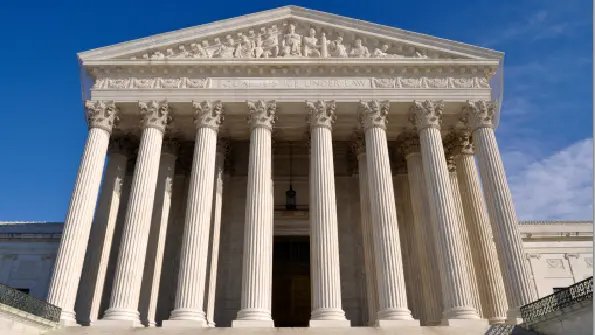

The Supreme Court of the United States (SCOTUS) has agreed to hear cases challenging FCC fines totaling nearly $200 million against Verizon, AT&T, T-Mobile, and other wireless carriers for failing to protect customer location data.
The fines—$47 million for Verizon, $57 million for AT&T, and $80 million for T-Mobile—raise a critical question: can federal agencies impose civil penalties without offering a jury trial?
The legal challenge stems from a 2024 SCOTUS ruling in SEC v. Jarkesy, which required that civil penalties in fraud cases be pursued in federal court rather than through internal agency tribunals. Verizon and AT&T argue the FCC’s fines violate their Seventh Amendment rights to a jury trial.
The lower courts have been divided. The 2nd U.S. Circuit Court of Appeals upheld the fine against Verizon, while the 5th U.S. Circuit Court of Appeals overturned AT&T’s penalty. By agreeing to hear both cases together, the Supreme Court aims to resolve this conflict and clarify the FCC’s authority to enforce its regulations.
In a petition to SCOTUS, Solicitor General D. John Sauer emphasized the stakes: the decision “deprives the Commission of one of its most important regulatory remedies and severely impairs the agency’s ability to enforce federal communications law,” according to The Hill.
The cases could have wide-ranging consequences for regulatory enforcement, potentially limiting the ability of federal agencies to impose fines without jury trials and reshaping how major industries comply with federal law.
