

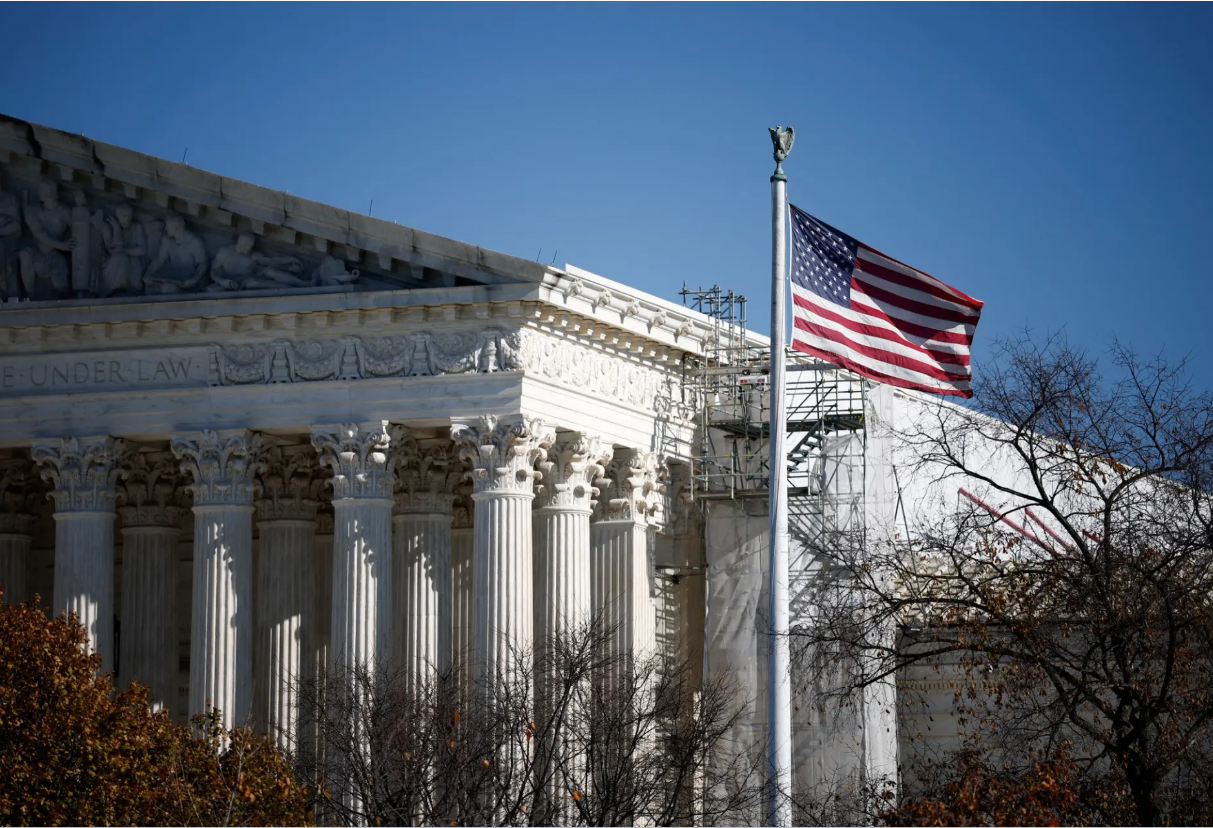

The US Supreme Court is set to examine the limits of presidential powers as it begins its fall term, focusing on cases tied to former President Donald Trump. Legal experts say the term could determine whether the Court acts as a check on executive authority or largely approves presidential actions.
Erwin Chemerinsky, dean of the University of California Berkeley Law School, highlighted that the key question is whether the Court will rein in Trump’s unprecedented expansion of powers or simply endorse his decisions.
Tariffs and Executive Authority
A blockbuster case this term concerns Trump’s unilateral imposition of hundreds of billions in tariffs under the International Emergency Economic Powers Act. Lower courts ruled against Trump, arguing he lacked statutory authority. The Supreme Court will hear full briefing and oral arguments on November 5, with significant financial consequences if Trump loses.
Samuel Bray, a law professor at the University of Chicago, called the case critical, noting that the government may need to refund billions depending on the Court’s ruling. Other high-profile cases later in December and January will consider Trump’s authority to fire members of the Federal Trade Commission and Federal Reserve Board governor Lisa Cook.
Voting Rights Under Review
On October 15, the Supreme Court will consider a voting rights case in Louisiana. Non-African American voters challenge the creation of a second Black majority congressional district, claiming unconstitutional racial gerrymandering.
The outcome could affect redistricting nationwide and potentially weaken sections of the Voting Rights Act designed to ensure majority-minority representation. Sophia Lin Lakin of the ACLU emphasized that stakes are extremely high for both Louisiana and future redistricting cases.
Transgender Athlete and Religious Freedom Cases
The Court will also hear cases challenging state bans on transgender girls participating in girls’ sports in Idaho and West Virginia. Legal observers note these cases could influence broader debates over gender identity and athletic eligibility.
In another notable case, Rastafarian Damon Landor seeks redress after his dreadlocks were forcibly cut in prison. The case raises complex issues of religious freedom and the ability to sue government officials for damages. Historically, the Court has been cautious about permitting claims against individual officials, though it often supports plaintiffs in religious liberty cases.
Shadow Docket and Executive Oversight
Much of Trump’s legal record has been shaped by the “shadow docket,” where decisions are issued quickly, without oral arguments, and minimal explanation. Experts describe it as the legal equivalent of fast food, allowing the six conservative justices to reverse lower court rulings that found Trump’s actions unconstitutional.
Cecillia Wang of the ACLU criticized the emergency docket, noting its frequent use to green-light administration policies. Despite past trends, this term’s high-profile cases, including the tariffs dispute, will receive full consideration, testing the Court’s role in checking presidential power.
This Supreme Court term could have profound implications for executive authority, economic policy, voting rights, and civil liberties. Legal analysts are closely watching whether the Court will continue its conservative trend or exercise stricter oversight of presidential actions.
The term represents a critical judicial test of constitutional checks and balances, potentially shaping the limits of presidential power for years to come.
