

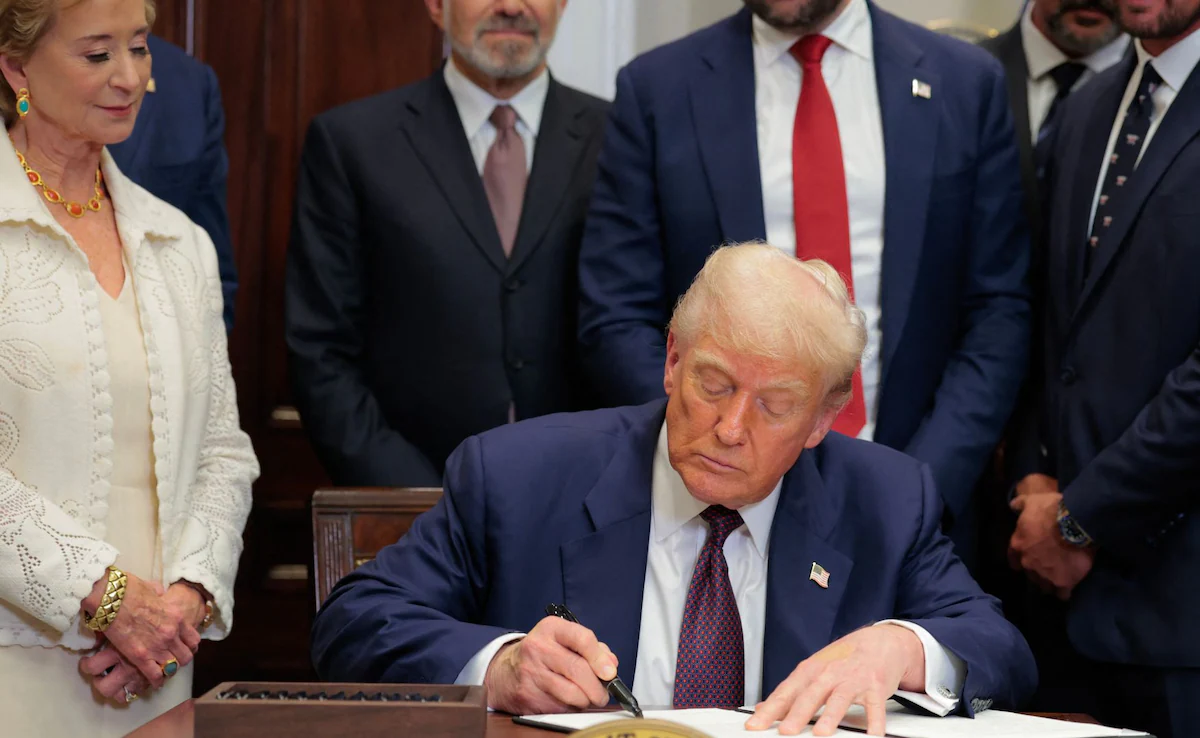

In a dramatic escalation of trade tensions, United States President Donald Trump has imposed an additional 25 percent tariff on Indian imports, taking the total tariff rate to 50 percent. The move comes in response to India’s continued purchase of oil from Russia despite the ongoing war in Ukraine, which Washington sees as indirectly financing Moscow’s war effort.
In an executive order issued from the White House on Wednesday, Trump stated that India is “currently directly or indirectly importing oil from the Russian Federation.” He deemed it “necessary and appropriate” to penalize India for these actions by raising tariffs on goods imported from the country. The additional 25 percent levy will take effect in three weeks, adding to a previous 25 percent tariff already set to begin on Thursday.
The latest tariff hike exempts certain sectors, including steel, aluminium, pharmaceuticals, and other goods subject to separate duties. However, it still marks a significant blow to Indian exports, especially amid ongoing economic uncertainty.
Trump had been signaling this move for days. In a recent interview with CNBC, he criticized India for maintaining high tariffs on American goods and for what he called a one-sided trade relationship. “India has not been a good trading partner,” he said, accusing New Delhi of “fuelling the war machine” in Russia.
India’s Ministry of External Affairs (MEA) responded with strong objections, accusing the U.S. and EU of hypocrisy. It pointed out that Western nations themselves continue to import energy and other resources from Russia. The MEA listed U.S. imports of uranium hexafluoride, palladium, fertilizers, and chemicals from Russia, calling the targeting of India “unjustified and unreasonable.”
India remains the world’s third-largest oil importer and the largest buyer of seaborne Russian crude, a key revenue stream for Moscow as the Ukraine war enters its fourth year.
Tensions have been brewing for months. Trump had earlier hinted at imposing penalties on India while simultaneously cozying up to Pakistan. Last week, he announced a trade deal with Islamabad that would reduce tariffs on Pakistani goods. This came just weeks after a brief but deadly border conflict between India and Pakistan, further straining New Delhi’s relations with Washington.
Despite once showcasing a strong rapport with Indian Prime Minister Narendra Modi, Trump’s tone has shifted dramatically. He even dismissed India’s economy as “dead in the water” and ridiculed Indian support for his re-election, including the existence of a temple in India dedicated to worshipping him.
Caught in the crosshairs of Washington’s global sanctions push, India is now assessing its options. Officials in New Delhi say they are consulting stakeholders — a reference to industries and businesses that now fear the fallout from Trump’s aggressive trade posture.
With the 2025 Asia Cup and U.S. elections on the horizon, the economic and political ramifications of Trump’s move could reverberate far beyond trade halls — reshaping diplomatic alliances and regional power dynamics in South Asia.
