

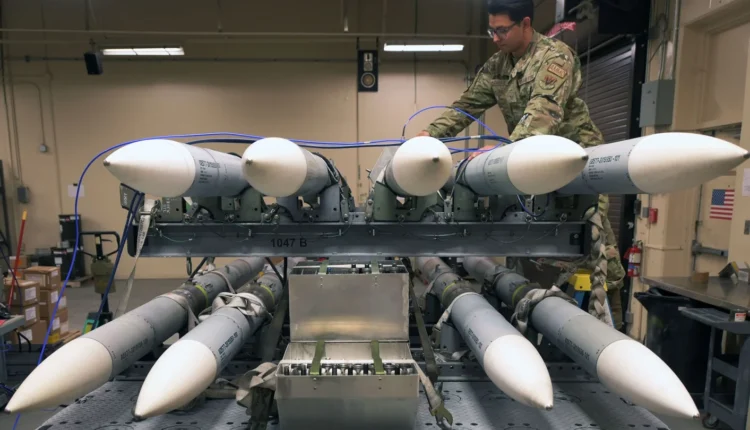

The United States has approved the sale of advanced air-to-air missiles to the Pakistan Air Force (PAF), marking a significant step in renewed military collaboration between the two countries. Under the deal, Pakistan is set to receive the AIM-120D-3 Advanced Medium-Range Air-to-Air Missiles (AMRAAMs) — the latest and most sophisticated variant — by 2030.
The contract, valued at $2.5 billion, was awarded to Raytheon Company and will include production of AMRAAMs for Pakistan, Turkiye, and other US partners, according to the US Department of War.
The AIM-120D-3 missiles are designed for beyond-visual-range (BVR) engagements, capable of neutralizing enemy aircraft and incoming missiles with enhanced accuracy and extended reach.
Defense analysts have highlighted that these upgrades will significantly improve the strike capability and air defense potential of Pakistan’s F-16 fleet, replacing the older AIM-120C-5 versions supplied with the Block 52 aircraft in 2010. The acquisition is seen as a critical step in modernizing Pakistan’s air defense capabilities.
Pakistan had reportedly been seeking next-generation AMRAAMs for several years to align its air capabilities with regional developments. The breakthrough followed high-level meetings in July, including a visit to Washington by PAF Chief Air Marshal Zaheer Ahmed Baber Sidhu, who held discussions with senior US military and political officials.
Additionally, Field Marshal Asim Munir engaged with US President Donald Trump and top defense officials, signaling a renewed phase of practical cooperation in military affairs.
Inter-Services Public Relations (ISPR) Director General Lt Gen Ahmed Sharif Chaudhry emphasized Pakistan’s defense strategy focuses on technological efficiency, operational effectiveness, and self-reliance.
Speaking to Bloomberg, he highlighted Islamabad’s pragmatic approach to modernization, combining domestic defense technology with advanced platforms sourced from both eastern and western countries. He stressed that Pakistan remains open to acquiring all types of technology, whether indigenous or foreign, as part of a balanced strategy to strengthen its defense capabilities.
