
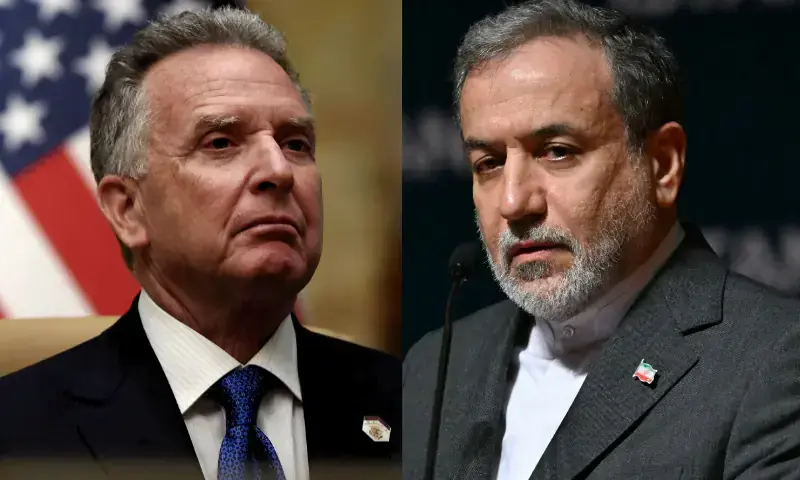

Washington — Reports of renewed communication between US and Iranian officials have emerged, although both sides offer sharply different accounts of the exchanges. Axios reported that US special envoy Steve Witkoff and Iranian Foreign Minister Abbas Araghchi recently resumed direct messaging, citing American and regional sources.
However, uncertainty surrounds the substance and origin of the outreach. According to Axios, Araghchi initiated contact and focused on ending the conflict. In contrast, Drop Site News claimed Witkoff sent messages that Iranian officials chose to ignore. Meanwhile, a US official insisted Washington is not actively engaging Tehran despite incoming messages.
Conflicting narratives cloud diplomatic signals
Araghchi publicly rejected claims of recent communication, stating his last contact occurred before what he described as an “illegal military attack” that derailed diplomacy. Furthermore, he argued that reports suggesting otherwise aim to mislead oil markets and public perception.
On the other hand, President Donald Trump acknowledged that Iranian figures had reached out but questioned their authority. He emphasized uncertainty over whether those initiating contact could negotiate meaningfully. Nevertheless, he left the door open, noting that dialogue can sometimes yield positive outcomes.
Limited contact still signals diplomatic testing
Even so, analysts view the mere possibility of direct exchanges as significant. Historically, US–Iran negotiations have relied on intermediaries such as Oman before evolving into formal talks. Therefore, any direct line — even informal — suggests both sides may be cautiously probing diplomatic options.
At present, no structured negotiations exist, and neither side has confirmed sustained engagement. Still, these reports indicate that, despite escalating tensions, neither Washington nor Tehran has fully abandoned diplomacy.

