
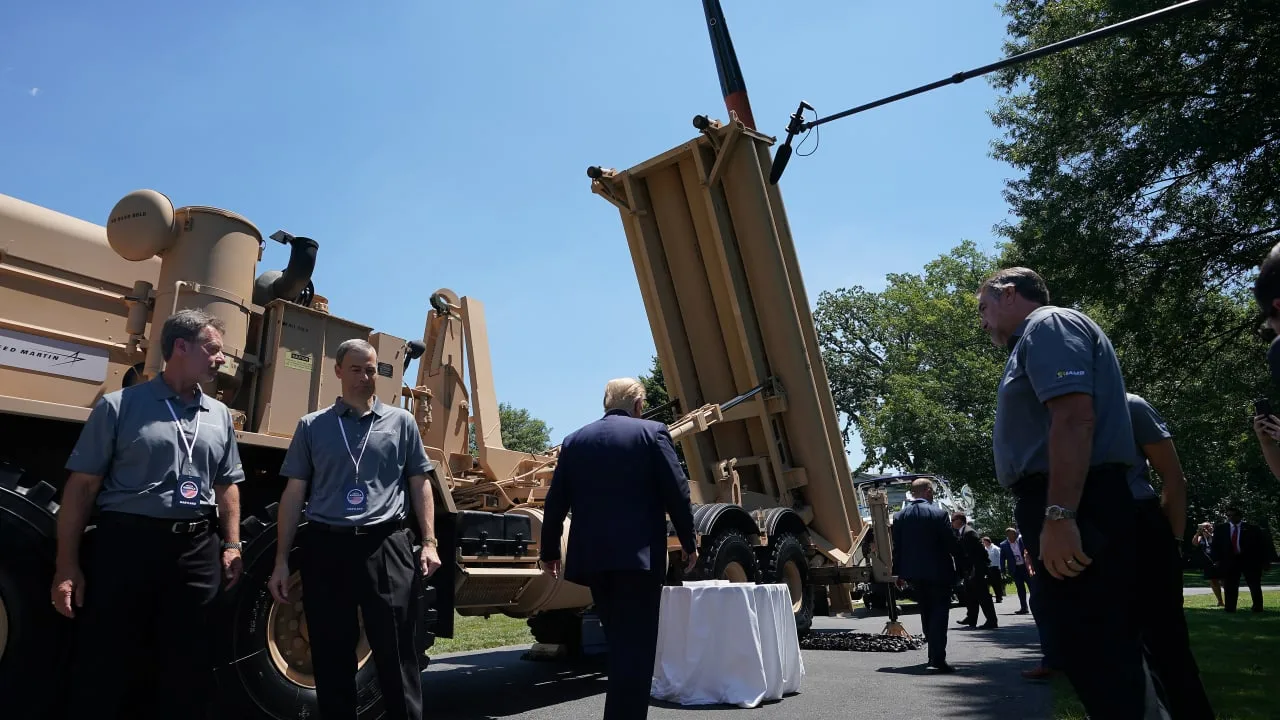

Washington: A recent US Congressional study has raised concerns about dwindling stocks of THAAD missile interceptors following intensive use during Operation Epic Fury. The report warns that the high rate of interceptor deployment has significantly reduced already limited reserves, potentially affecting future military readiness.
Moreover, the study highlights that THAAD systems achieved an interception success rate of around 90% against Iranian ballistic missiles and drones, particularly in the UAE. This performance closely matches Israel’s Arrow 3 system, which operates as part of a layered missile defense strategy.
Stockpile strain and slow replenishment timeline
However, heavy usage has strained supplies. The report notes that THAAD systems carried out 92 interceptions during operations defending Israel, out of an estimated stockpile of 632 interceptors. Analysts estimate that replenishing these stocks could take between three and eight years, with each interceptor costing about $12.7 million.
At the same time, Patriot systems fired 943 interceptors in just four days, equivalent to roughly 18 months of production. Current annual output stands at around 620 interceptors, underscoring the pressure on supply chains. Experts warn that while offensive capabilities remain strong, defensive resources such as interceptors and sensors are becoming critical constraints.
Meanwhile, US and Israeli forces continue to rely on a coordinated, multi-layered defense system. Military officials prioritize intercepting threats with Arrow 3, followed by Arrow 2, and then systems like David’s Sling or THAAD if needed.
In addition, a joint US-Israeli command center determines which system to deploy based on radar data and projected impact zones. Despite progress, analysts say operations have only partially reduced Iran’s missile capabilities, suggesting weeks of continued engagement may be required.

