
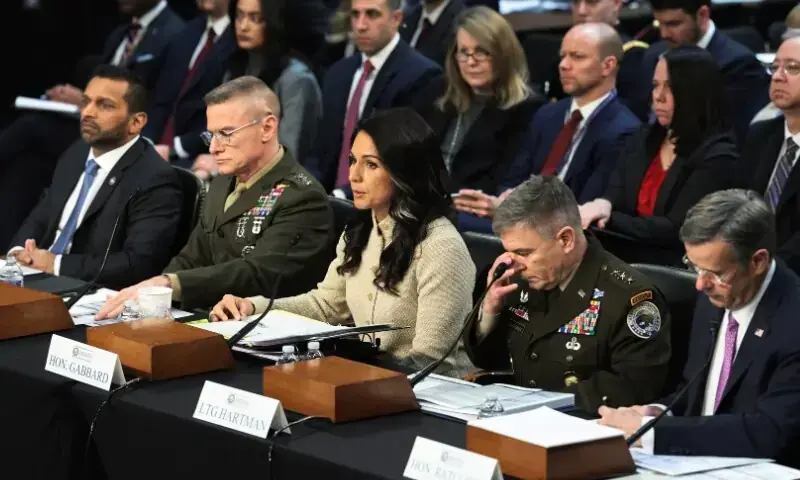

The United States intelligence community has assessed that Iran is not rebuilding its nuclear enrichment capabilities following strikes by the US and Israel last year, according to Director of National Intelligence Tulsi Gabbard.
In written testimony submitted to the Senate Intelligence Committee, Gabbard stated that Iran’s enrichment programme had been “obliterated” during the June 2025 operation and that no efforts had been detected to restore it. Consequently, the assessment appears to challenge one of President Donald Trump’s key justifications for supporting military action against Tehran.
However, Gabbard did not read that portion during her public testimony. When questioned, she said time constraints prevented her from presenting the full statement, while not disputing its contents. Senator Mark Warner criticised the omission, arguing that it contradicted the administration’s position.
Meanwhile, Trump and senior officials have repeatedly cited Iran’s nuclear ambitions as a central reason for abandoning diplomatic negotiations in favour of military action. They have maintained that Iran posed an immediate threat despite the strikes.
Tehran has consistently denied seeking nuclear weapons. Additionally, independent monitors have long argued that even if Iran pursued such capabilities, it would not pose an immediate threat in the short or medium term.
Furthermore, diplomatic sources have raised questions about the necessity of the war. Sayyid Badr Albusaidi, who mediated earlier talks, rejected claims that negotiations had stalled. Similarly, Jonathan Powell reportedly assessed that Iran’s position did not justify urgent military action.
The findings highlight ongoing debate over the rationale and legality of the conflict.

