

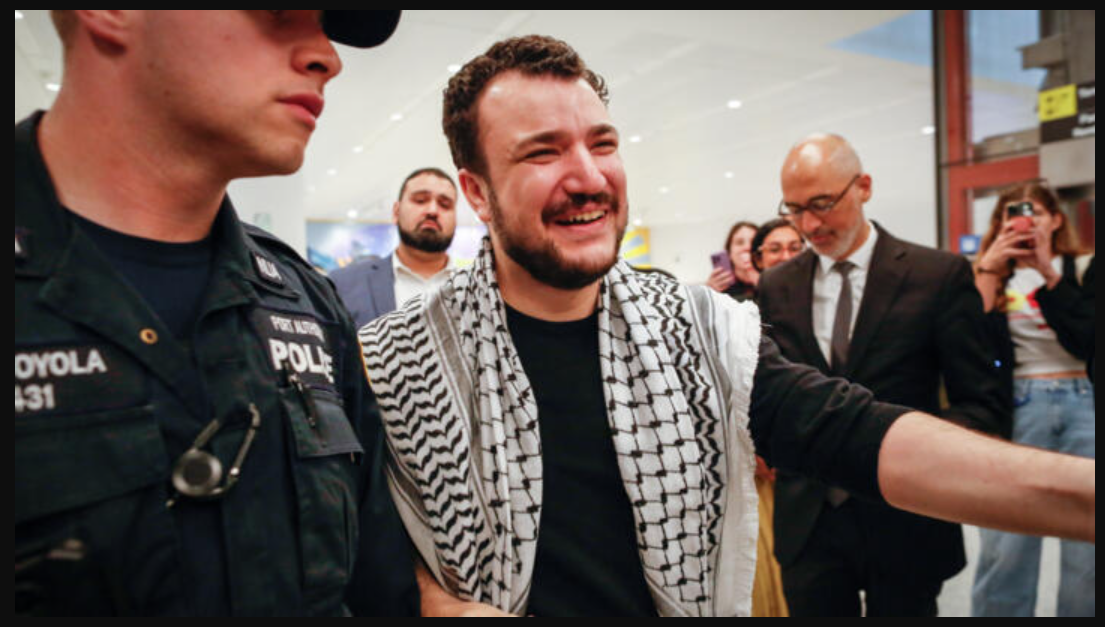

A federal appeals court has ruled that a judge lacked jurisdiction to release Mahmoud Khalil from immigration detention. The decision is a legal victory for the Trump administration, which seeks to deport the pro-Palestinian activist. The ruling opens the possibility for Khalil to be rearrested after the dismissal of his lawsuit challenging his detention.
Appeals Court Cites Immigration Law
The Philadelphia-based 3rd Circuit Court of Appeals issued a 2-1 decision on Thursday. Judges Thomas Hardiman and Stephanos Bibas wrote that under the Immigration and Nationality Act, Khalil’s claims should be heard through an appeal of a removal order. The court emphasized that the district court was not the correct venue to decide his release. This ruling could limit a legal avenue used by many foreign students to challenge deportation orders.
Dissent Highlights Constitutional Concerns
U.S. Circuit Judge Arianna Freeman dissented from the ruling. She argued that Khalil’s detention raises serious First Amendment concerns, including free speech violations. Freeman noted that Khalil had demonstrated irreparable harm during his detention. Her dissent emphasized the importance of meaningful judicial review in protecting constitutional rights.
Khalil Responds to Court Decision
Khalil described the ruling as “deeply disappointing” but said it does not weaken his commitment to justice. He confirmed that his legal team will appeal the decision. For now, the ruling does not take immediate effect, preventing Khalil’s re-detention. He affirmed that advocacy for Palestine and accountability will continue despite the legal challenges.
US Authorities Call for Compliance
A spokesperson for the Department of Homeland Security urged Khalil to “self-deport before facing arrest and deportation.” Officials stated that the court’s decision reinforces the authority of immigration judges over district courts in these matters. The department said the ruling upholds the rule of law regarding immigration proceedings.
Background of Khalil’s Case
Khalil, a Columbia University graduate, was arrested on March 8 at his university residence in Manhattan. He became a prominent figure in pro-Palestinian protests during Israel’s war in Gaza in 2024. Initially detained in New York, he was later moved to New Jersey, leading to the transfer of his case. A district court had ordered his release in June, but the Trump administration appealed, calling it an unprecedented interference.
Potential Future Developments
Khalil’s deportation order names Algeria or Syria as potential destinations. His lawyers are appealing that order as well. Meanwhile, a federal judge in Boston is reviewing remedies to prevent the government from retaliating against foreign students engaged in activism. The ongoing legal battles could shape how the U.S. government handles activism and immigration enforcement in academic settings.
