

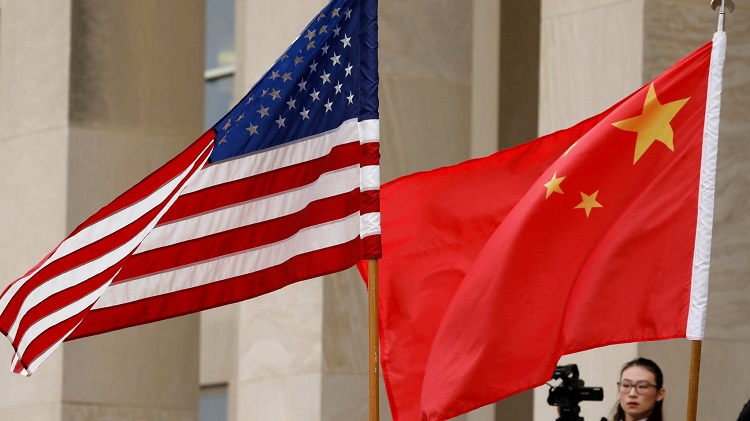

United States Treasury Secretary Janet Yellen and Chinese Vice Premier Liu He discussed bilateral economic issues including trade and supply chains, as the Biden administration plans to reduce tariffs on Chinese goods to tame soaring inflation.
Yellen held a virtual meeting with her Chinese counterpart on Tuesday and raised concerns about China’s unfair, non-market” economic policies and Russia’s war against Ukraine, the US Treasury Department said in a statement issued today.

The US-China talks come as US President Joe Biden weighs the option of easing tariffs on Chinese imports to control prices, which are rising at their fastest rate in more than four decades in America.
Both the sides discussed the global economic outlook amid rising commodity prices and food security challenges, Al-Jazeera reported today.
“The comments from Yellen don’t seem to go much beyond what US officials have said previously,” James Laurenson, director of the Australia-China Relations Institute said.
“The issue is what the US is going to do beyond just repeating the same accusations. Plenty of trade law scholars argue there’s considerable scope for seeking redress at the WTO but the US seems unenthusiastic towards the institution. But more unilateral sanctions won’t change Chinese policies and nor will they win the US plaudits even from close allies like Japan and Australia, who remain committed to the WTO and its processes.”
After the call, Ministry of Commerce of China said the “pragmatic and frank” talks touched on the macroeconomic situation and the stability of global supply chains.
China also expressed concerns about US tariffs and sanctions against Chinese firms, the ministry said, adding that both sides had agreed to continue dialogue.
“As the global economy faces grim challenges, there is a great significance to strengthen the communication and coordination of the macro policies between China and the United States,” the ministry said in a statement.
“Safeguarding the stability of global industrial chains and supply chains will serve the benefits of China, the US and the whole world.”
