

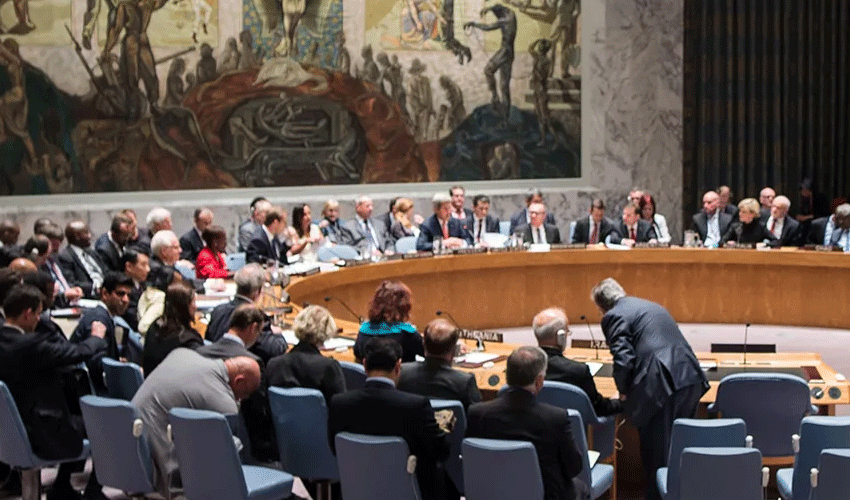

UNITED NATIONS – Amid rising tensions between India and Pakistan, United Nations Security Council (UNSC) President Evangelos Sekeris has indicated that the Council may consider convening a meeting to address the deteriorating situation in South Asia.
Speaking at a press briefing on Thursday after assuming the rotating presidency of the UNSC for May, Sekeris—who also serves as Greece’s Permanent Representative to the UN—acknowledged growing international concern. “With plain logic, this is something which might probably happen,” he said, referring to the potential for a Council meeting.
Sekeris emphasized that the UNSC remains “very receptive to any request” for a discussion and reaffirmed the Council’s mandate under the UN Charter to preserve international peace and security. He noted that such a session could allow both India and Pakistan to express their positions and explore ways to de-escalate tensions.
The possibility of a Security Council meeting on the issue would be significant. India has consistently opposed third-party involvement in its disputes with Pakistan, citing the 1972 Simla Agreement, which stipulates that issues between the two nations should be resolved bilaterally. However, Sekeris stressed that the Council retains the authority to act when international peace is at risk.
While no formal request has yet been made, Pakistan—currently serving as a non-permanent member of the Council—could advocate for such a meeting. Still, the prospect of consensus remains uncertain, with several permanent members expected to tread carefully to avoid direct intervention, in deference to India’s position.
Sekeris also reiterated the UNSC’s strong condemnation of terrorism, referencing the April 22 attack in Pahalgam, which killed 26 civilians. The attack, claimed by The Resistance Front, a group linked to Lashkar-e-Toiba, sparked renewed concerns over cross-border militancy. While the UNSC issued a press statement condemning the incident, it stopped short of naming the perpetrators, prompting questions about potential diplomatic sensitivities.
Asked about the omission, Sekeris said, “A press statement, adopted by consensus, cannot be commented on in terms of its negotiation stages,” noting that member states’ involvement, including Pakistan’s, could influence the final wording.
As tensions continue to mount—with Pakistan reportedly bracing for a possible Indian incursion and diplomatic channels actively engaged—Sekeris said the Council remains prepared to convene “sooner rather than later” should the situation deteriorate further.
Meanwhile, UN Secretary-General António Guterres has reiterated his offer to provide “good offices” to facilitate dialogue between the two nations. According to diplomatic sources, Guterres has recently spoken with Indian External Affairs Minister S. Jaishankar and Pakistan’s Prime Minister, signaling the UN’s continued engagement in efforts to defuse one of the world’s most persistent regional conflicts.
