

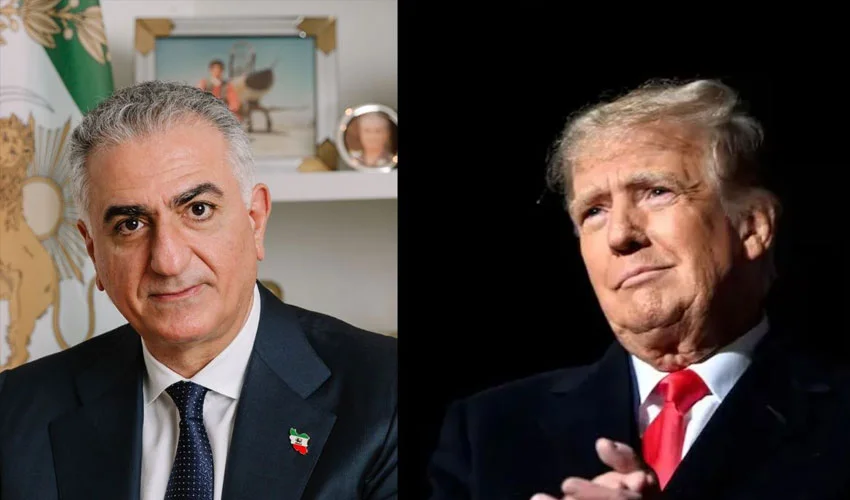

US President Donald Trump has said it would not be appropriate for him to meet Iran’s self-proclaimed Crown Prince Reza Pahlavi at this stage, even as political unrest and protests spread across Iran. His remarks signal that Washington remains cautious and is not prepared to formally back any single opposition figure as a potential alternative to Iran’s current leadership.
In an interview on The Hugh Hewitt Show, Trump described Pahlavi, the son of Iran’s last shah, as a “nice person” but stressed that a meeting with a sitting US president would be premature. He added that the situation inside Iran should be allowed to evolve naturally, saying different groups should be given space to see who ultimately emerges. The comments underline a wait-and-see approach toward Iran’s divided opposition landscape.
Reza Pahlavi, who is based in the United States, leads a monarchist faction within the Iranian opposition and has developed close ties with Israel. However, Trump’s comments make clear that the US administration is not ready to endorse him as a future leader, even if the Iranian government were to collapse under mounting pressure.
Protests grow as Trump balances pressure and restraint
Iran has witnessed widespread protests in recent weeks, driven by a deepening economic crisis and growing political dissatisfaction. In response, authorities have reportedly restricted internet access and blocked communications nationwide. Demonstrations have taken place in major cities, with some protesters echoing Pahlavi’s calls for public mobilisation, although no unified leadership has emerged.
While avoiding direct engagement with Pahlavi, Trump has taken a firm public stance against Tehran’s handling of the unrest. He has repeatedly warned Iranian authorities against using violence against protesters and has said the United States would respond “very strongly” if demonstrators were targeted. Pahlavi publicly welcomed those remarks and thanked Trump for his support.
Overall, Trump’s position reflects a careful balance. The administration has voiced support for the Iranian people’s demands for change and accountability, yet it has stopped short of recognising or promoting a specific individual as a successor. US officials appear intent on maintaining pressure on Tehran while avoiding actions that could fragment the opposition further or complicate future diplomacy.
