

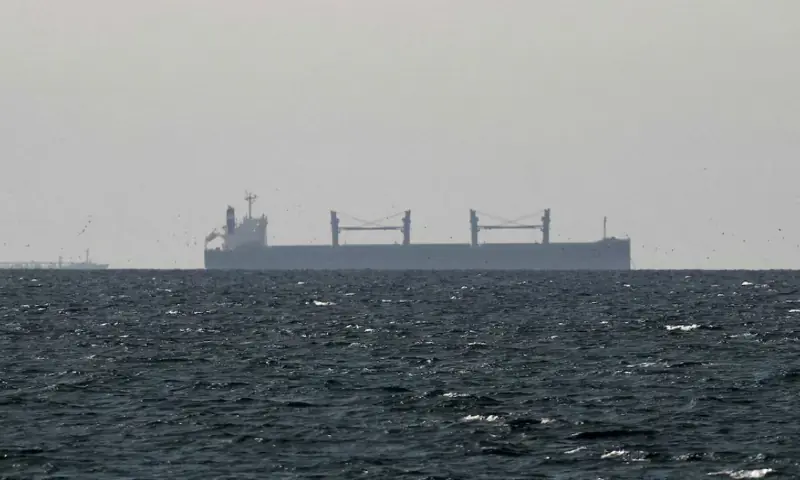
UNITED NATIONS: The UN Security Council is scheduled to vote on Saturday on a Bahraini-drafted resolution aimed at protecting commercial shipping in and around the Strait of Hormuz. This comes despite strong opposition from China.
Diplomats said the 15-member council will meet on Saturday morning instead of Friday, which is a UN holiday. The meeting will be held to vote on the draft resolution.
The resolution, finalised by Bahrain as the current president of the Security Council, would authorise “all defensive means necessary” to safeguard commercial shipping for at least six months. It has the backing of Gulf Arab states and the United States.
China Opposes Authorising Use of Force
China’s UN envoy, Fu Cong, made it clear on Thursday that Beijing strongly opposes any authorisation of force. He warned that such a move would legitimise “unlawful and indiscriminate use of force.” He added that it could lead to further escalation with serious consequences.
Earlier drafts faced objections from China, Russia, and even France. A fourth version was put under a “silence procedure,” but the silence was broken by these three countries. The text has now been finalised (“put in blue”). This clears the way for a vote.
A Security Council resolution needs at least nine votes in favour. It must also avoid a veto from the five permanent members (US, UK, France, Russia, and China).
Strait of Hormuz Crisis
The Strait of Hormuz is a vital global shipping route for oil and gas. It has been effectively closed since the US and Israel launched military strikes on Iran at the end of February. The month-long conflict has caused oil prices to surge sharply.
Bahrain’s Foreign Minister Abdullatif bin Rashid Al Zayani told the council that Iran’s “unlawful and unjustified attempt” to control navigation in the strait threatens global interests. He said it requires a decisive international response.
The League of Arab States also expressed support for the resolution. On Thursday, Britain hosted a meeting of more than 40 countries. The meeting focused on reopening and securing safe passage through the waterway.
On Wednesday, US President Donald Trump vowed to continue military operations against Iran. However, he did not outline any clear plan to reopen the strait. This has raised further concerns among shippers and pushed oil prices even higher.

