

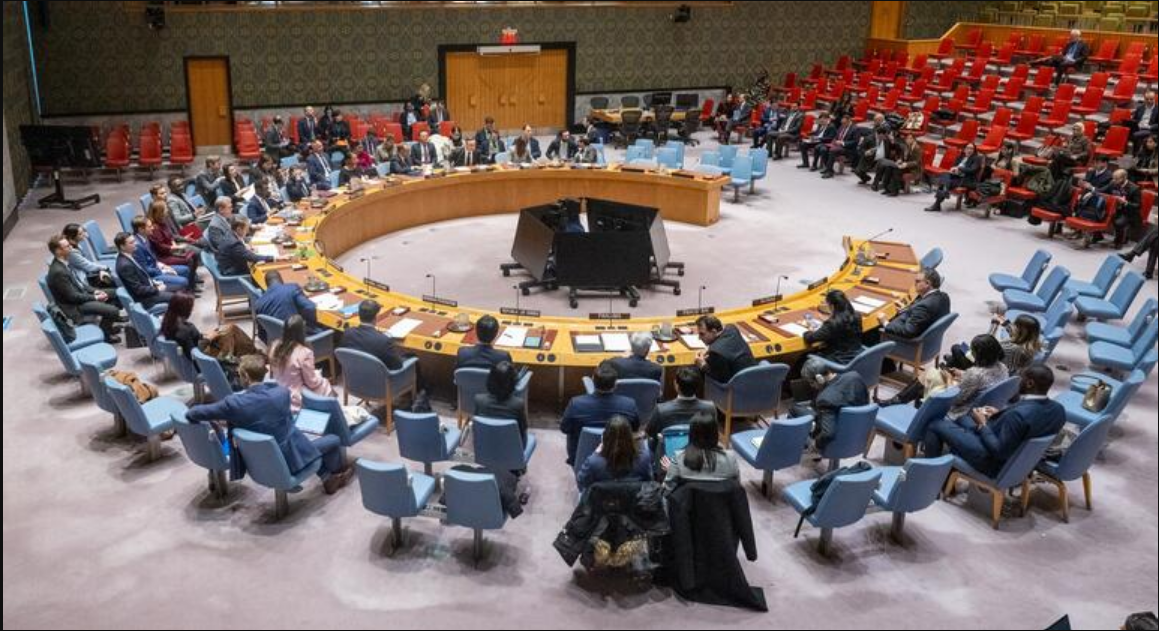

The United Nations Security Council will hold an emergency session on Monday following mounting international concern over the United States’ military operation in Venezuela. The session was requested by Colombia and supported by China and Russia, with Venezuela formally appealing for Council intervention. The agenda is listed under “Threats to International Peace and Security,” and UN Secretary-General Antonio Guterres is expected to brief members.
Secretary-General Warns of Dangerous Precedent
UN Secretary-General Guterres expressed alarm at the escalation in Venezuela, highlighting potential regional risks. He emphasized that the action could undermine international law by creating a dangerous precedent. His spokesperson, Stephane Dujarric, stressed that respect for the UN Charter remains essential. Guterres warned that ignoring these legal norms weakens the rules-based international system and jeopardizes sovereign equality among states.
US Military Operation Raises Regional Concerns
The United States confirmed its operation in Venezuela, citing the removal of an authoritarian leader involved in narco-terrorism and criminal activity. President Donald Trump stated that the US would “run the country until a safe, proper, and judicious transition” occurs, signaling temporary governance involvement. While some Latin American governments welcome Maduro’s removal, many argue that the intervention risks regional instability and violates sovereignty.
Venezuela Condemns US Action
Venezuelan officials denounced the operation as an act of aggression and a violation of international law. UN Ambassador Samuel Moncada described it as a “colonial war” designed to impose a puppet government. He highlighted that the UN Charter prohibits the use of force against the territorial integrity or political independence of any state. These arguments reinforce calls for multilateral oversight and adherence to international legal frameworks.
China and Russia Criticize US Intervention
China condemned the US military action as hegemonic behavior that violates Venezuela’s sovereignty and international law. Russia described the operation as armed aggression, stressing that Latin America must remain a zone of peace. Both countries emphasize that their objections are grounded in defending the UN Charter and rules-based international order rather than supporting any individual leader.
Implications for International Law and Diplomacy
Experts warn that unilateral actions such as this could erode long-standing international legal norms. Article 2(4) of the UN Charter restricts force unless in self-defense or with Security Council approval, neither of which clearly applies in this case. Diplomats caution that normalizing unilateral interventions threatens the principle of sovereign equality and undermines multilateral conflict resolution mechanisms.
Expected Council Dynamics
Inside the Security Council, divisions are anticipated between members supporting strict adherence to international law and those defending US justifications on security grounds. Venezuela, China, and Russia are expected to condemn the action, while the United States will argue legality based on criminal and security concerns. Historical parallels, such as interventions in Panama and Iraq, underscore the complex debate over legality, legitimacy, and precedent.
A Test of the Global Rules-Based System
Beyond immediate geopolitical tensions, the Venezuela crisis tests the effectiveness of the post-World War II international system. The removal of a sitting head of state by force challenges whether UN Charter restraints can still command respect. Regional governments are monitoring the political vacuum, potential humanitarian impacts, and migration pressures closely. The unfolding situation highlights the balance between power, law, and diplomacy in maintaining global order.
