

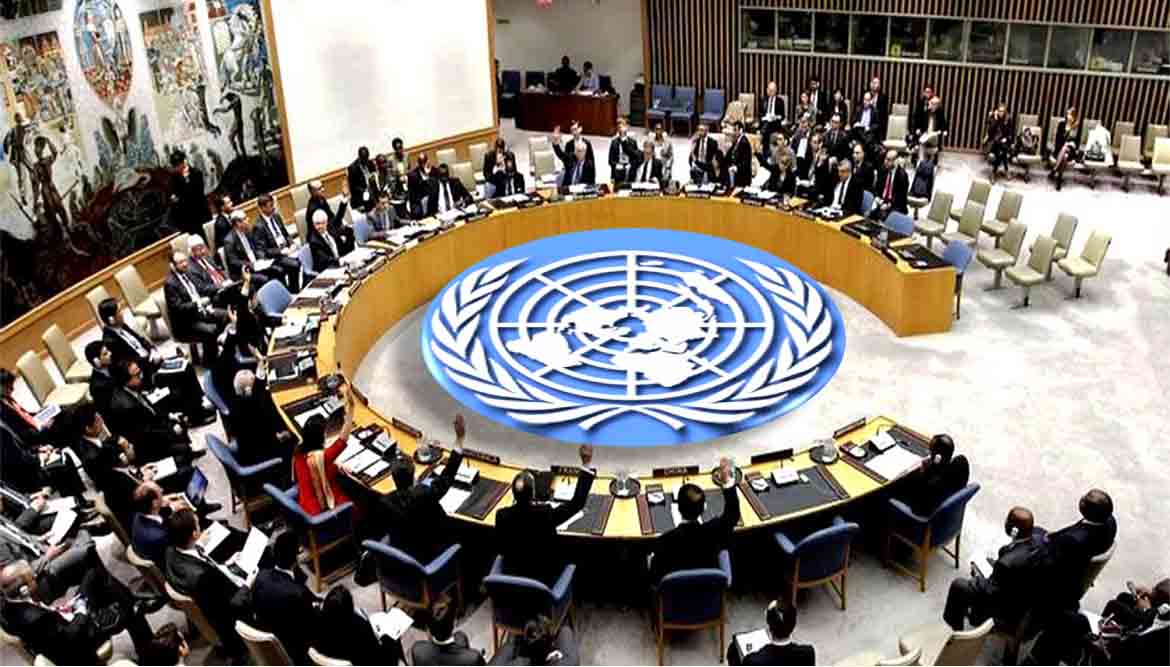

UNITED NATIONS: The United Nations Security Council (UNSC) held its inaugural meeting on artificial intelligence (AI). In the meeting, China cautioned against its uncontrolled advancement, and the United States warned against its potential for censorship and repression.
Britain’s Foreign Secretary James Cleverly chaired the meeting. The diplomats acknowledged that Artificial Intelligence would significantly transform all aspects of human life. Cleverly emphasized the need for global governance of transformative technologies as AI has no boundaries.
While recognizing its potential to address climate change and boost economies, he highlighted the risks of AI in spreading disinformation. He also discussed the role of AI in aiding the development of weapons.
UN Secretary-General Antonio Guterres, Jack Clark from AI startup Anthropic, and Professor Zeng Yi from the China-UK Research Center for AI Ethics and Governance provided briefings to the 15-member council. Guterres emphasized that both military and non-military applications of AI could have significant implications for global peace and security.
Guterres supported the establishment of a new UN body, similar to organizations such as the International Atomic Energy Agency and the Intergovernmental Panel on Climate Change, to govern AI collectively.

China’s Ambassador to the UN, Zhang Jun, referred to AI as a “double-edged sword”. He expressed support for the UN to play a central coordinating role in setting guiding principles for AI. Zhang emphasized the importance of regulating AI to prevent it from spiraling out of control.
The US Deputy Ambassador to the UN, Jeffrey DeLaurentis, stressed the need for countries to collaborate on AI. He requested cooperation on other emerging technologies to address human rights risks that could undermine peace and security. He emphasized that AI should not be used by any member states to censor, constrain, repress, or disempower people.
Russia questioned whether the Security Council, which primarily focuses on international peace and security, should be dealing with AI. Russia’s Deputy UN Ambassador Dmitry Polyanskiy advocated for a professional and scientific discussion on AI that is already taking place in specialized platforms.
Overall, the meeting highlighted the potential benefits and risks associated with AI. It underscored the need for international cooperation in governing and regulating this transformative technology.
