

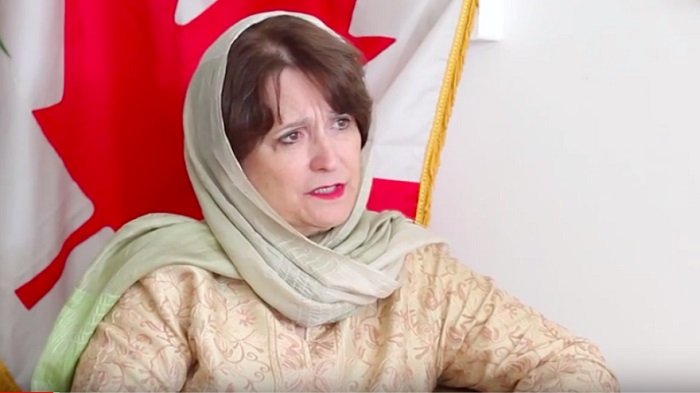

Deborah Lyons, the envoy of the United Nations for Afghanistan urged the world to offer urgent financial support to Afghanistan as the country is “on the brink of a humanitarian catastrophe.” Deborah sought immediate intervention by the international community to find ways to provide financial support to the Afghan people, who feel abandoned.
The UN Envoy said an estimated 60 percent of Afghanistan’s 38 million people are facing crisis levels of hunger in a food emergency that will likely worsen over the winter.
“Now is not the time to turn away from the Afghan people,” Lyons said at a press conference on Wednesday at the UN.
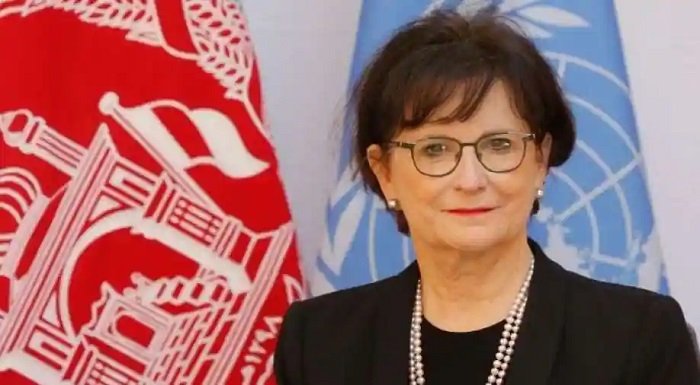
“To abandon the Afghan people now would be a historic mistake – a mistake that has been made before with tragic consequences,” she had told the UN Security Council earlier in the day.
Humanitarian catastrophe ‘is preventable’
Lyons added that the humanitarian catastrophe “is preventable” as its main cause is financial sanctions on the Taliban, who took over the country in August, and she assured the international community the UN would make every effort to avoid the diversion of funds to the Taliban.
Sanctions “have paralysed the banking system, affecting every aspect of the economy”, according to the UN envoy. The country’s GDP is estimated to have contracted by 40 percent since the Taliban takeover.
The International Monetary Fund (IMF) blocked the release of about $450m to Afghanistan more than a week after the West-backed government collapsed and the Taliban took over. The Afghan central bank’s $9bn in reserves, most of which are held in the US, were also frozen.
Asked by Al Jazeera’s James Bays if releasing the frozen funds would alleviate the current humanitarian crisis, Lyons said: “We’re looking at the money that has already been committed by the donors for the humanitarian work and making sure we have mechanisms in place to have that flowing.”
“Unfreezing assets is something that is a decision by key countries.”
Lyons said a new mechanism to pay health workers’ salaries has been set up. The Taliban has struggled to pay workers in key sectors such as health and education.
The “paralysis of the banking sector will push more of the financial system into unaccountable and unregulated informal money exchanges,” the envoy said, which “can only help facilitate terrorism, trafficking and further drug smuggling” that will first affect Afghanistan and then “infect the region.”
Against that tenuous backdrop, Lyons warned that the Taliban has been unable to stem the expansion of ISIL (ISIS), which now seems to be present in nearly all provinces and is increasingly active. The UN estimates the number of attacks attributed to ISIL has increased significantly, from 60 last year to 334 this year.
