

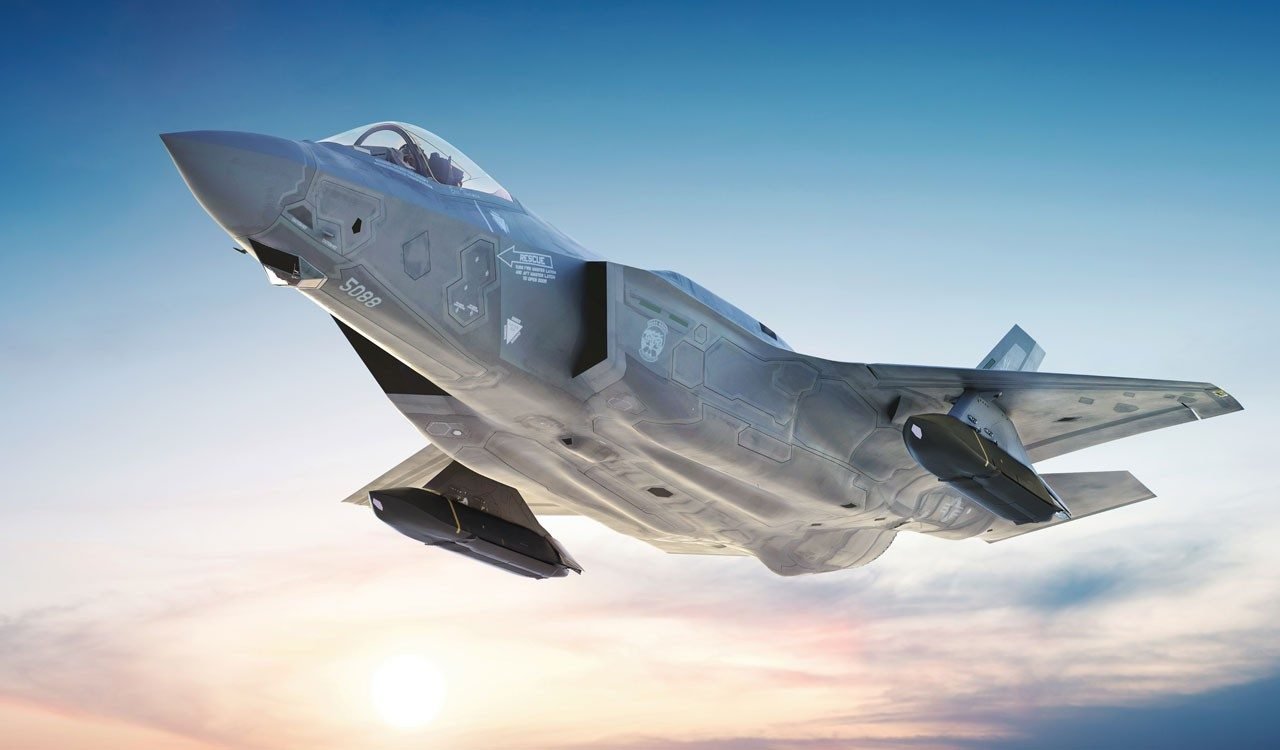

The British government announced on Tuesday that it will purchase 12 F-35A fighter jets capable of carrying tactical nuclear weapons, calling it the most significant upgrade to its nuclear deterrent in a generation.
Downing Street said the acquisition of the U.S.-built Lockheed Martin jets would reintroduce the UK’s ability to deploy air-launched nuclear weapons for the first time since the Cold War. This move marks a major strategic shift in the country’s defense policy.
“In an era of radical uncertainty, we can no longer take peace for granted,” Prime Minister Keir Starmer said in a statement. “That is why my government is investing in our national security.”
The UK is ramping up defense spending and modernizing its military capabilities, including its aging submarine fleet, as concerns grow over increasing threats from Russia and reduced U.S. engagement in European security.
According to the government, the new jets will allow the UK to contribute dual-capable aircraft to NATO—planes that can carry conventional and nuclear weapons—strengthening the alliance’s collective deterrence posture.
NATO Secretary General Mark Rutte welcomed the announcement, calling it “yet another robust British contribution to NATO.”
Until now, the UK’s nuclear arsenal has been based solely on its Trident submarine-launched missile system, which has suffered notable test failures in recent years. The last British air-launched nuclear weapon, the WE-177 free-fall bomb, was retired in 1998.
The F-35A jets are designed to carry the U.S. B61 tactical nuclear bomb, which would likely need to be supplied by Washington, according to an unnamed British official. The United States removed its last nuclear weapons from the UK in 2008, reflecting a then-declining threat environment.
Tactical nuclear weapons are intended for battlefield use, offering flexibility in conflict scenarios distinct from strategic weapons meant for long-range strikes.
With this purchase, Britain aligns more closely with NATO allies such as the U.S. and France, both of which maintain land, sea, and air-based nuclear delivery systems.
The UK government said the deal would support around 20,000 jobs domestically and reaffirm its long-term commitment to NATO.
It also reiterated its goal of increasing defense and security spending to 5% of GDP by 2035, and warned that Britain must begin “actively preparing” for potential conflict at home for the first time in years.
