

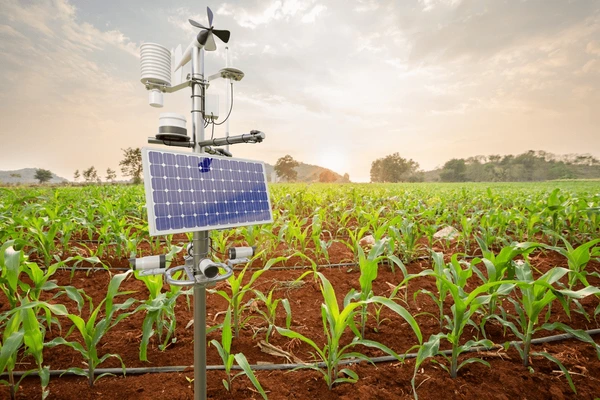

Innovative Flux Tower to Aid Farmers, Cut Emissions
British High Commissioner to Pakistan Jane Marriott has officially inaugurated a Climate-Smart Farming Tower in Okara, Punjab. The project is designed to help farmers reduce water usage, lower operational costs, and improve crop productivity through advanced agricultural monitoring technology.
The initiative is part of the UK-backed Climate Smart Farming Promotion Programme, which supports climate resilience and sustainable agriculture in Pakistan.
At the center of the project is the Eddy Covariance Flux Tower, a high-tech system that tracks real-time exchanges of water vapor, carbon dioxide, methane, and energy between land and the atmosphere. The technology is already being used by the Punjab Irrigation Department for smarter water management and by the Ministry of Climate Change to refine national greenhouse gas emission reporting.
Affordable Tools Helping Farmers Adapt to Climate Change
During her visit, Jane Marriott was also introduced to low-cost soil moisture sensors—devices that guide farmers on when and how much to irrigate. These sensors have helped cut electricity and water bills, while also increasing yields for many local farmers.
“It’s no longer enough to react after the crisis. We must act now,” said Marriott. “What’s happening in Okara shows the power of practical, science-based cooperation between the UK and Pakistan.”
The farming tower launch comes as Pakistan faces the growing impact of climate-related disasters, including devastating floods. Experts warn that without smart, long-term solutions, such challenges will only worsen.
Dr. Mohsin Hafeez, Director of the International Water Management Institute (IWMI), emphasized the need for data-driven planning. He noted that combining Flux Tower data with satellite imagery could offer Pakistan better insights into national water use, carbon emissions, and climate trends, allowing for more effective policies.
