

The United Arab Emirates (UAE) closed its stock markets on Monday and Tuesday after Iran launched retaliatory missile and drone attacks. The prevailing situation signalled expanding economic fallout in the Gulf region.
The shutdown followed escalating regional tensions after joint strikes on Iran by Israel and the United States.
Markets halted amid security concerns
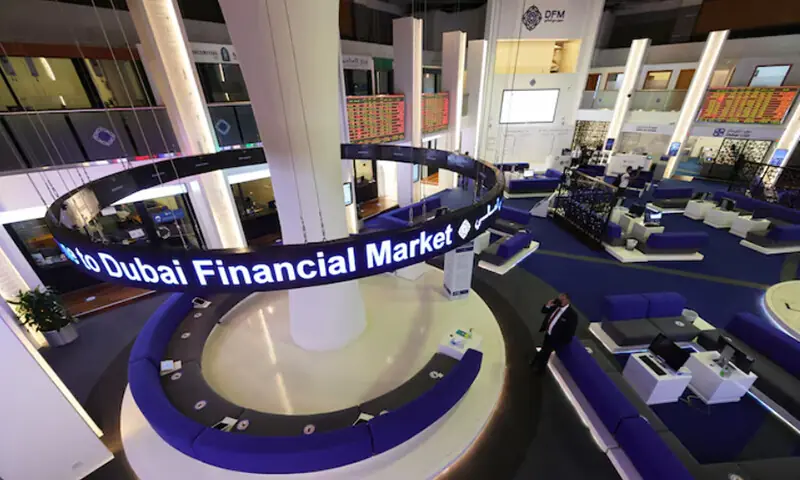
Iran targeted Gulf states hosting US military assets, intensifying fears of broader instability. In response, the UAE Capital Markets Authority directed the Abu Dhabi Securities Exchange and Dubai Financial Market to suspend trading on March 2 and 3.
The regulator cited its supervisory role and said it would continue assessing developments. Officials added they would take further measures if needed, depending on the evolving security situation.
The UAE’s two main exchanges list some of the region’s most valuable companies. Consequently, the closure freezes billions of dollars in assets as investors assess the potential impact of the weekend attacks.
Regional fallout hits investors
Missile and drone strikes reportedly damaged airports, ports and residential areas across the UAE and wider Gulf region. Therefore, uncertainty over infrastructure losses and security risks has weighed heavily on market sentiment.
Meanwhile, other regional markets showed sharp reactions. Saudi Arabia’s benchmark index fell more than four per cent at the open, while Oman declined three per cent. Egypt’s main index dropped 5.44 per cent, and Kuwait halted trading entirely.
Authorities urged investors to rely on official updates from the UAE Capital Markets Authority and the country’s stock exchanges regarding the resumption of trading.
The UAE’s decision to shut down its stock markets indicates growing financial disruption as geopolitical tensions ripple across regional markets.

