

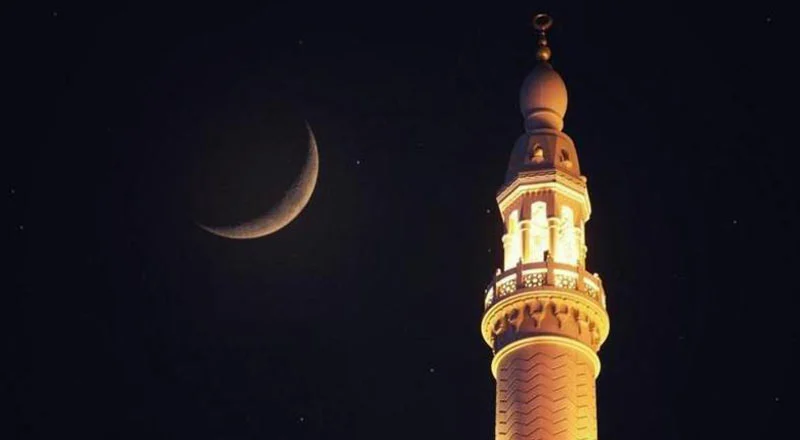

ISLAMABAD: The United Arab Emirates (UAE) is set to make history as the first country to utilize artificial intelligence-powered drones to aid in sighting the Ramadan crescent moon, the UAE Council for Fatwa announced on Friday.
Muslims across the country have been urged to observe the crescent on the evening of Friday, February 28, which aligns with 29 Shaban in the Umm Al Qura calendar, the official system used in the UAE for determining Islamic months.
The council affirmed that using drones for moon sighting aligns with Islamic teachings, considering it an extension of direct vision, in accordance with Prophet Muhammad’s (PBUH) guidance:
“Do not fast until you see the crescent moon, and do not break your fast until you see it. If it is obscured from you, estimate it.”
Despite this technological advancement, the UAE will continue its traditional moon sighting methods, including naked-eye observation and astronomical observatories equipped with state-of-the-art technology. These observatories collaborate with national institutions, specialized centers, and astronomical bodies to ensure the accuracy of Ramadan’s commencement.
If the crescent is spotted on Friday evening after Maghrib prayer, Ramadan will begin on March 1. Otherwise, the holy month will commence on March 2. The International Astronomy Centre has predicted that Ramadan is most likely to start on March 1.
Meanwhile, Saudi Arabia has also invited Muslims to observe the crescent moon on the same evening.
The UAE’s Federal Authority for Government Human Resources has announced reduced working hours for public sector employees during Ramadan, while private sector workers will have their daily hours shortened by two.
Moon sighting holds deep spiritual and cultural significance in the Islamic world, as millions of faithful residents eagerly anticipate confirmation of Ramadan’s beginning.
