

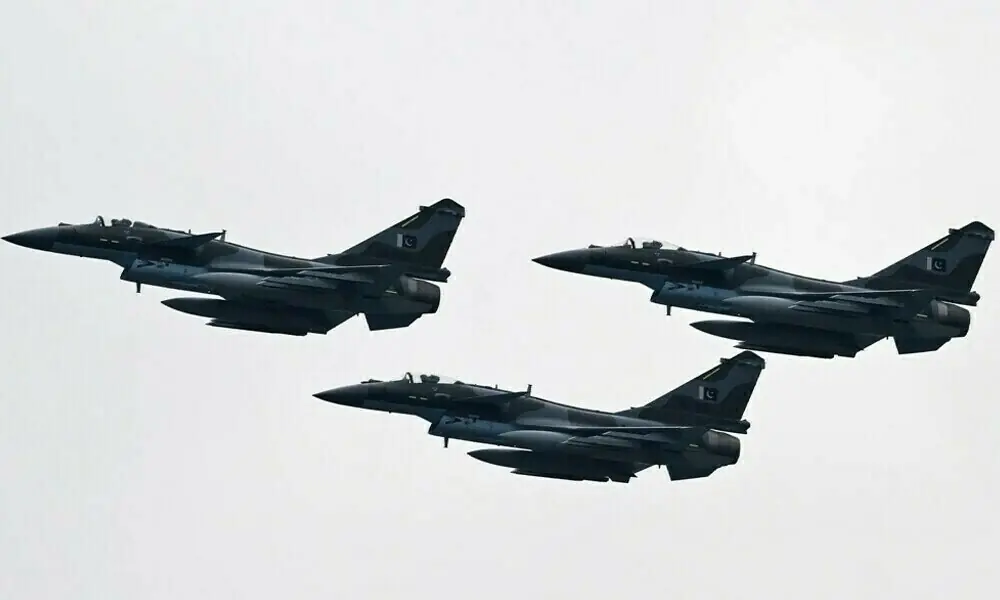

A report submitted to the US Congress by the US-China Economic and Security Review Commission has stated that Pakistan demonstrated “military success” over India during their four-day conflict in May, highlighting the prominent role of Chinese-origin weapons in the fighting.
The commission noted that Pakistan initially claimed to have downed five Indian aircraft, later raising the figure to seven, while denying any of its own losses. Islamabad also asserted that it struck 26 Indian targets after India attacked three of its airbases. US President Donald Trump recently reiterated that eight aircraft were “essentially” shot down during the clash.
According to the commission, China used the conflict to “test and promote” its defence capabilities, drawing international attention to the deployment of its modern weapons systems, including HQ-9 air defence units, PL-15 missiles and J-10 fighters, all used in combat for the first time.
The report said Pakistan “relied upon Chinese weaponry” and may have benefited from Chinese intelligence support—an allegation New Delhi repeated but Islamabad rejected, while Beijing neither confirmed nor denied the claim.
The commission detailed the broader security context, noting that China provided 82 per cent of Pakistan’s arms imports from 2019 to 2023 and expanded military cooperation in 2025.
Joint activities included the Warrior-VIII counter-terrorism drills in late 2024 and the AMAN naval exercises earlier this year. India viewed these developments as worsening its security environment and as direct challenges to its territorial interests.
The report further claimed that China celebrated the performance of its equipment after the conflict to boost international arms sales and allegedly ran disinformation campaigns—cited by French intelligence—to undermine sales of French Rafale jets in favour of its own J-35 fighters.
The clash itself began after India linked an attack on tourists in occupied Kashmir to Pakistan without evidence. India launched air strikes on May 7, prompting retaliatory attacks, until US intervention secured a ceasefire on May 10.
