

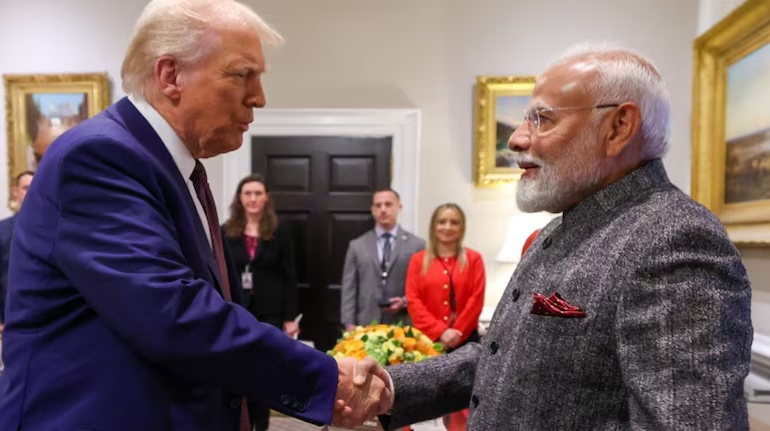

New Delhi Faces Fresh Pressure from Washington Amid Geopolitical Tensions
The Indian rupee weakened slightly on Tuesday following a renewed threat from U.S. President Donald Trump to significantly raise tariffs on Indian imports. Trump warned that he would raise the current 25% tariff on Indian goods “very substantially” within 24 hours, citing India’s ongoing purchase of Russian oil as the primary reason.
In an interview with CNBC, Trump accused India of “fuelling the war machine” in Ukraine by continuing to import oil from Russia. “If they’re going to do that, then I’m not going to be happy,” he stated. He also dismissed India’s offer of zero tariffs on U.S. goods, arguing that it was insufficient given New Delhi’s stance on Russian energy.
Trump’s tough talk began on July 31 when he first announced a 25% tariff and hinted at further penalties unless India changed its behavior. India is the world’s third-largest oil importer and currently sources over a third of its crude oil from Russia, a strategy Indian officials say helps stabilise global energy markets by diversifying supply chains.
India Responds Strongly, Markets React
India pushed back firmly against Trump’s remarks. Both the ruling BJP and the opposition Congress Party condemned the threats as disrespectful and unjust. Congress MP Manish Tewari described Trump’s comments as an insult to India’s dignity, while BJP Vice President Baijayant Jay Panda quoted Henry Kissinger to highlight the risks of close ties with the U.S., stating: “To be an enemy of America can be dangerous, but to be a friend is fatal.”
India’s Ministry of External Affairs also issued a pointed statement accusing the U.S. and EU of hypocrisy. “It is revealing that the very nations criticising India are themselves indulging in trade with Russia,” the ministry said, referencing ongoing Western trade ties with Moscow.
Meanwhile, the Indian rupee fell to 87.8000 against the U.S. dollar—down 0.2% from the previous day’s close. It touched an intraday low of 87.8850, nearing February’s record of 87.95, before stabilising with likely intervention from the Reserve Bank of India. Traders reported that state-run banks stepped in to cushion the rupee amid heightened tariff concerns.
