

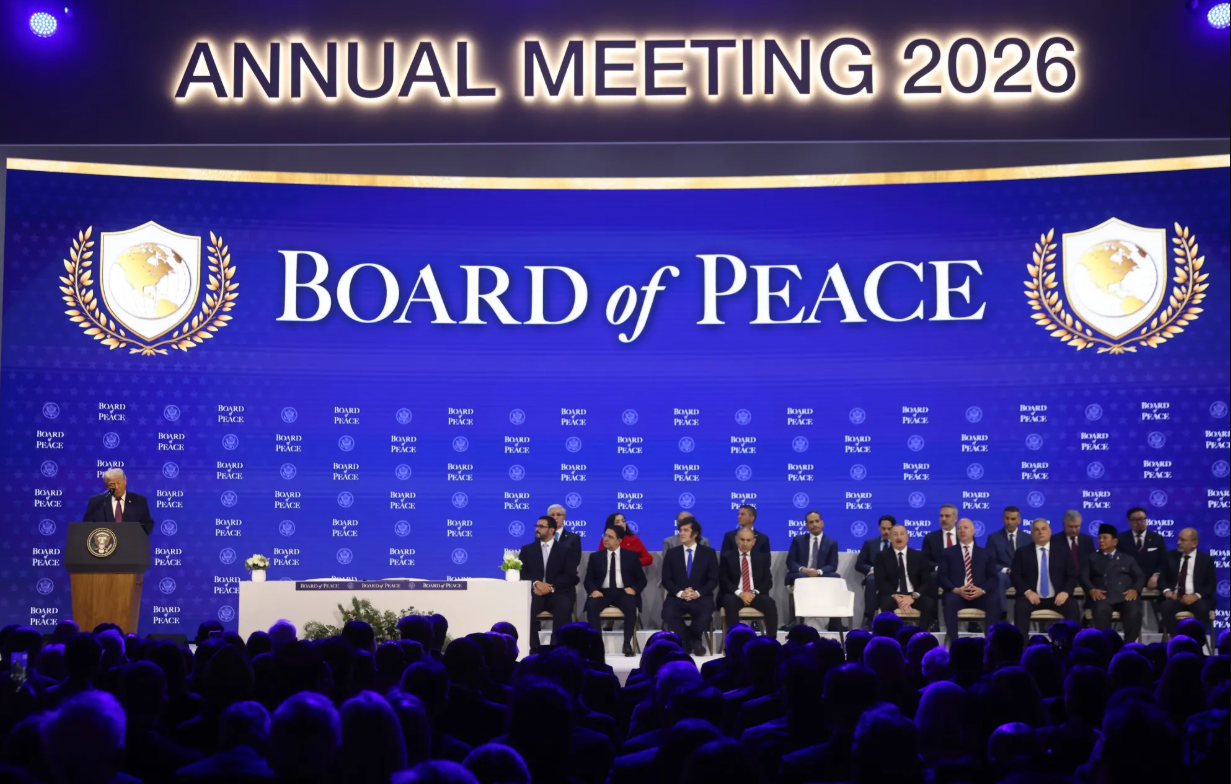

The Trump Board of Peace initiative has sparked intense global debate. President Donald Trump introduced the concept in September. Initially, he presented it as part of a plan to end Israel’s war in Gaza. However, he later expanded its mandate to address global conflicts.
Traditionally, the United Nations has managed such peace-building efforts. Nevertheless, Trump positioned the board as an alternative structure. He chairs the board and holds significant executive authority.
According to its charter, member states serve three-year terms. However, countries that contribute $1 billion may gain permanent membership. The board includes prominent political figures. These include US Secretary of State Marco Rubio, special envoy Steve Witkoff, former British Prime Minister Tony Blair, and senior adviser Jared Kushner.
Which Countries Have Joined?
More than two dozen countries joined as founding members. Many are key Middle Eastern allies of Washington. These include Israel and Saudi Arabia. Additionally, Egypt and Qatar joined after mediating ceasefire talks.
Other regional members include Bahrain, Jordan, Kuwait, Morocco, Turkey, and the United Arab Emirates.
Furthermore, countries from Europe, Asia, and Latin America joined. These include Albania, Argentina, Armenia, Azerbaijan, Belarus, Bulgaria, Cambodia, El Salvador, Hungary, Indonesia, Kazakhstan, Kosovo, Mongolia, Pakistan, Paraguay, Uzbekistan, and Vietnam.
Which Nations Declined?
Several major powers declined participation. Key Western allies refused to join. Leaders from United Kingdom, European Union, France, Germany, Norway, and Sweden rejected the offer.
In addition, Brazil and Mexico declined membership. They cited the absence of Palestinian representation. The Vatican also stayed out, arguing that crisis management should remain with the United Nations.
Meanwhile, major Security Council powers China and Russia have not joined.
What Powers Does the Board Hold?
In November, the UN Security Council passed a US-drafted resolution. The resolution recognized the board as a temporary administration for Gaza. It will coordinate funding and support redevelopment until Palestinian Authority reforms conclude.
The resolution authorizes deployment of a temporary International Stabilisation Force. However, its mandate remains limited to Gaza and expires in 2027. The board must report to the 15-member Security Council every six months.
China and Russia abstained during the vote. They argued that the resolution lacked clarity on the US role.
Beyond Gaza, the board’s authority remains unclear. Its charter states it will conduct peace-building under international law. However, Trump retains veto power and authority to remove members.
Why Has It Drawn Criticism?
Supporters view the initiative as bold leadership. However, critics argue it undermines the United Nations framework. Rights experts warn that overseeing a foreign territory resembles colonial governance.
Furthermore, critics question the absence of Palestinian representation. They also highlight the inclusion of Israel on a board overseeing Gaza. The territory has suffered widespread devastation and displacement.
Additionally, some member states face scrutiny over human rights records. Therefore, observers worry about credibility and neutrality.
What Will the Inaugural Meeting Address?
Most member states will attend the first meeting. More than 20 countries will join as observers. These include Japan, South Korea, India, and Thailand. European nations and others will also observe discussions.
The agenda will focus on Gaza reconstruction and humanitarian aid. Leaders will also discuss deployment of a stabilisation force.
The Trump Board of Peace initiative marks a significant geopolitical shift. Whether it strengthens peace efforts or deepens divisions remains uncertain.
