


President Donald Trump has unveiled his $892 billion defense and national security budget request for 2026, calling for a pay raise for U.S. troops and greater investments in advanced missiles and drones, while scaling back shipbuilding, jet purchases, and Navy civilian jobs to reduce costs.
The budget remains flat compared to the current year, but reflects Trump’s strategic shift toward modernizing the military through technology rather than expanding traditional forces. It includes funding not only for the Pentagon but also for nuclear programs under the Department of Energy and increased homeland security spending.
According to the White House, the proposed funding is intended to counter growing Chinese influence in the Indo-Pacific and strengthen the American defense industrial base.
Trump’s budget excludes most of the funding for his headline Golden Dome missile defense shield, which will be covered by a separate request. That system is expected to receive an initial $25 billion boost through the pending “One Big Beautiful Bill Act,” already passed by the House of Representatives.
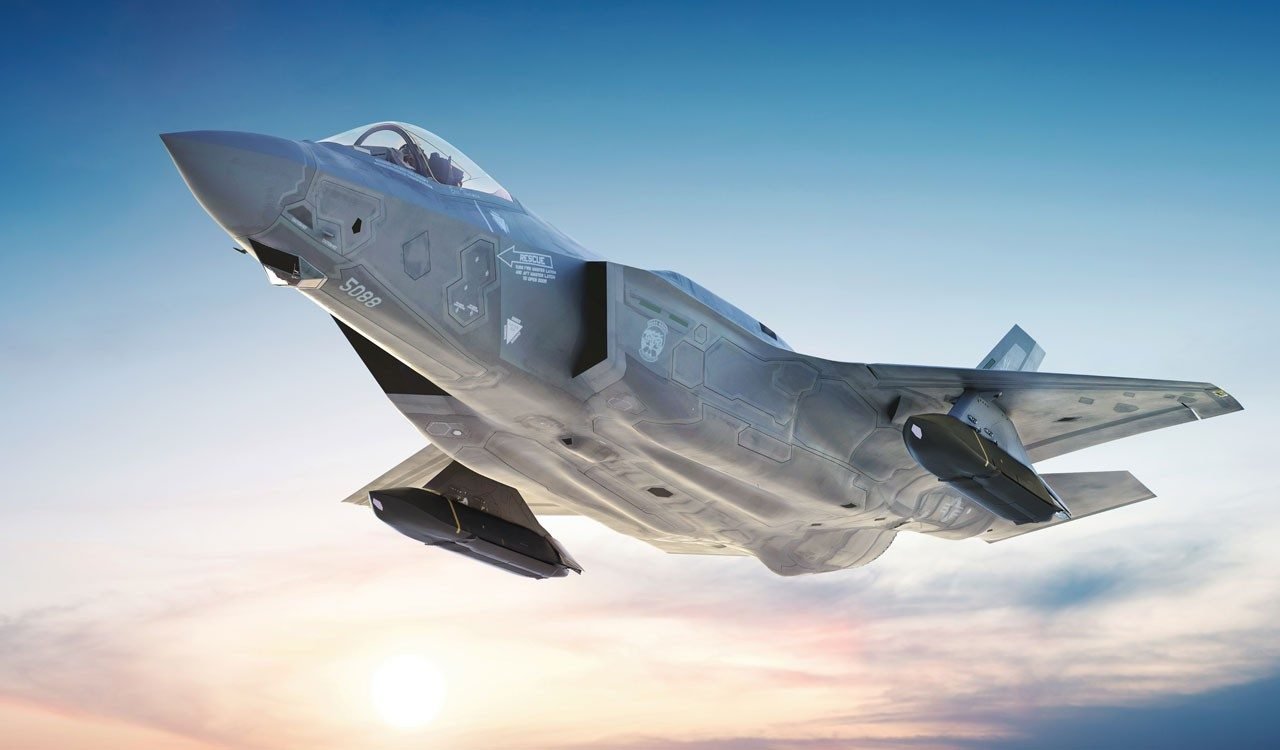
Under the 2026 plan, the administration is requesting 47 Lockheed Martin-made F-35 jets—down significantly from President Biden’s 2025 request of 68. The proposal also includes just three new Navy warships. A Virginia-class submarine built by General Dynamics and Huntington Ingalls Industries, along with 15 additional vessels, is expected to be included in separate legislation.
To control costs, the budget retires older, high-maintenance ships and aircraft. It also plans to shrink the Navy’s civilian workforce by 7,286 positions.
In contrast, the House Appropriations Committee’s Defense Subcommittee has already countered Trump’s cutbacks, proposing an increase to 69 F-35s for fiscal 2026—one more than Biden’s prior request.
The Air Force is pressing ahead with long-range missile investments, including the Joint Air-to-Surface Standoff Missile – Extended Range (JASSM-ER) and the Long Range Anti-Ship Missile (LRASM), both seen as critical to operations in the Pacific. However, the budget reduces funding for the Precision Strike Missile (PrSM), which is set to replace the Army Tactical Missile System (ATACMS), widely used in Ukraine. All three missile systems are produced by Lockheed Martin.
The budget also boosts funding for small, low-cost drones—citing battlefield lessons from Ukraine, where unmanned systems have proven essential for effective and affordable warfare.
The proposal comes amid intense debate on Capitol Hill, where Republicans are pushing for broader reforms and increased spending under the massive $150 billion “One Big Beautiful Bill Act,” a key legislative priority for Trump’s second term defense agenda.
