

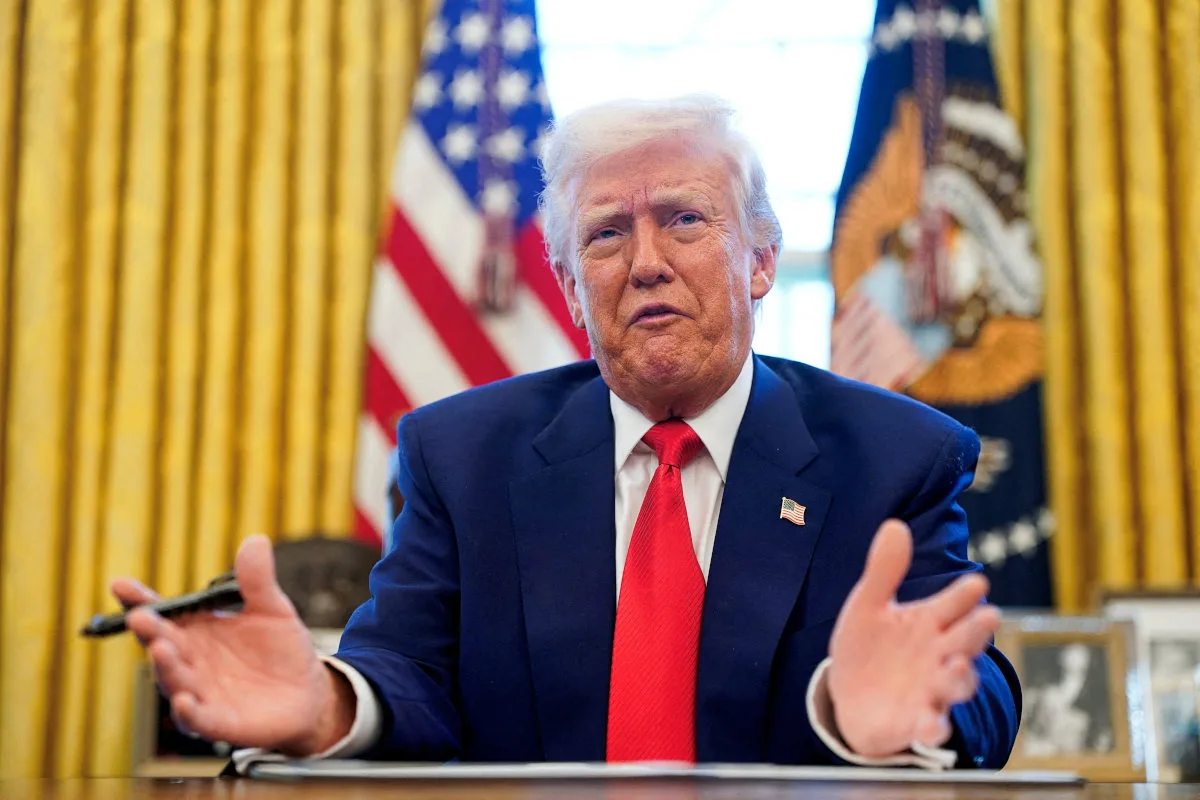

U.S. President Donald Trump has pledged to defend Poland and the Baltic states if tensions with Russia escalate, following a recent violation of Estonian airspace by Russian military aircraft. Trump’s remarks come amid growing concerns in Europe about increased Russian provocations near NATO’s eastern borders.
“Yes, I Would”: Trump Responds to Russia’s Airspace Incursions
When asked by reporters on Sunday whether the United States would stand by its NATO allies in the event of further Russian aggression, Trump responded firmly:
“Yeah, I would. I would.”
His statement follows Estonia’s request for an emergency United Nations Security Council meeting, after three Russian MiG-31 fighter jets entered Estonian airspace over the Gulf of Finland on Friday. The airspace violation was strongly condemned by both the European Union and NATO, who labeled it a dangerous and deliberate provocation. Russia, however, has denied the breach.
In response to the incident, Italian F-35 fighter jets, operating as part of NATO’s Baltic Air Policing mission, were scrambled alongside Swedish and Finnish aircraft to intercept the Russian planes and escort them out of the area.
Trump: “We Don’t Like It” — Reacts to Estonia and Poland Incidents
When questioned about the situation in Estonia, Trump confirmed that he had been briefed, saying simply:
“We don’t like it.”
His response comes just two weeks after 17 Russian drones reportedly crossed into Polish airspace, raising alarms across Europe. At the time, Trump had appeared to downplay the situation, suggesting on September 11 that:
“It could have been a mistake.”
However, the latest airspace violations appear to have drawn a stronger reaction, with Trump now expressing a clear commitment to defend Eastern European NATO allies, particularly Poland and the Baltic nations — Estonia, Latvia, and Lithuania — all of which have voiced concerns about increasing Russian military activity near their borders.
The U.S. commitment under Article 5 of the NATO treaty obliges member states to defend any ally under attack, a principle seen as critical to deterring Russian expansionism in Eastern Europe.
