

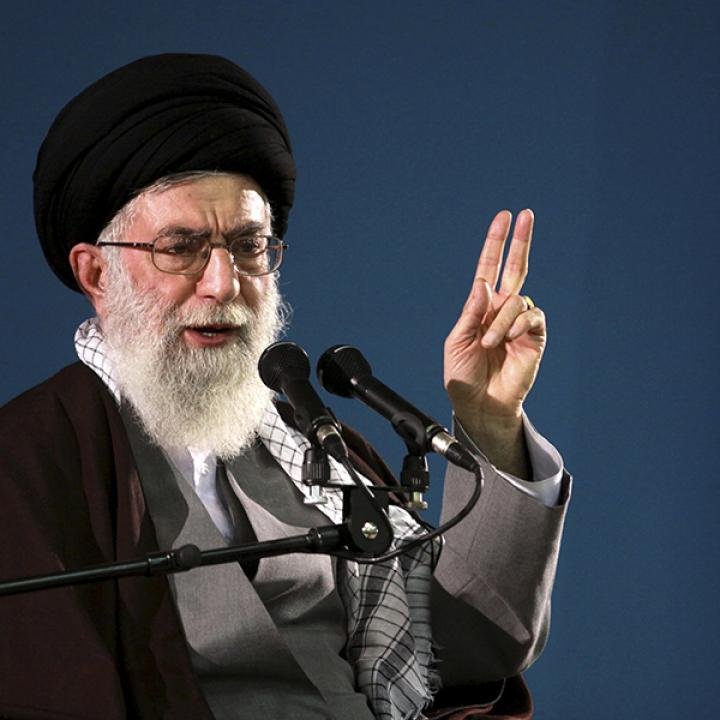

U.S. President Donald Trump blocked an Israeli plan to assassinate Iranian Supreme Leader Ayatollah Ali Khamenei, a senior American official said on Sunday, as tensions between Israel and Iran escalated into open warfare.
“We found out that the Israelis had plans to hit Iran’s supreme leader. President Trump was against it and we told the Israelis not to,” the official said, speaking on condition of anonymity.
When questioned about the report, Israeli Prime Minister Benjamin Netanyahu declined to confirm or deny the assassination plan during an interview with Fox News.
“I’m not going to get into that,” he responded. “But I can tell you… we’ll do what we need to do, and I think the United States knows what is good for the United States.”
The revelation comes as Israel and Iran exchanged heavy missile fire again on Sunday, shaking cities across both nations. Sirens and explosions were reported in Jerusalem, while Tehran activated its aerial defense systems in response to incoming threats.
This marks a dangerous new phase in the decades-long shadow war between the two regional powers. For the first time, they are openly trading direct strikes, sparking fears that a prolonged conflict could engulf the broader Middle East.
The latest hostilities began Friday, when Israeli airstrikes targeted Iranian military facilities, nuclear sites, and residential areas—killing top commanders and nuclear scientists. Iran responded with retaliatory missile attacks on Israeli targets, continuing a cycle of strikes that has persisted for days.
In the same Fox News interview, Netanyahu strongly implied that Israel had eliminated Iran’s intelligence chief, Mohammad Kazemi, stating that Israel had recently “got the chief intelligence officer and his deputy in Tehran” during air raids on the capital.
Despite the close alliance between Washington and Tel Aviv, President Trump has distanced the U.S. from Israel’s military campaign, telling ABC News on Sunday that the United States is “not at this moment” involved in the military operations.
Trump also said he was “open” to the idea of Russian President Vladimir Putin acting as a mediator to help de-escalate the conflict.
Meanwhile, support for Iran continues to emerge among its regional allies. According to TRT Global, Hamas has publicly backed Tehran following what it described as unprovoked Israeli attacks.
With no signs of immediate de-escalation, the international community remains on edge over the risk of a broader regional war.
