


President Donald Trump on Friday reignited global trade tensions by proposing a 50% tariff on goods from the European Union starting June 1 and threatening a 25% levy on imported iPhones sold in the U.S., including those made by Apple.
Trump’s announcements, made via social media, sent shockwaves through financial markets. U.S. and European stock indices declined, the dollar weakened, and gold prices rose as investors sought safer assets. Treasury yields also dropped amid growing fears of an economic slowdown triggered by renewed trade barriers.
The White House reportedly believes EU trade talks are moving too slowly, prompting Trump’s aggressive stance. He signaled a return to the confrontational tactics that characterized earlier rounds of the global tariff standoff.
Trump also targeted Apple in his comments, intensifying pressure on the tech giant to relocate manufacturing to the United States. Despite Apple’s plans to invest heavily in American operations, iPhone production remains concentrated in Asia, especially China and India. Analysts warn that moving production to the U.S. would dramatically increase iPhone prices for consumers.
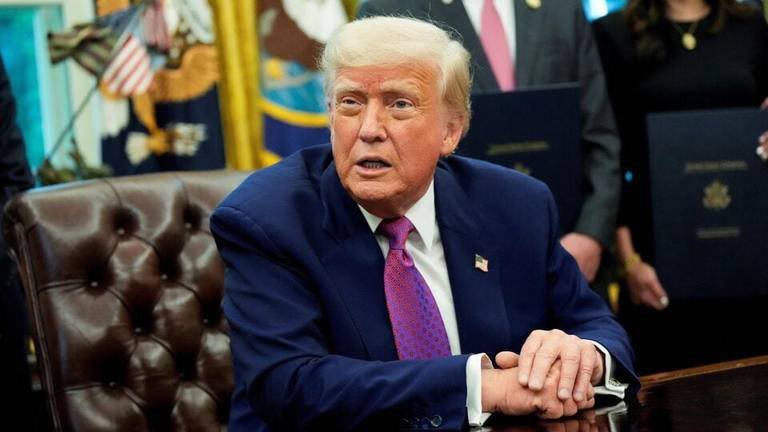
Speaking from the Oval Office later that day, Trump expanded the proposed smartphone tariffs to include products made by Samsung and other global brands. He stated he expected the new duties to take effect by the end of June.
Trump emphasized his dissatisfaction with the EU’s trade practices. “I’m not looking for a deal,” he said. “The tariff is set at 50%, unless they build their factories here.”
EU Trade Commissioner Maros Sefcovic said after a call with U.S. officials that the European Commission remains committed to a mutually beneficial agreement. Dutch Prime Minister Dick Schoof echoed this view, describing the announcement as part of ongoing negotiations.
Earlier this year, the Trump administration suspended sweeping tariffs imposed in April after investor backlash. A 10% base tariff on most imports remains, while tariffs on Chinese goods were lowered from 145% to 30%.
If enforced, the proposed 50% tariffs on EU imports would raise prices on various goods, from luxury cars to olive oil. The EU exported roughly €500 billion ($566 billion) worth of goods to the U.S. last year, with Germany, Ireland, and Italy leading in trade volume. Key exports included pharmaceuticals, vehicles, chemicals, and aircraft.
Global financial leaders, meeting earlier this week in Canada, attempted to downplay the escalating tensions, but analysts remain skeptical. Kathleen Brooks of XTB noted that Trump’s strained relations with European leaders could lead to a prolonged trade conflict.
Talks with Japan appeared more constructive. Following meetings with U.S. officials, Japanese trade negotiator Ryosei Akazawa described the discussions as productive and substantive, though he stressed the importance of protecting Japan’s national interests over hasty agreements.
Meanwhile, U.S. Treasury Secretary Scott Bessent, speaking on Fox News, declined to preview upcoming trade announcements but hinted more could be revealed as the 90-day pause on reciprocal tariffs expires in July.
Apple has not responded publicly to Trump’s tariff threat. The company’s shares dropped 3% after Trump posted on Truth Social that he had told CEO Tim Cook he expected iPhones sold in the U.S. to be produced domestically.
Apple is currently shifting more iPhone production to India to hedge against potential future tariffs on Chinese-made goods. Although the company has pledged $500 billion in U.S. investments over four years, these do not include domestic iPhone manufacturing.
Industry experts remain skeptical about Apple’s ability to meet Trump’s demand in the near term. “It’s difficult to imagine Apple complying fully with the president’s request within the next three to five years,” said Gil Luria, an analyst at DA Davidson & Co.
