

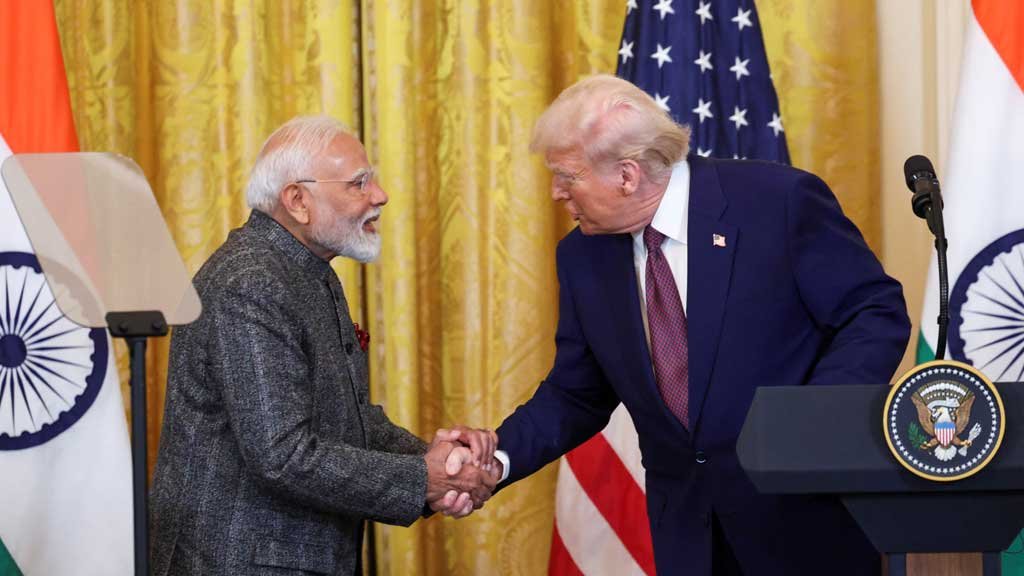

United States President Donald Trump announced a major trade deal with India following a call with Prime Minister Modi. The two leaders discussed trade, energy, and global security issues. Under the agreement, the United States will reduce reciprocal tariffs from 25 percent to 18 percent, while India will eliminate tariffs on American goods. The deal is expected to boost American exports in energy, technology, agriculture, and coal, with India potentially purchasing over $500 billion in US products.
The US president also stated that India will reduce its reliance on Russian oil. Instead, India will buy more oil from the United States and potentially Venezuela. Trump claimed this move could help ease the ongoing conflict in Ukraine.
Energy Shift and Strategic Implications
The trade deal represents a significant energy and geopolitical shift. India has traditionally relied on Russian oil, but the agreement will diversify its suppliers. Trump called the deal a demonstration of friendship and cooperation with Modi.
Prime Minister Modi responded positively on X, expressing gratitude for the reduced tariffs. He said that collaboration between the two largest democracies benefits both nations. Modi also praised Trump’s leadership in promoting global peace and economic growth.
Observers note that the deal strengthens US-India relations while sending a clear message to Russia. The shift in energy sourcing aligns with broader US strategic interests in limiting Russian influence. Analysts also suggest that the agreement could encourage further economic cooperation between the two countries.
Market and Economic Impact
Financial markets reacted favorably to the news. Indian stocks rose as investors welcomed the clarity in trade terms. Economists said the reduction in tariffs will make Indian exports more competitive. The deal may also increase investor confidence and create new opportunities for bilateral trade.
The agreement comes after a period of tense trade relations. Last year, the United States imposed high tariffs on Indian goods, partly due to India’s continued purchase of Russian oil, with some tariffs reaching 50 percent. Months of negotiations have now resulted in a mutually beneficial deal. The agreement is expected to strengthen economic ties and promote growth, with officials from both countries focusing on implementing the terms and facilitating trade and energy cooperation.
