
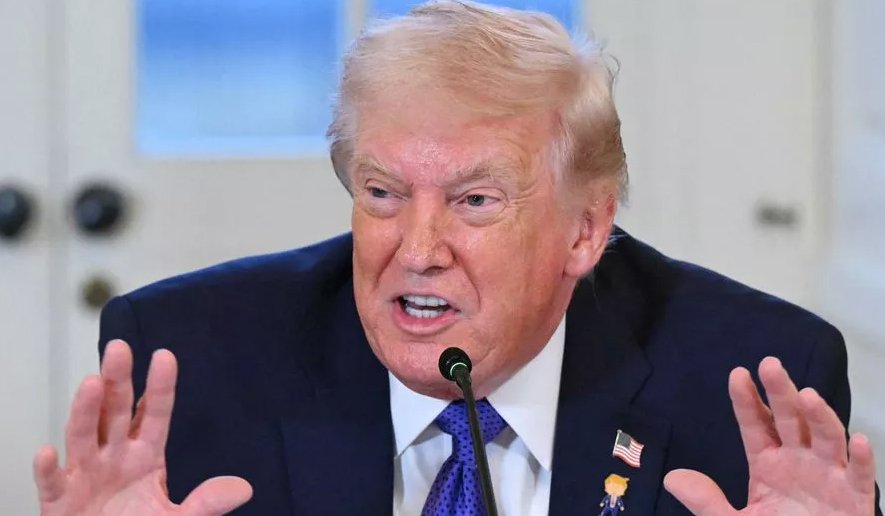

US President Donald Trump said Washington is holding serious discussions with what he described as a “new” and “more reasonable” leadership in Iran.
His remarks came as the conflict involving Iran entered its fifth week. The statement raised questions about potential political changes inside Tehran.
Trump suggested diplomatic progress was possible. However, he also warned that military options remain available if negotiations fail.
Rubio Declines to Identify Negotiating Figures
US Secretary of State Marco Rubio confirmed that communication channels exist with individuals inside Iran. Nevertheless, he refused to reveal their identities.
He explained that disclosure could endanger those involved. According to Rubio, internal divisions appear to be emerging within Iran’s leadership structure.
He noted that some individuals privately expressed positions different from previous Iranian officials. Still, he cautioned that it remains unclear whether those figures hold real authority.
Therefore, Washington plans to test whether these contacts can deliver meaningful outcomes.
Iran Rejects Claims of Direct Negotiations
Iranian authorities denied holding direct talks with the United States. Officials stated that messages were exchanged only through intermediaries.
Foreign Ministry spokesman Esmaeil Baqaei said no formal negotiations had taken place.
He also criticized a proposed US peace framework reportedly containing fifteen points. According to Iranian officials, several demands were viewed as unrealistic and excessive.
Despite disagreements, diplomatic communication appears to continue indirectly.
Pakistan’s Role in Potential Talks
Pakistan has emerged as a possible facilitator between both sides. Foreign Minister Ishaq Dar indicated that the country may host discussions in the coming days.
However, neither Washington nor Tehran confirmed a timeline or participant details. As a result, uncertainty still surrounds the format and scope of the expected dialogue.
Diplomatic observers view mediation efforts as an attempt to prevent further escalation.
Strait of Hormuz Central to Negotiations
Trump linked recent diplomatic momentum to developments around the Strait of Hormuz, a vital global shipping route.
Iran recently allowed oil tankers to pass through the strait after earlier disruptions. The US president described this move as a positive signal during negotiations.
At the same time, he warned that failure to reopen the waterway fully could trigger attacks on Iranian energy infrastructure.
Trump also extended a deadline tied to energy site strikes, pausing military action temporarily to allow diplomacy space.
Military Options Still Under Consideration
Despite diplomatic messaging, Washington continues military preparations in the region. Additional US service members, including sailors and Marines, have deployed to the Middle East.
Trump said he retains multiple strategic options. These include potential actions involving Iran’s energy facilities or key export hubs such as Kharg Island.
Experts believe ground troops could theoretically secure nuclear materials or strategic locations. However, officials have not confirmed any final decision.
Rubio emphasized that long-term control of the Strait of Hormuz by Iran would not be accepted. He added that the administration intends to achieve its objectives within weeks rather than months.
Diplomacy and Uncertainty Move Side by Side
The situation reflects a delicate balance between negotiation and military pressure. On one hand, diplomatic contacts suggest possible openings for dialogue.
On the other hand, strong warnings from Washington highlight ongoing tensions.
Trump expressed optimism about reaching an agreement soon. Still, he acknowledged that negotiations could fail.
For now, both diplomacy and deterrence continue simultaneously, leaving the outcome uncertain as the conflict evolves.

