

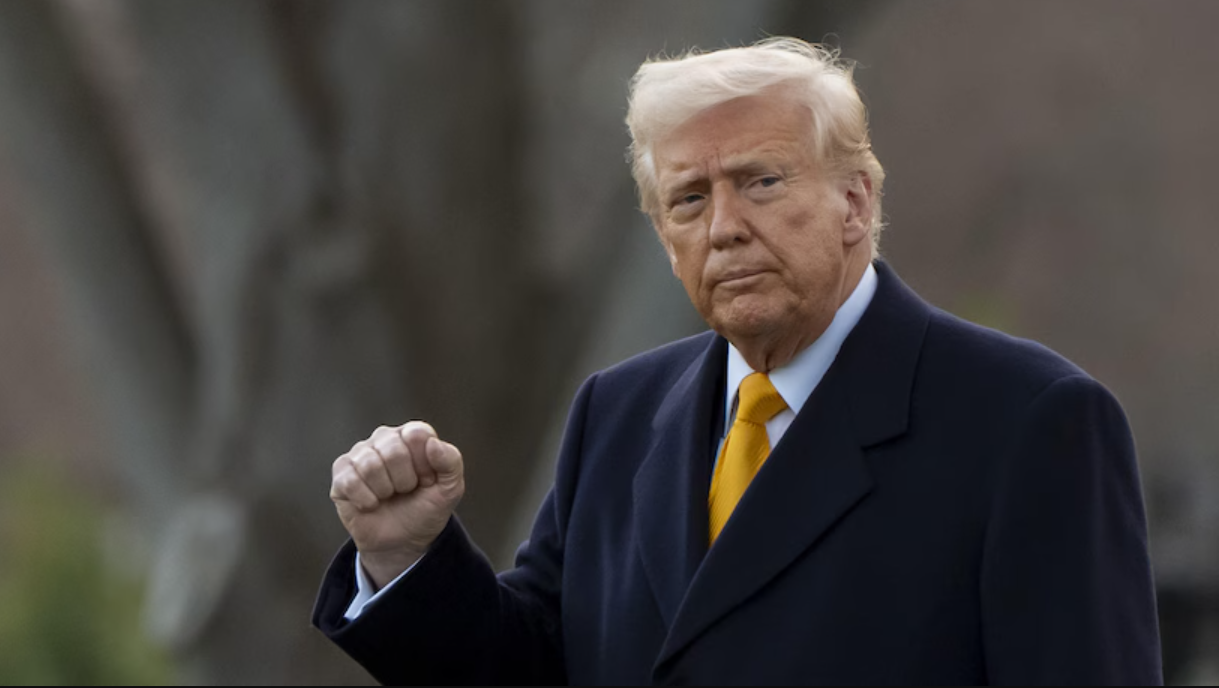

President Donald Trump, known for disrupting traditional U.S. foreign policy approaches, has adopted a more conventional and measured stance in response to the recent surge in violence between India and Pakistan.
While Trump has consistently worked to strengthen U.S.-India relations and expressed solidarity with New Delhi following the recent militant attack in Indian Illegally Occupied Jammu and Kashmir (IIOJK), his administration has refrained from openly criticizing India for its retaliatory strikes against Pakistan. Instead, Trump has urged both nations to de-escalate and resolve the situation diplomatically.
“It’s so terrible,” Trump said on Wednesday. “I get along with both. I know both very well, and I want to see them work it out. I want to see them stop.”
India has briefed Secretary of State Marco Rubio—currently also serving as interim National Security Advisor—on its overnight strikes. Following the deadly attack in Pahalgam, Rubio reached out to Pakistan’s prime minister, calling for condemnation of the violence and cooperation, while simultaneously urging India’s foreign minister to exercise restraint and prevent further escalation.
Lisa Curtis, a former senior director for South Asia at the National Security Council during Trump’s first term, emphasized that the U.S. remains uniquely positioned to influence both India and Pakistan. “There are other countries that are concerned and in communication with both sides, but ultimately, it is the U.S. that plays the key role in helping the two nations navigate a face-saving exit from crisis,” said Curtis, now a senior fellow at the Center for a New American Security.
This isn’t the first time India has launched strikes in response to attacks; in 2019, Prime Minister Narendra Modi ordered retaliatory action following another deadly incident. Former Secretary of State Mike Pompeo later revealed in his memoir that tensions escalated to the brink of nuclear conflict, which he claims was defused after a high-level Indian official warned of a potential Pakistani nuclear response.
Despite his return to diplomacy, Trump continues to rely on an unconventional foreign policy team. He has sidelined many career diplomats, placing more trust in longtime associate Steve Witkoff, who has been navigating delicate negotiations globally—including efforts with Iran and a recent deal with Yemen’s Houthi rebels.
With the administration already entangled in crises like the Ukraine conflict, the White House is eager to avoid further turmoil in South Asia.
“The Trump administration wants to maintain its focus on trade, economic cooperation, and the strategic competition with China,” said Aparna Pande, a fellow at the Hudson Institute. “Any prolonged India-Pakistan conflict risks pulling India away from those shared priorities.”
