

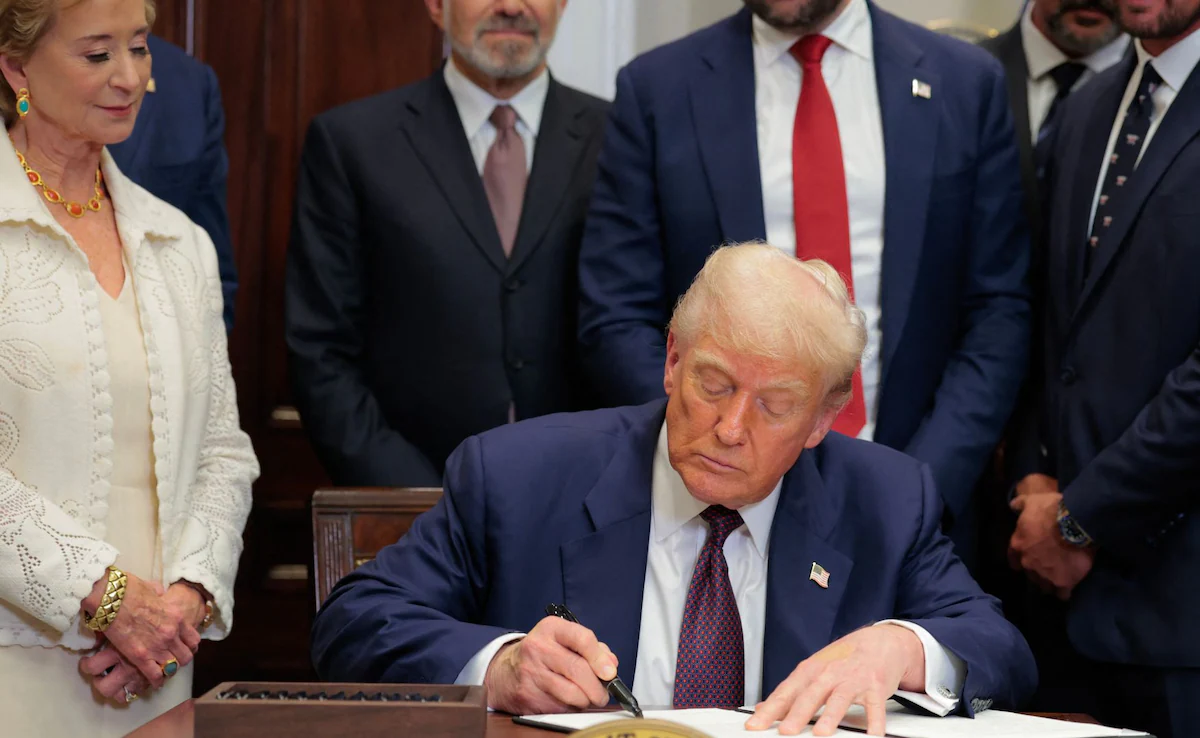

U.S. President Donald Trump has chosen not to take a definitive stance on Israeli Prime Minister Benjamin Netanyahu’s proposed full military reoccupation of Gaza. When asked about the plan, Trump said it was “pretty much up to Israel,” distancing himself from the strategic debate amid growing violence and an escalating humanitarian crisis.
Focus on Aid Over Strategy
Rather than commenting on military action, Trump emphasized U.S. humanitarian efforts. He highlighted a $60 million aid package aimed at addressing hunger in Gaza and mentioned that Israel and several Arab nations would assist in delivering food aid. However, he did not provide details on coordination or delivery timelines.
This position signals a shift in U.S. involvement, from strategic partner to humanitarian actor, as Trump attempts to avoid deeper political entanglement while maintaining support for Israel.
Netanyahu’s Gaza Strategy Sparks Debate
Reports suggest Netanyahu and his advisors are considering full military control of Gaza, a move that would reverse Israel’s 2005 disengagement. The Israeli military has reportedly presented various options, but no final decisions have been made.
The proposal has sparked internal debate. Several former Israeli security officials argue that full reoccupation is unrealistic, particularly with Israeli hostages still held in Gaza and troops stretched thin. Concerns over soldier fatigue and rising casualties have also surfaced within the military.
Hostage Crisis Fuels Public Pressure
Since Hamas’ October 2023 attack, dozens of hostages remain in captivity. Disturbing videos showing severely malnourished captives have triggered mass protests in Israel, with families demanding stronger action. International leaders have also urged a ceasefire and a renewed focus on hostage negotiations, although recent talks have stalled.
Trump’s Evolving Gaza Policy
Earlier in the conflict, Trump controversially suggested a U.S. takeover of Gaza, a proposal that faced widespread backlash and has since been dropped. His current hands-off approach emphasizes humanitarian support while leaving military decisions to Israel, likely in an effort to avoid reigniting criticism.
This recalibrated stance attempts to strike a balance between backing an ally and avoiding direct involvement in the conflict’s military aspects.
Growing Humanitarian Catastrophe
Gaza’s humanitarian crisis continues to worsen. Nearly 60% of its infrastructure has been damaged or destroyed, and aid organizations report rising food insecurity and famine-like conditions. While Israeli authorities deny obstructing aid, on-ground reports suggest that political barriers and border blockades are preventing effective delivery.
Some global human rights advocates accuse Israel of using starvation as a weapon, claims that have sparked discussions about potential violations of international law.
Political Pressure on Netanyahu
Netanyahu is also under domestic pressure from far-right coalition members pushing to reestablish Jewish settlements in Gaza. Analysts believe that the ongoing war may serve his political survival, even as public and military support for escalation appears to be waning.
As humanitarian conditions deteriorate, diplomatic efforts continue, but progress remains fragile. Trump’s decision to sidestep military involvement while focusing on aid reflects a calculated political move, but whether it will help resolve the crisis or prolong it remains to be seen.
