

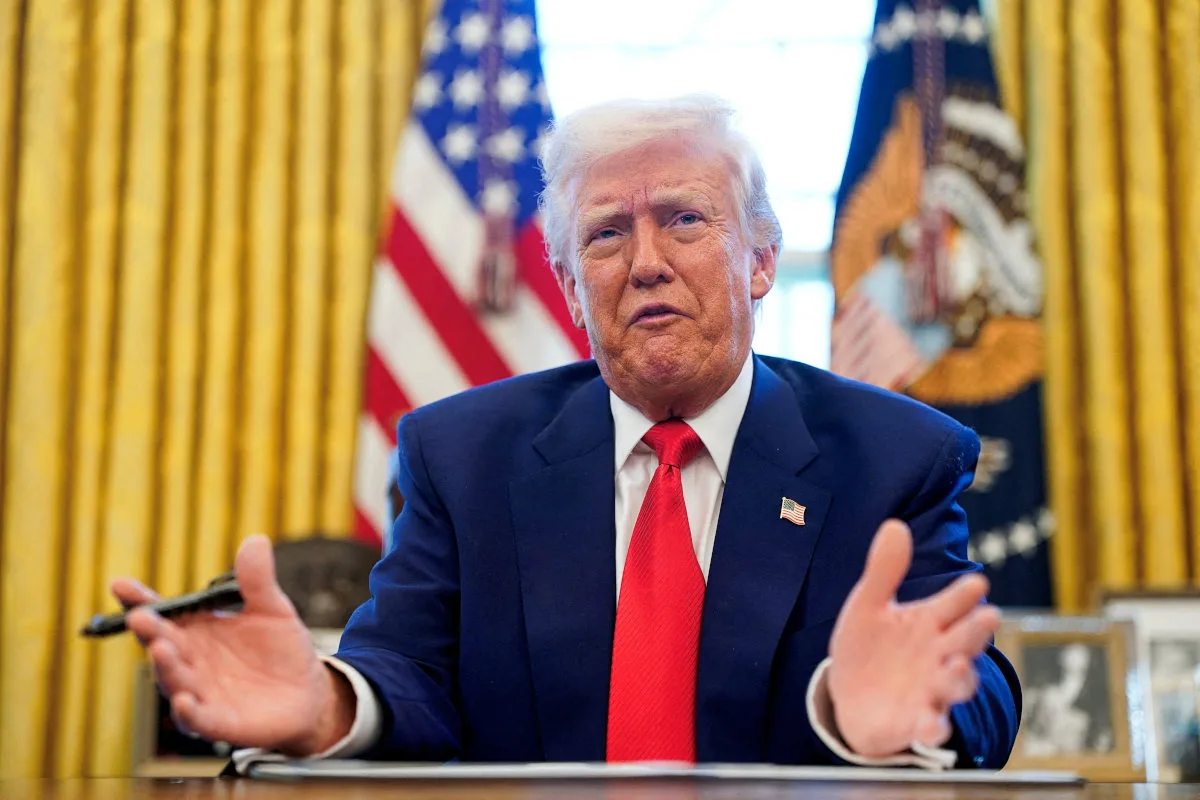

U.S. President Donald Trump has stated that the United States will impose a 100% tariff on semiconductor chips imported from countries that do not produce in the U.S. or have no plans to begin doing so. The proposed measure, aimed at boosting domestic chip manufacturing, would exempt companies already building or planning factories within the country.
Speaking from the Oval Office, Trump said the tariff would apply broadly to all imported semiconductors, with exceptions for firms committed to establishing U.S.-based manufacturing. He added that if a company falsely claims to be building in the U.S. but fails to follow through, the accumulated tariffs would eventually be enforced retroactively. However, Trump did not provide details on the implementation timeline or specifics regarding the countries or volumes affected.
The potential move comes as the U.S. continues its efforts to secure its semiconductor supply chain and reduce reliance on foreign manufacturers. One key example is Taiwan’s TSMC, a major contract chipmaker for American tech companies, which already operates plants in the U.S. As a result, its top clients, such as Nvidia, are unlikely to be impacted by the proposed tariff.
Nvidia, a leading AI chip manufacturer, has publicly stated plans to invest heavily in U.S.-based chip production over the next several years, though company representatives have not issued comments in response to Trump’s remarks.
Industry experts say the policy would likely favor large companies with sufficient capital to build domestic manufacturing facilities. “It’s survival of the biggest,” noted one investment economist, emphasizing that major corporations would benefit the most under such a protectionist regime.
In 2022, Congress approved a $52.7 billion subsidy package to support domestic semiconductor manufacturing and research. Since then, the U.S. Commerce Department has successfully attracted five leading semiconductor firms to set up advanced chipmaking facilities within the country.
Despite these efforts, America currently manufactures only about 12% of the world’s semiconductor chips, a significant decline from its 40% share in 1990. The proposed tariff aims to reverse this trend and further incentivize local production.
Analysts suggest the measure is likely to be directed primarily at China, where many semiconductors used in consumer electronics are produced. Chinese companies such as SMIC and Huawei would likely face the full brunt of the tariff, especially since their chips are often integrated into devices assembled in China and then exported to the U.S.
However, unless the tariffs are extended to individual components within assembled devices, their immediate impact may be limited, according to industry experts.
Meanwhile, countries like Japan, South Korea, and members of the European Union may avoid higher tariffs due to existing trade agreements. The European Union, for instance, has secured a flat 15% tariff rate on a broad range of exports, including semiconductors. Similarly, South Korea and Japan have reportedly obtained assurances that they will not face worse tariff conditions than other partners, suggesting they too could be subject to a 15% rate.
The full economic implications of such a sweeping tariff remain uncertain. Still, the proposal reflects growing bipartisan momentum in the U.S. to strengthen technological independence and protect national security through domestic chip production.
