

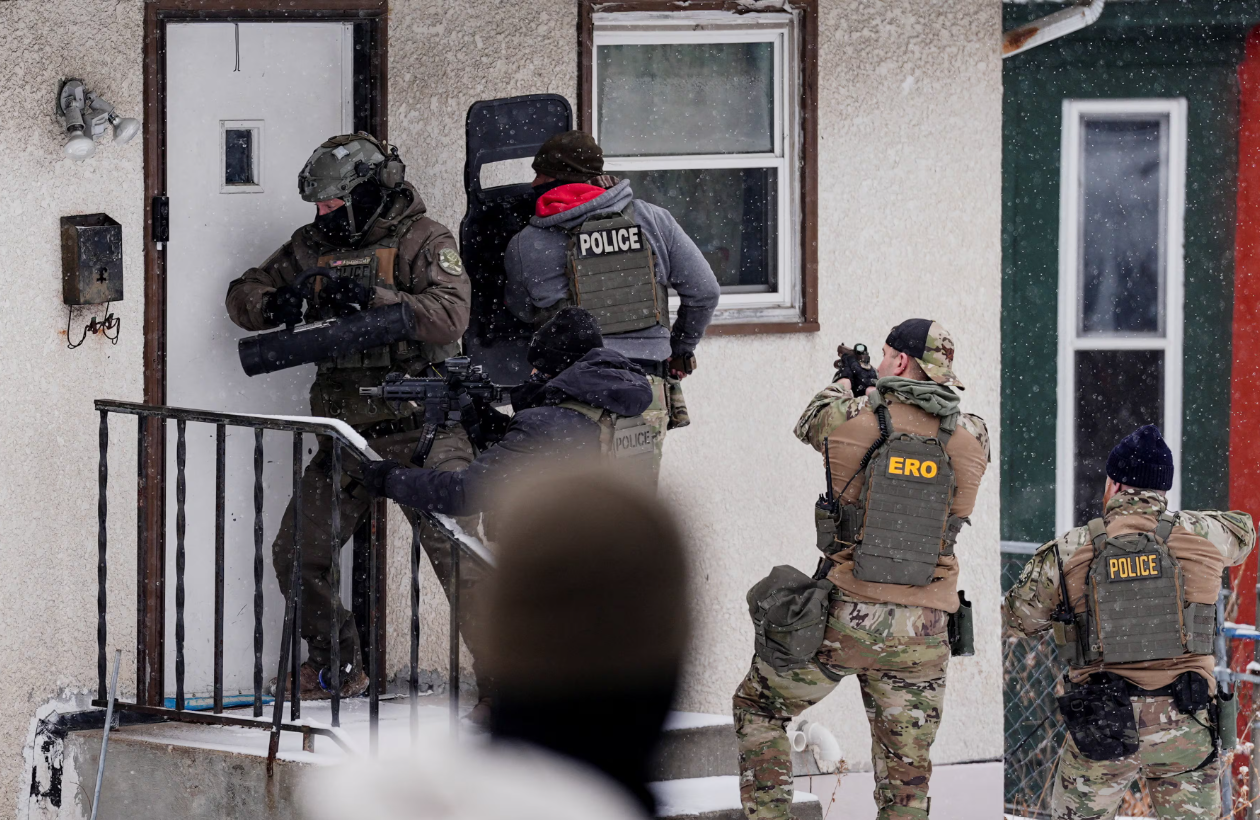

U.S. President Donald Trump has agreed to end a controversial deportation surge in Minnesota. The decision follows weeks of protests, political clashes, and growing criticism from both parties.
White House border czar Tom Homan confirmed that Operation Metro Surge will conclude. He said he proposed ending the operation, and President Trump approved the move. As a result, many immigration agents will return to their home states within the next week.
What Was Operation Metro Surge?
Under Operation Metro Surge, the administration deployed nearly 3,000 armed immigration agents to Minnesota by late January. Before the surge, about 150 agents operated in the state.
The operation aimed to accelerate deportations of undocumented migrants. However, Governor Tim Walz and other state leaders strongly opposed the move. Large crowds filled Minneapolis streets in protest. Consequently, tensions escalated between federal and state authorities.
On separate days in January, immigration agents fatally shot two U.S. citizens. The victims had reportedly come out to observe or protest enforcement actions. These incidents intensified public anger and deepened political divisions.
Federal and State Leaders Clash
Governor Walz criticized the federal operation and argued it harmed public safety. He said the surge disrupted communities and damaged trust. Moreover, he warned that constitutional rights faced serious strain during the crackdown.
Minneapolis Mayor Jacob Frey also challenged the operation. He joined Walz in filing a lawsuit against the administration. He described the federal presence as catastrophic for the city. Furthermore, he claimed the community’s unity ultimately resisted federal pressure.
Meanwhile, the chief federal judge in Minnesota reprimanded immigration officials. The judge said Immigration and Customs Enforcement ignored dozens of court orders to release wrongly detained migrants. Therefore, legal concerns further complicated the situation.
Republicans Raise Concerns
Although Trump campaigned on mass deportations, some fellow Republicans questioned the surge’s execution. They criticized the handling of the killings of Renee Good and Alex Pretti.
Initially, administration officials labeled the victims as “domestic terrorists.” However, Republican Senator Rand Paul warned against careless rhetoric. He stressed that constitutional rights remain protected during protests and unrest. According to Paul, imprecise statements risk inflaming already tense situations.
What Happens Next?
Homan said Immigration and Customs Enforcement will continue targeting individuals who pose public safety risks. However, he emphasized that officers will carry out duties with professionalism and compassion.
Earlier, officials announced the withdrawal of about 700 agents. Now, many remaining out-of-state agents will also leave Minnesota. Nevertheless, not all federal personnel will depart.
Community leaders remain skeptical. Avonna Starck, a nonprofit leader and school board member, said residents wanted all agents removed. She pledged to continue supporting families who fear detention. In addition, she vowed to keep educating neighbors about their rights.
Miguel Hernandez, a local business owner and community organizer, also demanded accountability. He argued that ending the surge does not erase the harm caused. Therefore, he believes protests and advocacy efforts will continue.
A Political Turning Point?
Trump described the surge as necessary for public safety. He often characterized migrants as criminals or fraudsters. However, critics said the operation undermined safety and eroded constitutional protections.
Now, the administration’s decision marks a rare retreat. The political fallout, however, may linger. Minnesota faces a long recovery process, according to state leaders.
As the operation ends, debate over immigration enforcement tactics continues nationwide. The conclusion of Operation Metro Surge may calm tensions. Yet questions about accountability and constitutional limits remain unresolved.
