

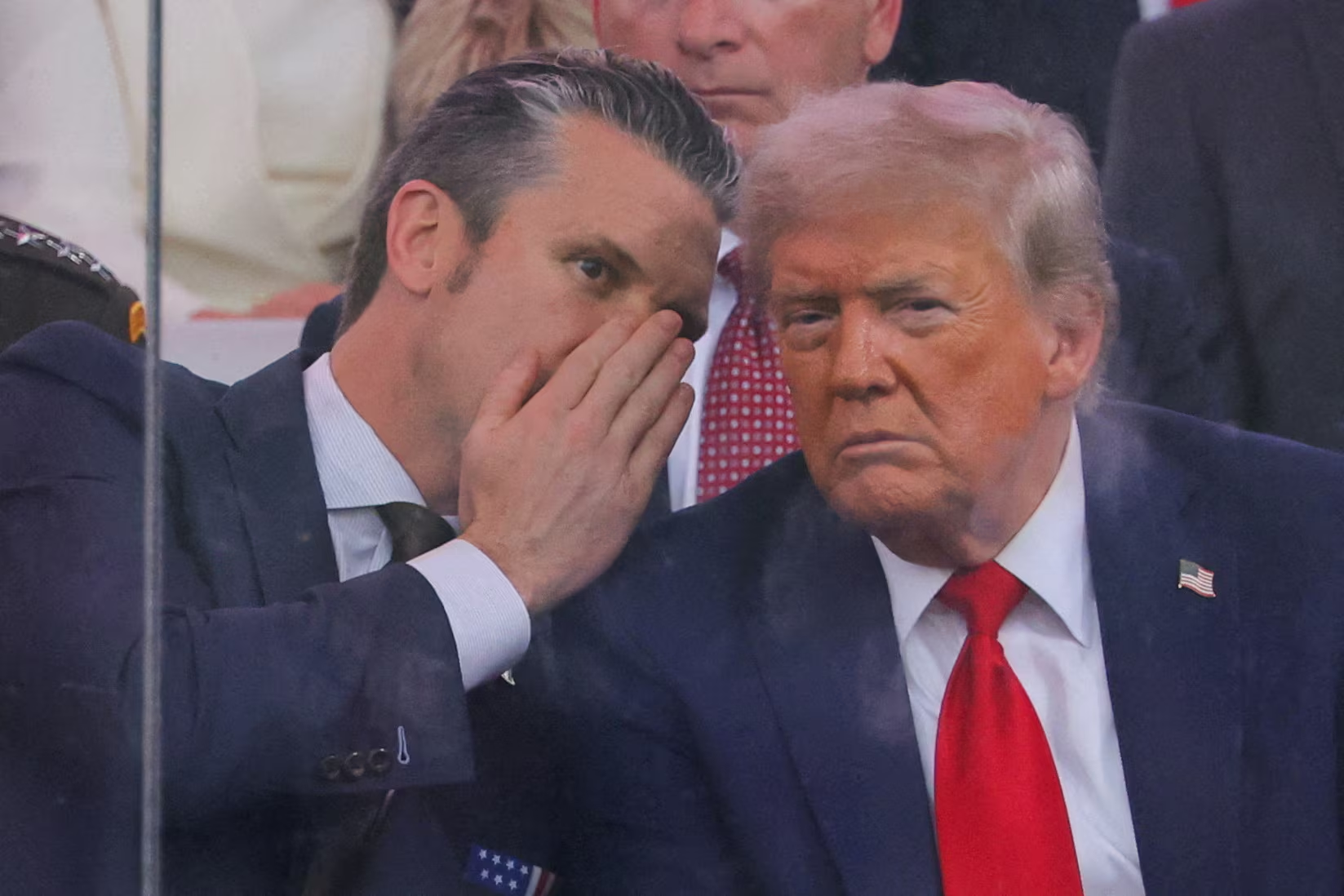

Israel-Iran Peace Deal
WASHINGTON: U.S. President Donald Trump expressed optimism on Sunday that Israel and Iran might eventually reach a diplomatic agreement, though he acknowledged that the two longtime adversaries might have to engage in conflict before any meaningful negotiations can occur.
Speaking to reporters before departing for the G7 summit in Canada, Trump addressed the escalating tensions in the Middle East, where hostilities between Israel and Iran have intensified in recent days.
While reiterating the United States’ unwavering support for Israel’s right to defend itself, Trump refrained from disclosing whether he had urged Israeli leaders to hold back on launching further military strikes against Iran.
“I hope there’s going to be a deal,” Trump said. “I think it’s time for a deal and we’ll see what happens. Sometimes they have to fight it out, but we’re gonna see what happens.”
Trump’s comments come amid a sharp escalation in violence between Israel and Iran. Both nations exchanged fresh military strikes on Sunday, resulting in significant civilian casualties and stoking fears of a wider regional conflict.
The cross-border assaults included missile attacks and airstrikes, with both Israeli and Iranian forces urging civilians in targeted areas to seek shelter and prepare for the possibility of continued hostilities.
Although the president did not outline any specific U.S. diplomatic initiatives aimed at de-escalating the situation, his remarks appeared to reflect a blend of hope for diplomacy and a recognition of the entrenched hostilities that have long plagued the relationship between Israel and Iran.
His statement suggests a willingness to support peace efforts, but also an understanding that a direct confrontation may be a necessary precursor to any eventual reconciliation.
As tensions continue to mount, the international community remains watchful. Analysts note that any breakthrough in Israel-Iran relations would require not only sustained diplomacy but also a shift in the security calculus of both nations—factors that remain highly uncertain given the current state of affairs.
