

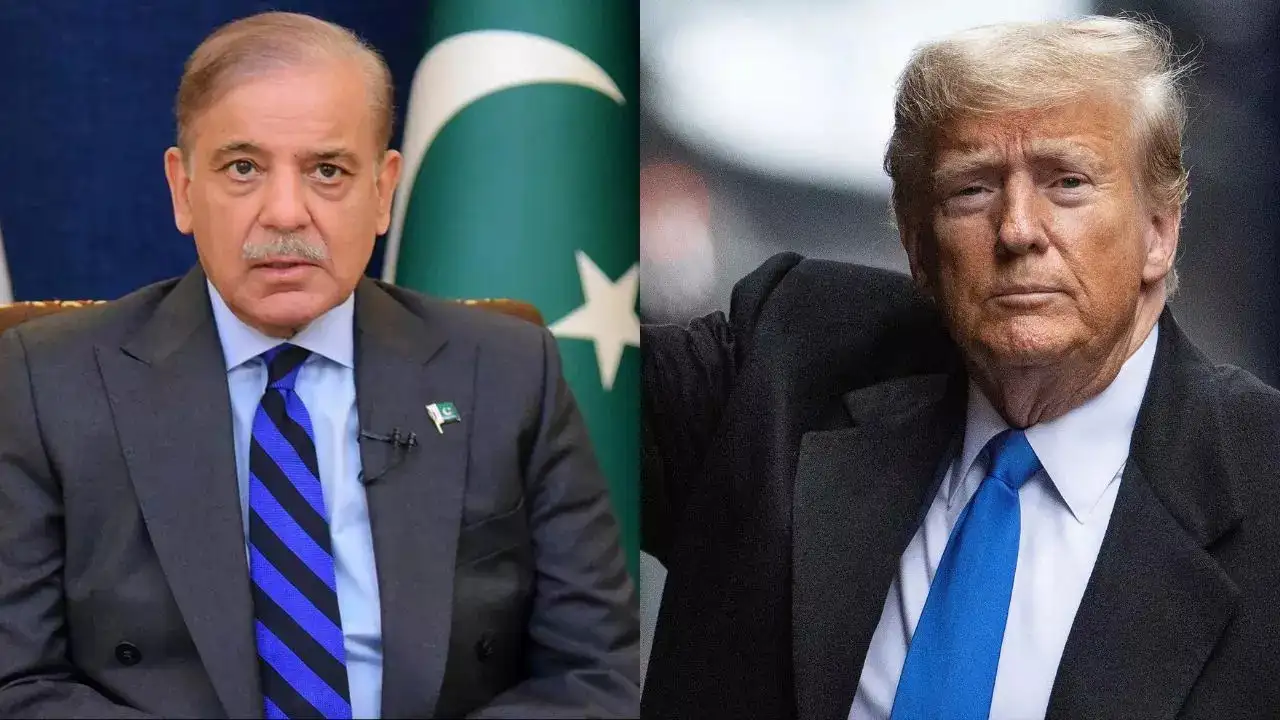

Trade Talks
U.S. President Donald Trump has confirmed that a high-level delegation from Pakistan will arrive in Washington next week for crucial trade negotiations. The visit marks a significant moment in U.S.-Pakistan economic relations, as both sides look to resolve growing trade tensions stemming from newly imposed American tariff measures.
The talks come at a sensitive time for Islamabad, which currently faces the prospect of up to 29% tariffs on its exports to the United States. The tariff threat follows Pakistan’s reported $3 billion trade surplus with the U.S., which has drawn scrutiny under Washington’s recently announced global tariff strategy aimed at balancing trade deficits.
To ease diplomatic tensions and facilitate dialogue, the U.S. administration has temporarily suspended the new tariffs for 90 days. In response, Prime Minister Shehbaz Sharif convened a high-level meeting in Islamabad on April 9, leading to the decision to dispatch a delegation comprising senior government officials, influential business leaders, and top exporters to the United States. Their mission is to preserve Pakistan’s access to the U.S. market and foster deeper economic cooperation.
Speaking at Joint Base Andrews, President Trump emphasized the link between trade and regional peace, stating, “I would have no interest in making a deal with either Pakistan or India if they were to engage in war with each other.” His comments came amid a dangerous flare-up between the two nuclear-armed neighbors, which witnessed four consecutive days of military exchanges involving drones, artillery, and air strikes.
Meanwhile, Trump confirmed that trade talks with India are also progressing, with Indian Trade Minister Piyush Goyal recently visiting Washington to push for a bilateral trade agreement.
An interim deal is expected by July, as both nations look to manage a 26% tariff on Indian exports. India may also open federal contracts worth over $50 billion to U.S. firms.
In a strategic move, Pakistan has proposed a zero-tariff trade agreement on select items of mutual interest. The proposal is aimed at boosting trade flows, offering Washington a viable economic partnership in South Asia that could complement or counterbalance its growing trade ties with India.
On May 30, Pakistan’s Finance Minister Muhammad Aurangzeb and U.S. Trade Representative Jamieson Greer held a preliminary discussion via telephone.
According to Finance Ministry Advisor Khurram Schehzad, the exchange was “constructive,” and both parties agreed to commence technical-level negotiations soon.
Additionally, Pakistan is preparing to offer investment incentives to American companies, particularly in the mining sector. Commerce Minister Jam Kamal announced that lease grants and joint ventures in Balochistan will be on the table, presenting opportunities for U.S. firms in mining machinery, hydrocarbons, and related industries.
Kamal also emphasized Pakistan’s intent to increase imports from the U.S., especially in cotton and edible oils, to address domestic shortages. He noted that while previous U.S. administrations prioritized India, the current Trump administration appears to be engaging Pakistan more seriously as a trade partner.
To further attract foreign investment, Pakistan plans to lower tariffs in its upcoming federal budget. While the U.S. has yet to identify specific sectors for prioritization, Islamabad remains optimistic about reaching a comprehensive and mutually beneficial trade agreement.
