

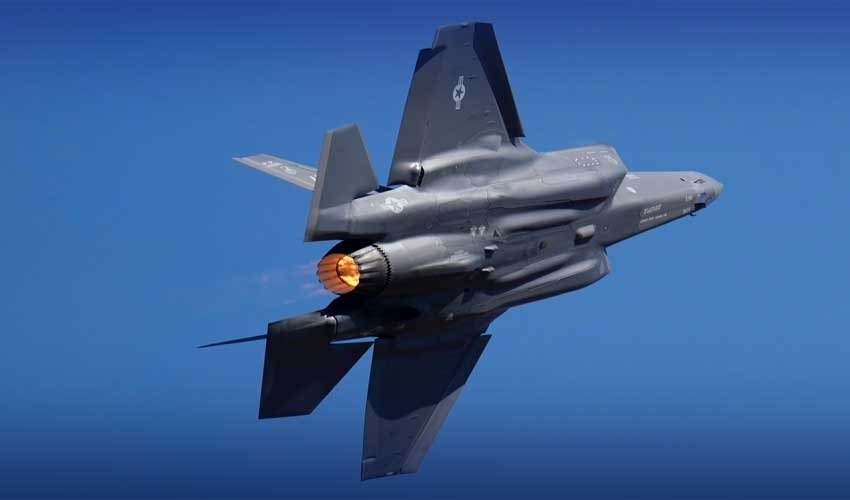

President Donald Trump said on Monday that he plans to approve the sale of US-made F-35 fighter jets to Saudi Arabia. He made the remarks one day before hosting Saudi Crown Prince Mohammed bin Salman for high-level diplomacy. Trump told reporters in the Oval Office that Washington will move forward with the sale. He added that the United States will sell the advanced F-35s to the kingdom.
Saudi request advances despite concerns
The decision marks a significant shift that could reshape the military balance in the Middle East. It may also test Washington’s longstanding pledge to maintain Israel’s qualitative military edge. Saudi Arabia has requested up to 48 F-35 jets in a deal potentially worth billions of dollars. The proposal cleared an important Pentagon review earlier this month. Reuters reported that the clearance came shortly before the crown prince’s planned visit.
A senior White House official said Trump wanted to discuss the jets with MBS before announcing a final decision. Trump’s approval came despite a New York Times report highlighting US concerns about possible Chinese access to F-35 technology through Saudi Arabia. The United States has previously restricted F-35 sales to its closest allies. Those allies include several NATO members and Israel, which operates the aircraft.
Regional security and technology issues dominate agenda
Washington removed Turkey from the F-35 programme in 2019 after Ankara bought a Russian air defence system. US officials feared Moscow could gain access to sensitive F-35 data through that system. The crown prince will visit the White House to strengthen cooperation on oil, security and advanced technologies. His trip will be his first visit to the United States since 2018.
Trump aims to secure progress on a $600 billion Saudi investment pledge made during his 2017 visit to Riyadh. He avoided addressing human rights issues during that trip and is expected to do so again. Saudi Arabia seeks stronger security guarantees amid rising regional tensions. The kingdom also wants access to artificial intelligence technologies and movement on a civilian nuclear programme.
Defence ties remain central
Washington and Riyadh have long maintained an arrangement linking oil supply and US security support. That understanding weakened after Washington failed to respond to Iran’s 2019 attack on Saudi oil installations. Concerns increased again in September when Israel struck Doha in an operation targeting Hamas members. The defence deal discussions now carry added urgency amid regional volatility and shifting alliances.
